 12. February 2026
HOW TO IDENTIFY AND CONTROL SCALE INSECTS.
Scale insects are among the most persistent and elusive garden pests. Often resembling small bumps or shells rather than living creatures, they can drain the life from your favorite plants before you even realize they are there. Here is a comprehensive guide on how to identify and control these sap-sucking invaders.
1. Identification of scale insects
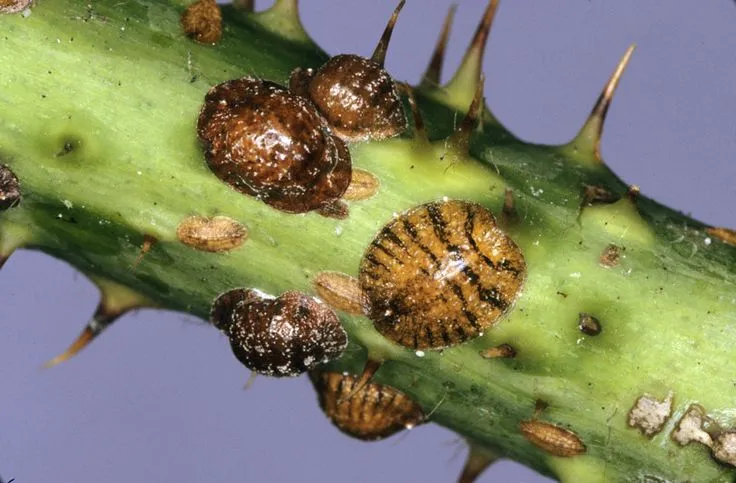
Scale insects are often overlooked because they are largely immobile and blend into the bark or leaves of their host plants.
Physical Appearance
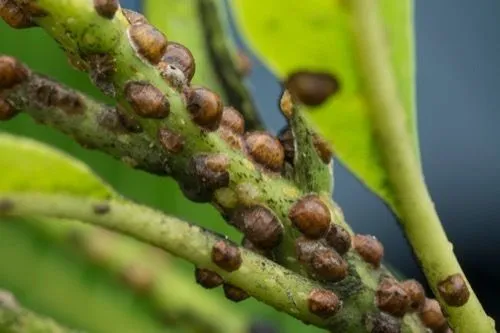
- Shell-like Bumps: Most adult scales appear as small (1/8 to 1/2 inch), oval, or circular bumps on stems, twigs, and the undersides of leaves.
- Coloration: Depending on the species, they can be tan, brown, gray, or even cottony white.
- Two Main Types:
- Armored Scale: These produce a hard, waxy covering that is not attached to their bodies. They are generally smaller and do not excrete honeydew. Examples include Oystershell and Euonymus scale.
- Soft Scale: These are larger, more rounded, and have a waxy coating attached to their bodies. They produce large amounts of a sticky substance called honeydew. Examples include Magnolia and Cottony Maple scale.
Symptoms of Infestation
- Yellowing Leaves: As they suck the sap, leaves often turn yellow or develop mottled spots.
- Stunted Growth: Heavily infested plants look “sickly” and produce little new growth.
- Sooty Mold: For soft scale, the excreted honeydew often develops a black, soot-like fungus. This mold can interfere with photosynthesis.
- Ant Activity: Ants are attracted to honeydew and will often “farm” or protect scale insects from natural predators.
2. Control Methods: From Natural to Chemical
Scale insects are most difficult to kill once they have formed their protective shells. Timing is critical for effective treatment.
Physical & Mechanical Removal
For small infestations or indoor plants, you can often remove the pests manually:
- Scrubbing: Gently scrub scales off stems and leaves using a soft brush or your fingernails.
- Alcohol Dabbing: For light infestations, dip a cotton swab in 70% isopropyl alcohol and dab each insect directly to kill it instantly.
- Pruning: If a single branch is heavily infested, it is often best to prune it out and destroy it to prevent the spread.
The “Crawler” Stage
Scales are most vulnerable during the “crawler” stage, the brief period after hatching when the young nymphs are mobile and have not yet grown their protective armor.
- Monitoring: Wrap double-sided sticky tape around branches in late spring or early summer to catch crawlers as they move.
- Targeted Spraying: This is the best time to apply contact insecticides like insecticidal soap.
Oil Treatments (Horticultural & Neem)
- Dormant Oils: Applied in late winter or early spring before buds break, these oils coat the overwintering scales and smother them.
- Neem Oil: This natural insecticide is effective at smothering scales at various stages. Apply it weekly until the infestation is under control.
Homemade Remedies
A popular DIY spray involves mixing:
- 2 tablespoons of cooking oil
- 2 tablespoons of baby shampoo (or bleach-free dish soap)
- 1 gallon of water
- Optional: 1 cup of alcohol to help penetrate the shells.
- Note: Always test a small area of the plant first to ensure the mixture doesn’t burn the foliage.
Systemic Insecticides
For large trees or severe infestations where spraying is impractical, systemic insecticides can be applied to the soil. The plant absorbs the chemical into its vascular system, and the insects ingest it while feeding.
3. Prevention and Long-Term Care
- Reduce Stress: Scale insects are drawn to weakened plants. Ensure your trees and shrubs are properly watered and fertilized, especially during droughts.
- Encourage Predators: Ladybugs, lacewings, and parasitic wasps are natural enemies of scale. Avoid broad-spectrum pesticides that might kill these beneficial “bugs.”
- Check New Plants: Always inspect new additions to your garden or home before placing them near healthy plants.

Conclusion
In short, scale insects are persistent but manageable with vigilance and timing. By combining consistent monitoring with targeted treatments, like neem oil or manual removal, you can protect your garden’s health and keep these pests under control.