 08. October 2026
HOW TO SPOT FAKE CHARITY WEBSITES AND PROTECT YOUR DONATIONS.
When disaster strikes or holiday giving season arrives, generous people rush to support charitable causes. Unfortunately, online scammers also use these moments to launch fraudulent donation websites that mimic legitimate organizations. Recognizing a fake charity website before entering your credit card details ensures your hard-earned money actually helps those in need.
Protecting your donations starts with knowing the common red flags of fraudulent campaigns. Review these critical warning signs to identify deceptive sites and donate safely:

Red flags of fraudulent charity websites
- Vague Mission Statements: Legitimate charities clearly state how they use funds, who they help, and where they operate. Fake websites often use emotional, generic language without providing verifiable details about their operations or registered nonprofit status.
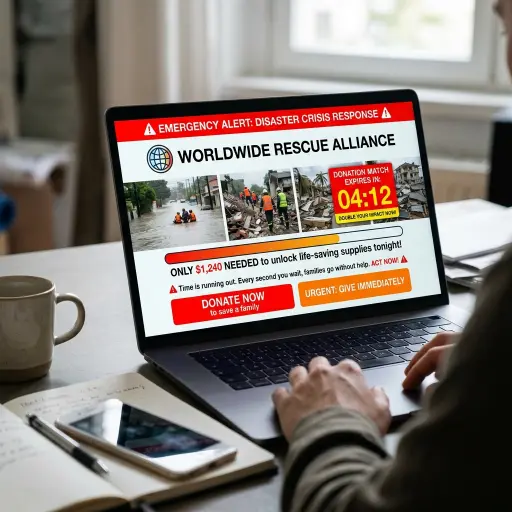
- High Pressure Tactics: Scammers want your money immediately. Fraudulent sites frequently use urgent appeals, graphic imagery, or countdown timers to pressure you into donating without taking time to verify their claims.
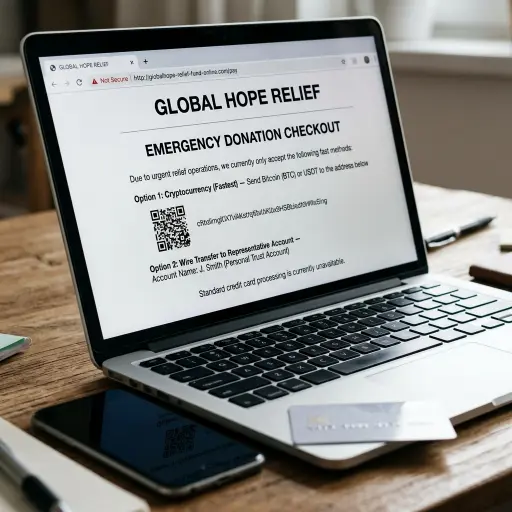
- Unsecure Payment Methods: Safe online donations should be processed through secure, reputable payment platforms. Cryptocurrency, wire transfers, prepaid debit cards, and peer-to-peer money transfer apps can all be legitimate payment methods, but donors should be cautious when a website insists on an unusual payment method, directs them to send money to a personal account, or provides payment instructions that cannot be independently verified. These can be warning signs of a scam.
- Lookalike Domain Names: Fraudsters often register domain names that closely resemble those of well-known charities by changing a letter, adding a word, or using a different domain extension. For example, a legitimate charity using charityname.org might be imitated with charityname.com or charity-name.org. Always check the exact web address in your browser before making a donation.
How to verify a charity website online
Before giving your financial information to any organization, take a few minutes to check its credentials through trusted charity-rating and oversight platforms. These platforms review charities using factors such as financial transparency, responsible use of donations, accountability, and governance. Checking a charity website through these sources can help you identify legitimate organizations and avoid potential scams.
Search for the organization on established databases such as Charity Navigator, GuideStar, or the Better Business Bureau Wise Giving Alliance. If the group is not listed, or if they lack a positive rating, look for a different organization supporting the same cause. Additionally, verify official government charity registries in your country to confirm their legal standing.
Conclusion
Online charity scams prey on human empathy, but taking a few simple precautions can help donors avoid falling victim to them. By looking past emotional appeals, checking domain URLs, and verifying organizations through independent watchdogs, you ensure your financial contributions reach legitimate causes that genuinely make a difference.
Sources: