
 14. September 2026
HOW TO PROTECT YOUR SIM CARD FROM UNAUTHORIZED ACCOUNT TAKEOVER.
Mobile devices anchor our digital lives, serving as the primary verification keys for banking, email, and social media accounts. If a scammer takes control of your number, they may be able to intercept verification codes and attempt to access other accounts.
To reduce the risk of SIM swap fraud, set up a secure PIN or password with your mobile carrier, protect your personal information, watch for phishing attempts, and use authentication methods that do not rely on SMS whenever possible.
Understanding how SIM swapping occurs
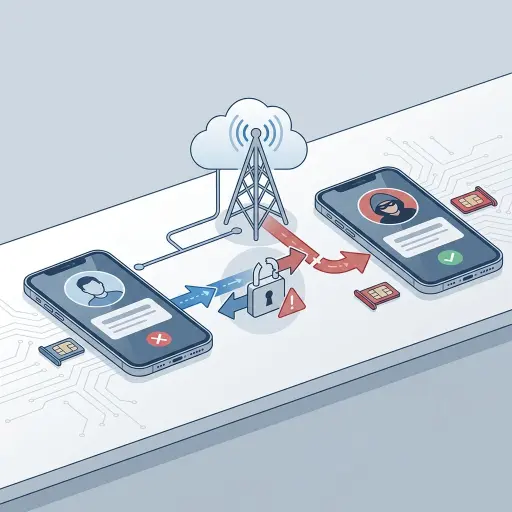
SIM swapping, also known as port-out fraud, occurs when a scammer convinces a mobile service provider to transfer your phone number to a SIM card they control.
Scammers may collect personal information through data breaches, social media, or phishing campaigns. They can then use details such as your name, date of birth, or account information to impersonate you when contacting the carrier. Once the number is transferred, your phone may suddenly lose cellular service. The attacker can then receive incoming calls and text messages, including one-time verification codes used to access some financial, email, and other online accounts.
Ways to protect your SIM card from unauthorized account takeover
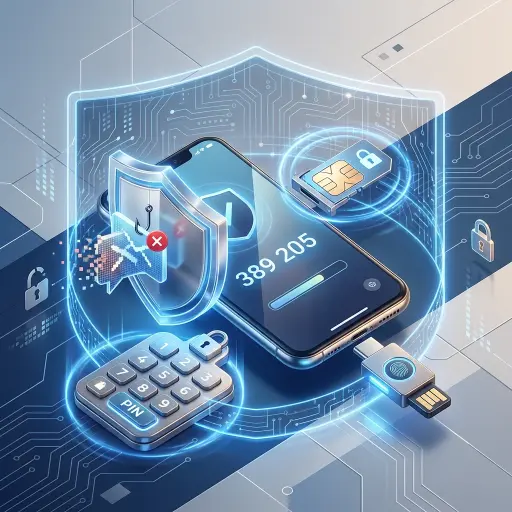
1. Set up a carrier security PIN or password: Adding a PIN or password to your mobile carrier account can provide an additional layer of protection against unauthorized changes. Contact your carrier or log into your account to find out how to enable this security feature. Choose a unique PIN or password that is difficult to guess and is not based on information that could be easily found on your social media profiles.
2. Use stronger two-factor authentication: SMS-based two-factor authentication can be compromised if an attacker gains control of your phone number. Where supported, use an authenticator app or a hardware security key instead.
Authenticator apps such as Google Authenticator, Authy, and Bitwarden generate verification codes without relying on your mobile network. Hardware security keys such as YubiKey provide another option by requiring the physical device to authorize access. Prioritize these methods for sensitive accounts, particularly email and financial accounts.
3 .Recognize phishing attempts: Scammers may use phishing and social engineering to collect the information needed to impersonate you. Be cautious of unsolicited messages asking for your mobile account details, billing information, passwords, or carrier PIN.
Phishing messages may also pretend to come from your bank or mobile provider and use urgent language to encourage you to click a link. Instead of using links in unexpected messages, access your bank or mobile carrier through its official website or app. You can also contact the organization using a verified support number.
4. Act quickly if your phone suddenly loses service: An unexpected loss of cellular service can be a warning sign of a SIM swap, particularly if your phone displays no signal or only allows emergency calls without an obvious network problem.
If this happens, contact your mobile carrier immediately using another phone or an available online support channel. Ask the carrier to investigate whether your number was transferred or your SIM was changed. After regaining control of your number, check your email, banking, and other important accounts for unauthorized activity. Change passwords where necessary and review your account security settings.
Conclusion
SIM swap fraud can give attackers control of a phone number that is used to verify access to other accounts. Protecting your mobile carrier account with a strong PIN or password, avoiding phishing attempts, and using authentication methods other than SMS can reduce your exposure to this type of attack. Monitoring your phone for unexpected loss of service can also help you identify a potential SIM swap quickly and take action before the attacker gains further access.
Sources: