 05. October 2026
HOW TO PREVENT DRYER LINT BUILDUP AND ELIMINATE FIRE HAZARDS.
Dryer lint can build up in the trap, cabinet, exhaust duct, and exterior vent, restricting airflow and creating a serious fire hazard. Regularly clean the lint trap and maintain proper ventilation to eliminate this hazard and keep your appliance running efficiently. Routine maintenance is essential to prevent lint buildup in your exhaust system.
The following maintenance steps will help you keep your dryer lint safe and running smoothly:
1. Inspect and clean the dryer lint screen after every load
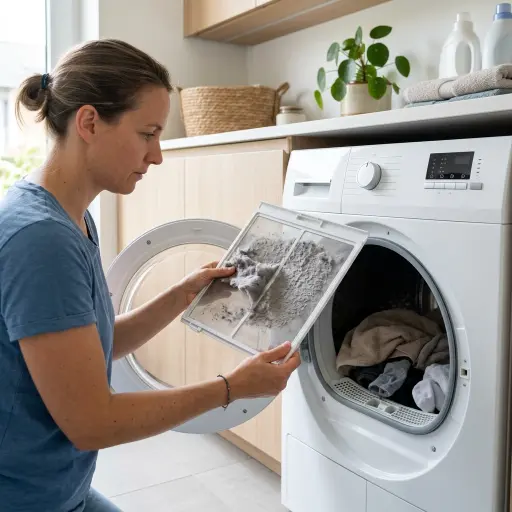
The dryer lint screen is the first line of defense against lint buildup. Remove the screen and clear trapped lint after every drying cycle. A clogged screen restricts airflow and allows more lint into the exhaust system.
Fabric softener sheets can also leave a waxy residue on the screen. Over time, this residue can reduce airflow even when the screen appears clean. Every few months, wash the screen with warm water and dish soap to remove accumulated residue. Allow it to dry completely before putting it back.
2. Clear the lint trap housing
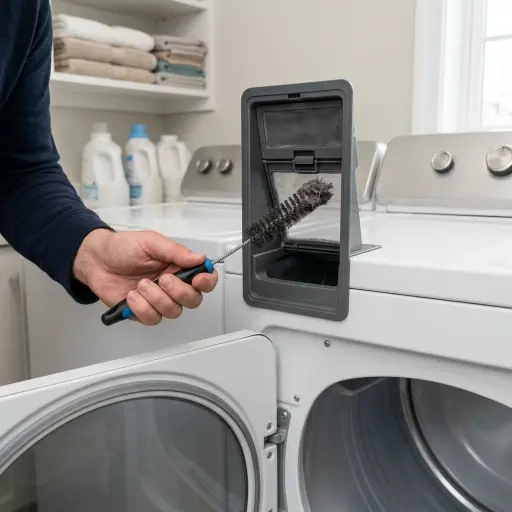
Lint can bypass the screen and accumulate inside the opening where the lint screen is inserted. Use a lint brush with an extended handle or a vacuum attachment to remove lint from inside the lint screen housing. Gently loosen and remove lint from the sides and bottom of the cavity. Cleaning this area regularly helps prevent debris from accumulating inside the dryer.
3. Maintain and vacuum the exhaust duct
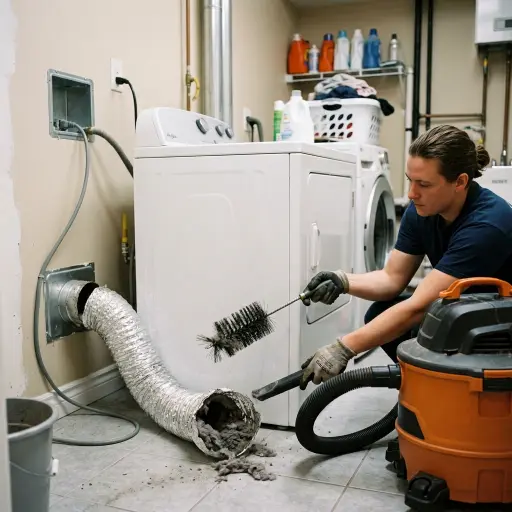
The transition duct between the back of the dryer and the wall vent can collect substantial amounts of lint. Inspect and clean the duct at least once a year. Disconnect the duct and use a suitable duct-cleaning brush to loosen trapped lint. Vacuum loose debris from the duct and the exhaust outlet at the back of the dryer.
4. Inspect the exterior vent
The exterior vent releases warm, moist air and lint from the dryer. Check it regularly while the dryer is running to ensure the flap or louvers open freely.
Remove dryer lint and debris around the opening, and keep the area clear of dry leaves, grass, and other flammable materials. Avoid covering the vent with wire mesh or other materials that can restrict airflow.
Recognizing signs of a restricted vent
Certain dryer problems can indicate restricted airflow or excessive lint buildup. Watch for:
- Clothes taking significantly longer than normal to dry
- Clothes remaining damp after a complete cycle
- The dryer becoming unusually hot during operation
- Little or no airflow from the exterior vent
- A burning smell while the dryer is running
A burning smell requires immediate attention. Stop the dryer and disconnect it from the power supply only if it is safe to do so. If there is smoke, fire, or another immediate hazard, leave the area and contact emergency services. Do not use the dryer again until it has been inspected by a qualified technician. If the problem persists, have the dryer inspected by a qualified technician.
Conclusion
Preventing dryer lint buildup requires regular attention to the entire ventilation system. Clean the dryer lint screen after every load, clear the internal lint housing regularly, and keep the exterior vent unobstructed.
These simple maintenance habits improve airflow, reduce overheating, and help keep your dryer operating safely and efficiently.
Sources
- Don’t Let LINT Buildup Turn Your Dryer into a FIRE HAZARD!
- Why Is My Dryer Vent On Fire?
- How do you prevent dryer fires at home?