 06. August 2026
HOW TO SAFELY STORE AND USE PROPANE GAS AT HOME.
Propane gas is a reliable fuel for home heating, cooking, and grilling, but it is also highly flammable. Proper storage and handling can help prevent leaks, fires, and other hazards. This guide explains where to store propane tanks, how to protect them from heat and damage, how to check for leaks, and what to do with old or damaged tanks.
Where to Store Propane Tanks Safely
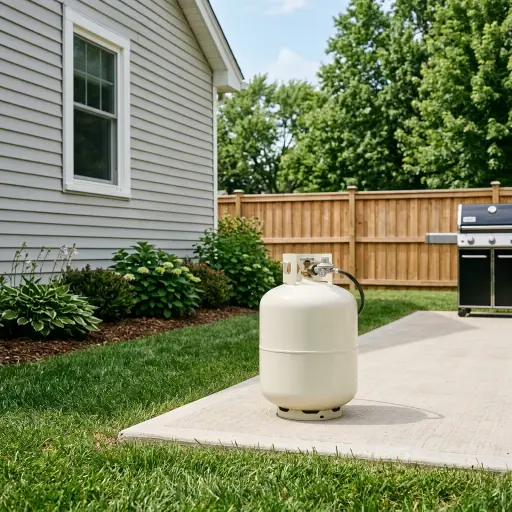
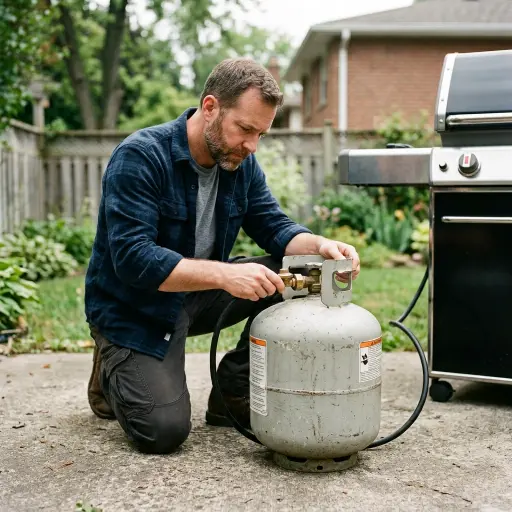
Propane tanks should be stored outdoors in a well-ventilated area. Keep each tank upright on a sturdy, flat surface such as concrete or wood, with the tank resting on its foot ring. Choose a shaded location away from the house, grills, electrical equipment, open flames, and other potential ignition sources.
Keep propane tanks below 120°F (49°C) and out of prolonged direct sunlight, especially near walls or other surfaces that can retain heat.
Cold weather generally does not damage propane tanks. In areas prone to snow or ice, a cover can help prevent snow and ice buildup, but special protection is not normally needed simply because temperatures are low.
Why Proper Propane Storage Matters
Propane gas is stored as a liquid under pressure inside specially designed cylinders. If a tank is damaged or develops a leak, the propane quickly turns into a gas. Because propane gas is heavier than air, it can collect in low-lying or enclosed areas instead of dispersing. If the gas comes into contact with a flame, spark, or other ignition source, it can ignite and cause a fire or explosion. Proper storage helps reduce these risks.
Why Indoor Storage Is Risky
A leaking propane tank can allow gas to accumulate in enclosed spaces, creating a serious fire or explosion hazard. Therefore, propane tanks should never be stored inside homes, attached garages, basements, crawl spaces, or other enclosed areas.
If a tank develops a leak indoors, propane gas can remain in the enclosed space instead of dispersing safely. Because propane is flammable, this can create a serious fire or explosion hazard.
Larger propane cylinders, including common 20-pound grill tanks and 100-pound heating tanks, should remain outdoors even when they appear to be empty. Residual gas can remain inside the tank.
Small cylinders designed and approved for specific portable equipment may have different storage requirements. Always follow the manufacturer’s instructions for those containers.
How to Inspect a Propane Tank
Inspect the propane tank before storing it, reconnecting it, or putting it back into use. Look for:
- Deep rust or corrosion: Surface rust may occur, but deep pitting or severe corrosion can weaken the tank and may mean it needs to be replaced.
- Damaged support rings: Check that the collar and foot ring are securely attached to the propane tank and free from serious corrosion.
- Worn valves and seals: The valve is the metal fitting located at the top of the propane tank where gas flows out to the regulator or hose. Inspect the valve and its connections for visible signs of damage, corrosion, cracks, or dirt. Keep the connections clean, and do not use the tank if the valve or fittings appear damaged.
Do not use a tank that appears damaged or severely corroded. Contact a qualified propane professional for advice.
How to Check for a Propane Leak
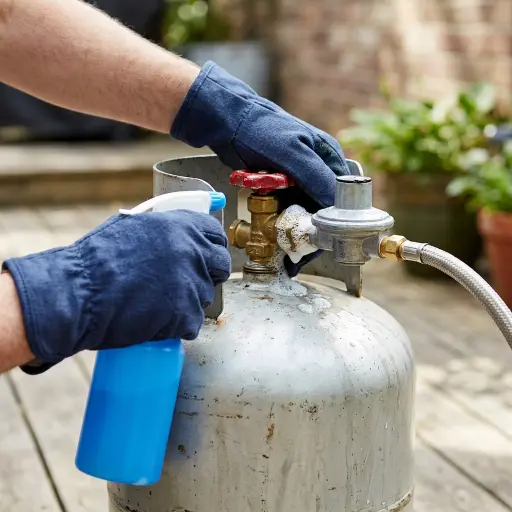
You can check tank valves and hose connections for leaks using soapy water. Apply the solution around the top of the tank and watch for bubbles. Bubbles that continue to form can indicate escaping gas. If you suspect a leak:
- Turn off the gas supply at the tank if you can do so safely.
- Move away from the area.
- Do not use or go near flames, sparks, electrical switches, or any other potential ignition sources, as they could ignite leaking propane gas.
- Contact a qualified propane professional before reconnecting or using the tank.
Never attempt to repair a leaking valve, hose, or fitting yourself.
Disposing of Old Propane Tanks
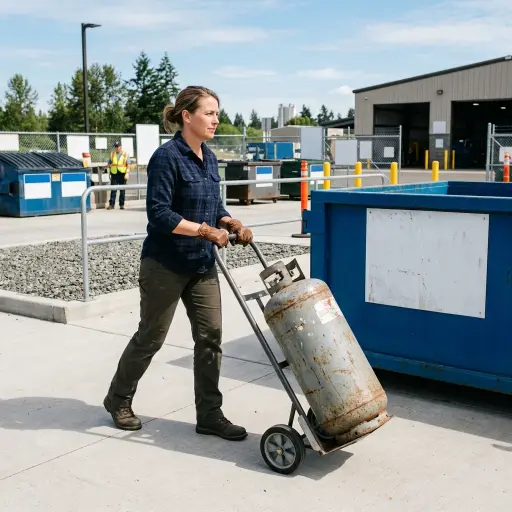
Take old or damaged tanks to an approved recycling or hazardous-waste facility or contact your propane gas supplier for instructions on safe disposal.
Conclusion
Safe propane gas storage starts with a few consistent habits. If you notice severe corrosion, physical damage, or a suspected gas leak, stop using the tank and contact a qualified propane professional. Proper storage and routine checks can help keep propane useful while reducing avoidable risks around the home.
Sources: