
 17. July 2026
HOW TO KEEP CEILING FANS CLEAN.
Ceiling fan blades collect dust quickly, and every time the fan spins, some of that dust can be pushed back into the air. Regular cleaning helps reduce dust buildup, maintain good airflow, and keep your ceiling fan looking its best.
4 Simple steps to keep a ceiling fan clean
These simple steps will help remove dust, tackle stubborn grime, and reduce future buildup:
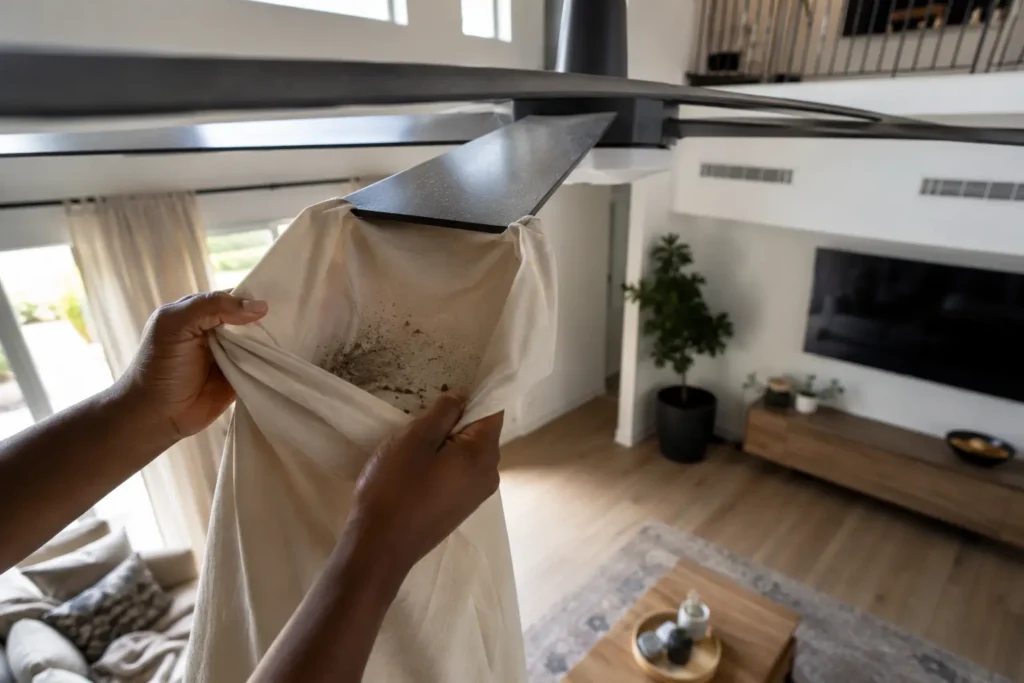
1. Use a pillowcase for a mess-free clean
An old pillowcase is one of the easiest ways to clean dusty ceiling fan blades without spreading dust around the room. Slide the pillowcase over one blade until it is fully covered. Then, gently pull it back in one smooth motion to trap the dust inside the fabric.
Repeat the process for each blade. Empty the collected dust into a trash can before washing the pillowcase so you can reuse it for future cleaning.
2. Use an extendable ceiling fan duster for routine cleaning
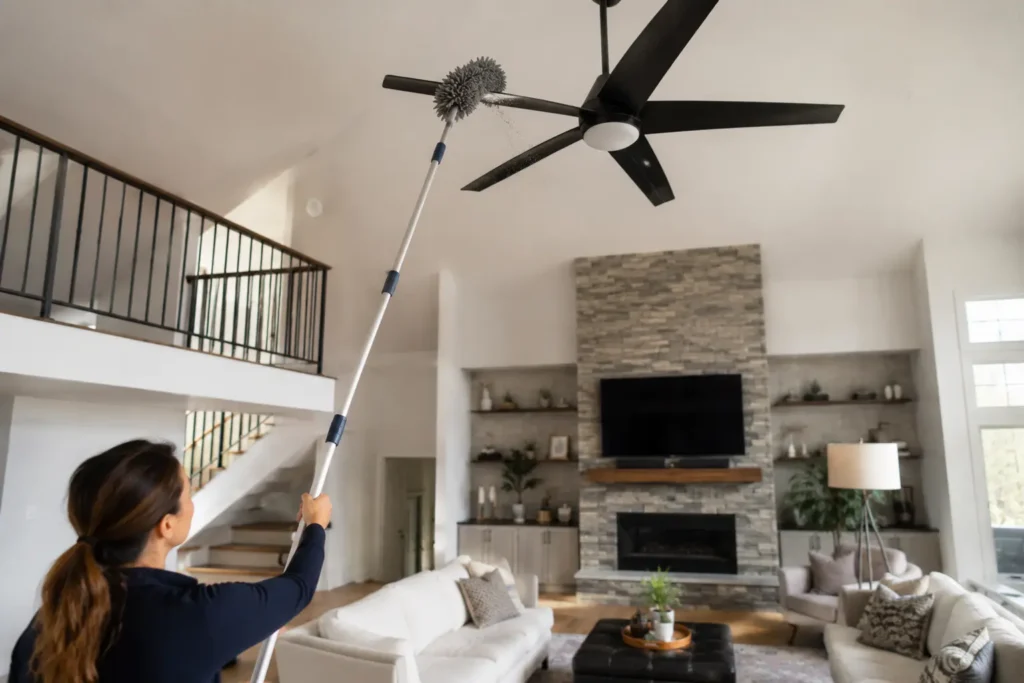
For light dust buildup, an extendable ceiling fan duster makes routine cleaning easier. Its flexible head can reach across the blades, while the long handle allows you to clean many ceiling fans without using a ladder.
Move the duster along each blade using smooth strokes to remove surface dust. Regular dusting can help prevent heavier buildup between deeper cleanings.
3. Remove stubborn dust and grime
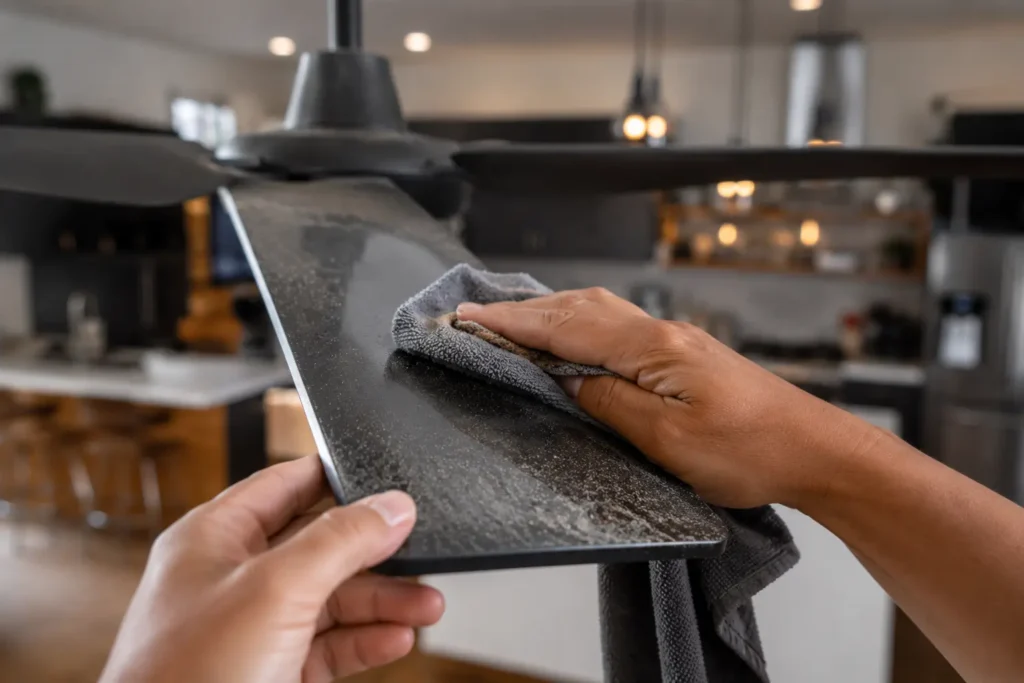
Dust mixed with grease or humidity can stick to fan blades, especially in kitchens. In these cases, a dry cloth alone is usually not enough.
- Wipe each blade with a damp cloth or paper towel and an all-purpose cleaner.
- Continue until all dirt and residue are removed.
- Use compressed air to remove dust from the motor housing.
- Finish by wiping the outside of the housing with a damp cloth.
4. Apply a dust repellent
After cleaning, apply a dust-repelling spray to the blades. The protective coating helps reduce dust buildup, so you’ll spend less time cleaning between maintenance sessions. Switch the direction whenever the seasons change to get the best performance from your fan.
Most ceiling fans have a small switch near the motor housing that reverses the direction of the blades. Adjusting the rotation with the seasons helps improve comfort and energy efficiency.
- Clockwise: Circulates warm air that collects near the ceiling, making rooms feel warmer during colder months.
- Counterclockwise: Pushes air downward to create a cooling breeze during warmer months.
Conclusion
Cleaning your ceiling fan takes only a few minutes, but regular maintenance can help reduce dust buildup, maintain good airflow, and keep the fan looking clean. Use a pillowcase for a mess-free deep clean, an extendable duster for routine maintenance, and a damp cloth when stubborn grime needs extra attention.
Sources: