


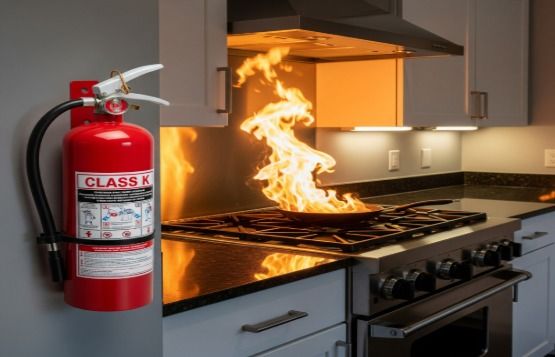

Kitchen fires are one of the most common household hazards, often starting from simple mistakes such as unattended cooking or overheated oil. Because they can escalate within seconds, prevention and quick response are essential. These practical tips will help you mitigate fire risks and stay prepared should an emergency arise.
Kitchen Fire Prevention
- Stay in the kitchen when cooking: Most kitchen fires begin when cooking is left unattended, especially on the stovetop.
- Clean grease and spills regularly: The buildup of grease and food residue on stovetops, counters, and inside ovens can ignite easily. Wipe surfaces after each use and deep-clean appliances often.
- Keep flammable items away from heat: Move paper towels, dishcloths, cookbooks, packaging, and curtains well away from the stovetop and open flames.
- Wear safe clothing: Wear short sleeves or close-fitting clothing when cooking so fabric doesn’t catch fire accidentally.
- Watch your oil temperature: Heat oil slowly and avoid letting it smoke. Smoking oil is a warning sign that it’s close to igniting.
- Keep a lid or metal tray nearby: Always cook with a lid within reach so you can quickly smother a grease fire if it starts.
- Install and maintain smoke alarms: Place alarms near, but not directly inside, the kitchen. Test them monthly and replace batteries as needed.
- Store and use fire extinguishers properly: Keep an ABC or Class B extinguisher in the kitchen, and ensure everyone in the home knows how to use it.
How to Manage Kitchen Fire
- Smother grease fires immediately: If oil catches fire, cover the pan with a metal lid or tray and turn off the heat. Never use water; it will make the flames spread.
- Use baking soda or salt for small fires: Pour it directly over the flames to smother them. Avoid using flour or sugar, as they can explode or worsen the fire.
- Use a fire extinguisher if needed: Aim at the base of the flames and use short, controlled bursts. If the fire doesn’t go out quickly, evacuate.
- Close the oven door for oven fires: If a fire starts inside the oven, keep the door shut and turn off the heat. Opening the door feeds oxygen to the flames.
- Evacuate quickly if the fire grows: Get everyone out, close the kitchen door behind you to slow the spread, and call emergency services immediately.
- Never move a burning pan: Carrying a flaming pot or pan increases the risk of spreading the fire and causing severe burns.
Conclusion
Kitchen fire safety depends on daily habits such as attentive cooking, proper kitchen cleanliness, and controlling heat properly. But knowing how to act in an emergency is just as important.