 18. September 2026
HOW TO PREVENT CURTAINS FROM COLLECTING EXCESS DUST.
Curtains can quickly collect dust because their large fabric surfaces catch airborne particles circulating through the home. Open windows, heating and cooling systems, and nearby textiles can all contribute to dust buildup.
The best way to keep dust off curtains is to reduce the amount of airborne dust, prevent dust from settling on the fabric, and remove surface particles regularly before they become embedded in the fabric.
Improve indoor air filtration
The less dust circulating through your home, the less dust your curtains are likely to collect. Check your HVAC or air-conditioner filters regularly and replace them according to the manufacturer’s recommendations. A dirty or overloaded filter can reduce airflow and filtration efficiency.
A true HEPA air purifier can also help capture airborne particles in rooms where dust accumulates quickly. Place the purifier in frequently used areas, particularly near large windows or other areas where curtains are exposed to circulating air. Keeping windows closed during windy or dusty weather can also reduce the amount of outdoor dust and debris entering the room.
Reduce static buildup
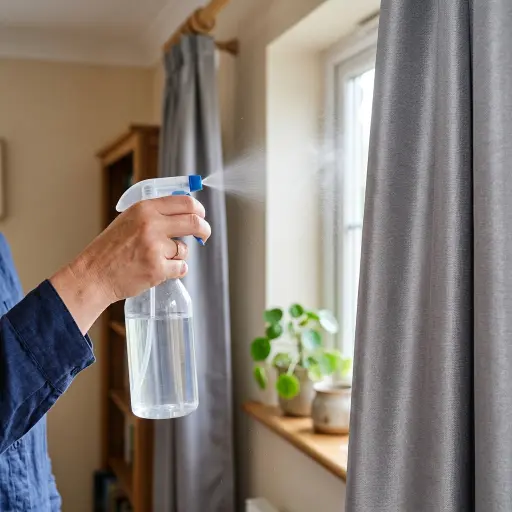
Static electricity can cause fine particles to cling more readily to some fabrics, particularly synthetic materials. You can reduce static buildup by maintaining appropriate indoor humidity and using an anti-static fabric spray when suitable for the curtain material. This can help reduce the amount of dust that sticks to the fabric.
For washable curtains, follow the manufacturer’s care instructions and consider an appropriate anti-static laundry product if the fabric allows it. For synthetic drapes, a fabric-safe anti-static spray may also help between washes.
Avoid applying products that leave a sticky or heavy residue, as this can attract and hold more dirt. Always test any product on an inconspicuous area first.

Establish a weekly maintenance routine
Regular light cleaning is easier than waiting until curtains become visibly dirty. A few minutes of maintenance each week can remove loose dust before it settles deeper into the fabric.
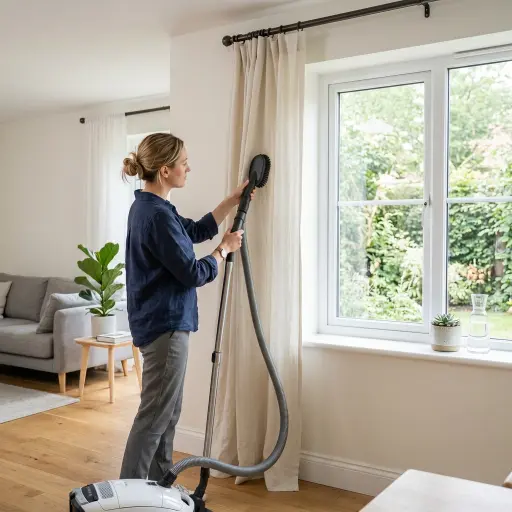
- Vacuum curtains weekly using a soft brush attachment and low suction.
- Start at the top and work downward in gentle, even strokes.
- Gently shake lightweight curtains outdoors from time to time to release loose dust, when the fabric and care instructions allow it.
- Clean curtain rods, blinds, window sills, and nearby surfaces regularly to prevent accumulated dust from settling back onto the fabric.
Choose fabrics that are easier to clean
If you are replacing your curtains, consider how easily the fabric releases dust and how much maintenance it requires. Rough, heavily textured fabrics can hold more particles within their surface than smooth fabrics.
Smooth, tightly woven materials are generally easier to vacuum and clean because loose dust is less likely to become caught in deep textures. Polyester and other smooth synthetic blends can be practical options when easy maintenance is a priority.
The curtain’s construction also matters. Deep pleats, heavy textures, and decorative details can create more areas where dust settles, so simpler designs may be easier to maintain in rooms where dust accumulates quickly.
Conclusion
Keeping dust off curtains is easier when prevention becomes part of regular household cleaning. Improve indoor air filtration, reduce static buildup where appropriate, and vacuum curtains regularly to remove loose particles before they accumulate.
Choosing easy-to-maintain fabrics can also reduce cleaning work when it is time to replace your window coverings. With consistent light maintenance, curtains can stay cleaner for longer without requiring frequent deep cleaning.
Sources