 27. June 2025
GEOTHERMAL ENERGY: A CLEAN AND SUSTAINABLE OPTION
The relentless demand for energy, coupled with the urgent realities of climate change, compels us to seek powerful, cleaner alternatives. Beneath our feet lies an immense, often-overlooked resource: geothermal energy, the natural heat emanating from deep within the earth. While its potential has been recognized by scientists and engineers for decades, it has yet to secure its place as a mainstream global energy solution since antiquity.
Public demand, market shifts, and growing interest from energy industry shareholders themselves have driven a remarkable surge in investment and viability for all renewable energies. Indeed, in the past year alone, the term “geothermal” has garnered more widespread discussion than ever before, signaling a new era for this technology. Geothermal energy, it seems, is finally having its well-deserved moment. This article will explore why geothermal energy is a powerful, clean, and sustainable option that deserves a prominent role in our future energy landscape.
What Exactly is Geothermal Energy?
Geothermal energy fundamentally taps into the earth’s immense natural heat, found far beneath the surface. This heat originates from two primary sources: the residual heat from the planet’s initial creation and the continuous decay of radioactive elements like uranium, thorium, and potassium within the Earth’s core and crust. These processes fuel the geothermal gradient, causing temperatures to rise significantly with depth, ranging from about 15°C at the surface to a scorching 4,000°C at the core.
Fortunately, the subsurface also holds vast amounts of water, which acts as a convenient medium for extracting and transferring this heat. In most parts of the world, the general rule is that the deeper you go, the hotter it gets. However, in geologically active regions, particularly those with volcanic or tectonic activity (hot spots, fumaroles, geysers, and natural cracks), nature has created pathways that bring significantly higher temperatures much closer to the surface. These areas, like the crustal region of the Earth (0-100 km deep), can host reservoirs of hot water and steam reaching up to 1000°C, making them prime locations for geothermal exploration.
How Geothermal Energy is Harnessed?
Geothermal energy can be utilized in two primary ways: for electricity generation and direct heating/cooling applications.
A. For Electricity Generation:
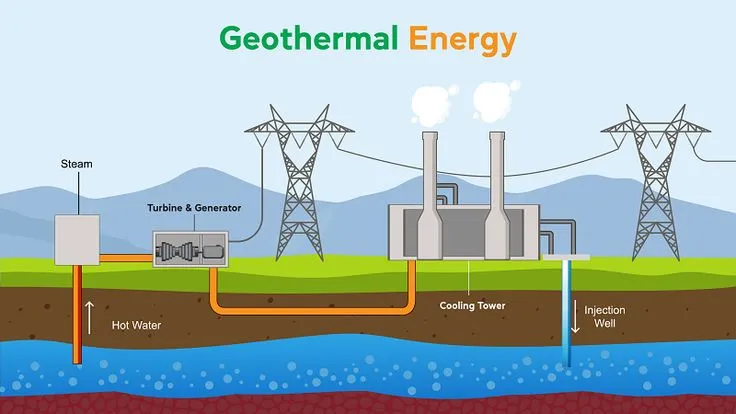
Geothermal power plants convert the Earth’s heat into electricity using different methods:
- Dry Steam Plants: Utilize direct steam from underground to spin turbines.
- Flash Steam Plants: Pump superheated water, which “flashes” into steam upon reaching the surface to drive turbines. These are the most common.
- Binary Cycle Plants: Employ a secondary fluid with a lower boiling point, heated by geothermal water, to vaporize and drive a turbine. This closed-loop system is ideal for lower-temperature resources, is fast-growing, and uses less water.
B. For Direct Use & Heating:
Geothermal heat can be used directly for various purposes:
- Geothermal Heating Systems (District Heating): Hot water from geothermal reservoirs is piped directly to provide space heating for buildings, entire districts (e.g., Reykjavik, Iceland), greenhouses, and industrial processes, typically for temperatures below 150°C.
- Geothermal Heat Pumps (Ground-Source Heat Pumps): These systems leverage the Earth’s stable underground temperature (around 25°C) to efficiently heat and cool buildings. They offer significant energy savings (30-40% on bills) and are viable almost anywhere.
The Clean and Sustainable Advantages
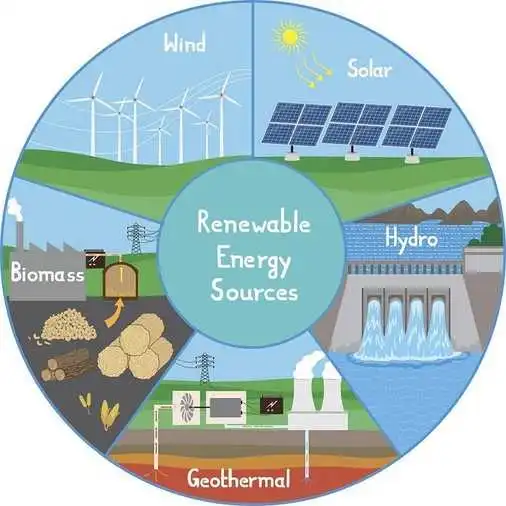
Geothermal energy stands out as a highly attractive renewable resource due to its unique benefits:
- Low Emissions: Geothermal power plants release only a fraction of the carbon dioxide compared to fossil fuel plants. They produce very little nitrous oxide or sulfur gases, significantly contributing to the reduction of greenhouse gas emissions and improving air quality. Cities like Reykjavik, largely powered by geothermal, are considered among the cleanest in the world.
- Renewable & Sustainable: The heat stored within the Earth’s crust is immense and continually replenished by the planet’s core and radioactive decay. The water used in geothermal processes is typically reinjected back into the ground after its heat is used, making it an endless and inexhaustible source of energy on a human timescale.
- Reliable Baseload Power: Unlike intermittent renewables such as wind and solar, geothermal plants can run consistently, 24 hours a day, 365 days a year. This provides reliable, continuous “baseload” power, a crucial advantage for national grids.
- Small Land Footprint: Geothermal facilities generally require less land per unit of energy produced compared to many other power generation methods.
- Reduced Water Consumption: Modern binary cycle plants operate in a closed-loop system, which significantly minimizes water consumption compared to other thermal power plants.
- Local Economic Benefits: Developing geothermal resources creates jobs in drilling, construction, and plant operation and maintenance, fostering energy independence for nations. Its local generation also saves on processing and transportation costs compared to other types of fuel.
- Contribution to Decarbonization: Geothermal power is a key tool in weaning economies off fossil fuel dependence, directly contributing to reducing carbon emissions and combating climate change.
Conclusion
Embracing this powerful underground resource is essential for a cleaner, more secure energy landscape for generations to come. With technological advancements and growing global attention, geothermal energy is no longer just a hidden potential; it is a rising force in the transition to a sustainable energy future.