 30. May 2025
Menstrual health 101: A Comprehensive Guide for teens.
Menstrual health is defined as a state of complete physical, mental, and social well-being related to the menstrual cycle, beyond just the absence of disease or infirmity. Achieving menstrual health requires several key elements. These include access to information about the menstrual cycle and self-care, availability of materials, facilities, and services for menstrual hygiene, diagnosis and treatment for menstrual-related discomforts and disorders, a supportive environment that minimizes psychological distress, and the freedom to fully participate in all aspects of life. This article will delve into each of these essential components and their significance for overall menstrual health.
People (women, girls) experience menstruation differently, shaped by their lived experiences, needs, and circumstances. Disability, age, place of residence, homelessness, migration, disaster, insecurity and displacement, religion, ethnicity, caste, culture, and many other factors influence menstrual experiences and must be considered to adequately meet menstrual health needs.

Information about the menstrual cycle and self-care
Women, girls who experience a menstrual cycle must have access to accurate biological and practical information to ensure menstrual health; this information is best before menarche. Accurate information can dismantle misconceptions and taboos that compromise menstrual health. See our article about myths of puberty.
The series of changes a female goes through each month to prepare for possible pregnancy is known as the menstrual cycle. To measure the menstrual cycle, count from the first day of your period to the day before the next period. There are 4 phases of the menstrual cycle, they are:
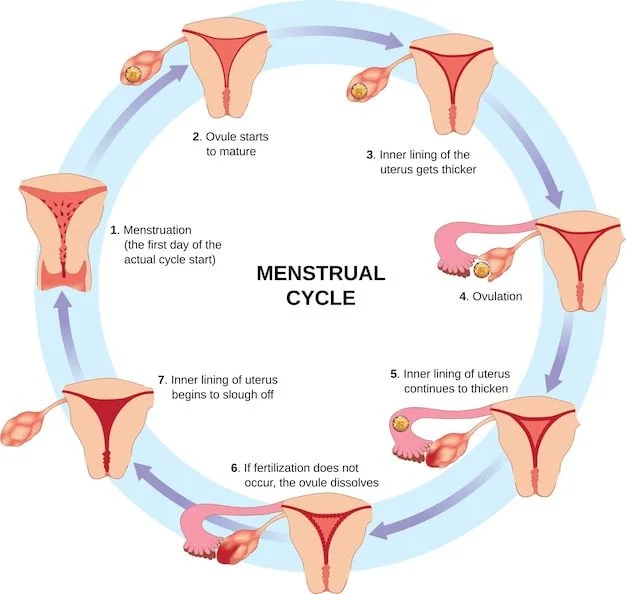
- Period (menstruation): This is when the uterus lining sheds and flow out of your vagina that contains blood, mucus and cells. The average length of the period is 3 to 7 days.
- Follicular Phase: The lining of the uterus thickens, and follicles grow on the surface of the ovaries. Begins on the first day of the period and lasts up to 13 to 14 days.
- Ovulation: 2 weeks before the next period, the ovary releases a mature egg.
- Luteal Phase: After ovulation, the mature egg travels through the fallopian tubes to your uterus, and this is when you start menstruation. ( Repetition of phases).
To know more about self-care, read our article on puberty hygiene.
Materials, facilities, and services to care for the body during menstruation
Select care practices that are preferable, comfortable, and affordable, practices that support hygiene and minimize the risk of infection or harm, and ensure the level of privacy desired, away from unwanted observation or disturbance. Materials needed include pads (in various types: disposable pads, tampons, menstrual cups, menstrual discs), and period underwear. Facilities needed include clean toilets, trash receptacles, and handwashing facilities. Services include access to clean water, body wash and soap, deodorant, shampoo, and pain relief. These care needs are relevant throughout the day and night, both at and away from the home.
Diagnosis, care, and treatment for menstrual discomforts and disorders
Timely diagnosis and support for disorders and discomforts require those experiencing a menstrual cycle to be able to identify menstrual symptoms that are abnormal for their body. Menstrual disorders are problems that affect a woman’s normal menstrual cycle.
These menstrual disorders include:
- Dysmenorrhea (painful cramps)
- Menorrhagia (heavy bleeding)
- Metrorrhagia (abnormal bleeding)
- Amenorrhea (absence of menstruation)
- Oligomenorrhea (infrequent menstruation)
- Hypomenorrhea (light menstruation).
A range of disorders of the menstrual cycle has significant implications for physical, mental, and social well-being. The treatment for menstrual disorders includes Acetaminophen (Tylenol) or nonsteroidal anti-inflammatory drugs (NSAIDs), oral contraceptives or Progesterone injections (Depo-Provera), endometrial ablation, and hysterectomy.
Please note consult a medical care professional before taking any medication.
A positive and respectful environment
For individuals to attain and maintain menstrual health, a positive and respectful environment is needed across all levels, including the interpersonal, community, and societal levels. This means resources and support must be required from a variety of sources, such as family members, caregivers, the community, educational institutions, and the government, to equip individuals to care for their bodies with confidence throughout their menstrual cycle.
Freedom to participate in all spheres of life
Social well-being, as part of menstrual health, requires that individuals are free to choose to participate in civil, cultural, economic, social, and political life without restrictions or exclusions related to their menstrual cycle. For teens, the right to choose to participate in activities in school, at home, or anywhere they find themselves during their menstrual cycle, as some activities can lead to inducing pain and stress.
Conclusion
Menstrual health is important for protecting reproductive health as well as preventing infections, including bacterial vaginosis and urinary tract infections. By following this guide, navigating the phases of the menstrual cycle won’t be a challenge. Share and comment. See our article on puberty.