 19. June 2026
HOW TO REMOVE CEMENT STAINS FROM NEWLY INSTALLED TILES.
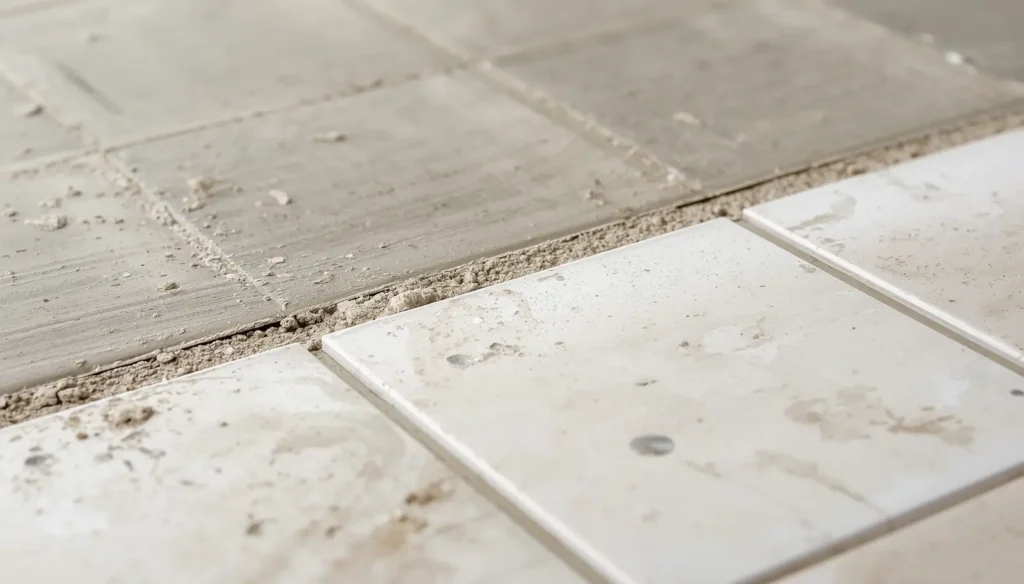
Cement stain is a prevalent problem that arises due to the application of mortar, grout, or tile glue after the tiling process. It results in the formation of white or grey deposits that stick to the tile surface very tightly. Cement stains will make the tile look dull and could even ruin porous tiles over time if left untreated. It is important to learn the procedure for removing cement stains from different types of tiles as they react differently to cleaning products.
Materials needed to remove cement stains
- Soft or stiff-bristle brush (selected based on tile type)
- Vacuum cleaner or broom
- White vinegar or diluted commercial acidic cleaner
- Plastic or rubber spatula
- Non-abrasive sponge
- Clean cloth or mop
- Bucket of warm water
- Protective gloves and basic safety gear
Step-by-step guide to remove cement stains from tiles
Step 1: Vacuuming first
To begin, sweep or vacuum the whole tiled area to eliminate any loose cement dust or other sand particles from the tiles before applying any liquids. Otherwise, there will be an increased likelihood of scratches on the tiles during cleaning.
Step 2: Apply vinegar solution pre-treatment
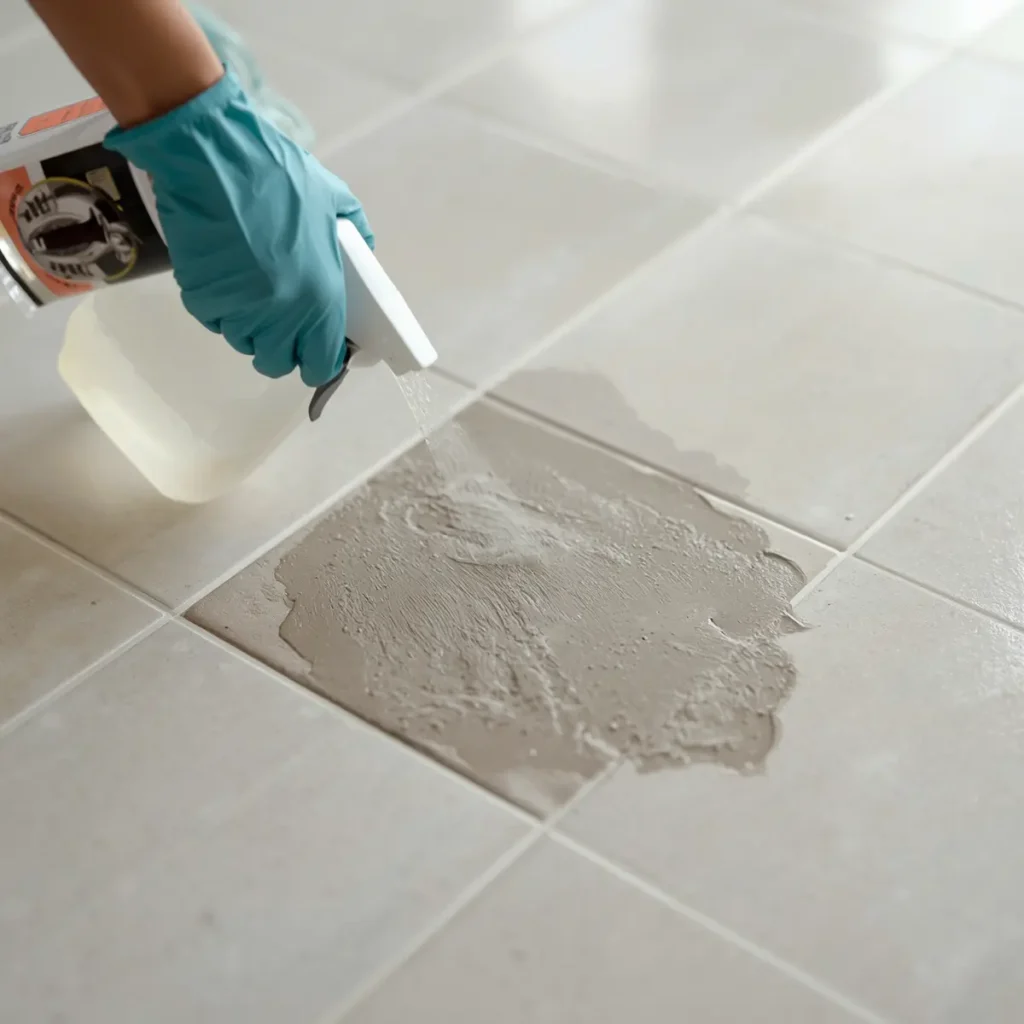
Mix three parts warm water with one part white vinegar and apply the solution generously over the stained areas. Allow it to sit for 10–15 minutes. This helps soften cement deposits by breaking down mineral bonds, making the hardened residue easier to loosen and remove without excessive force.
Step 3: Carefully remove hardened residue
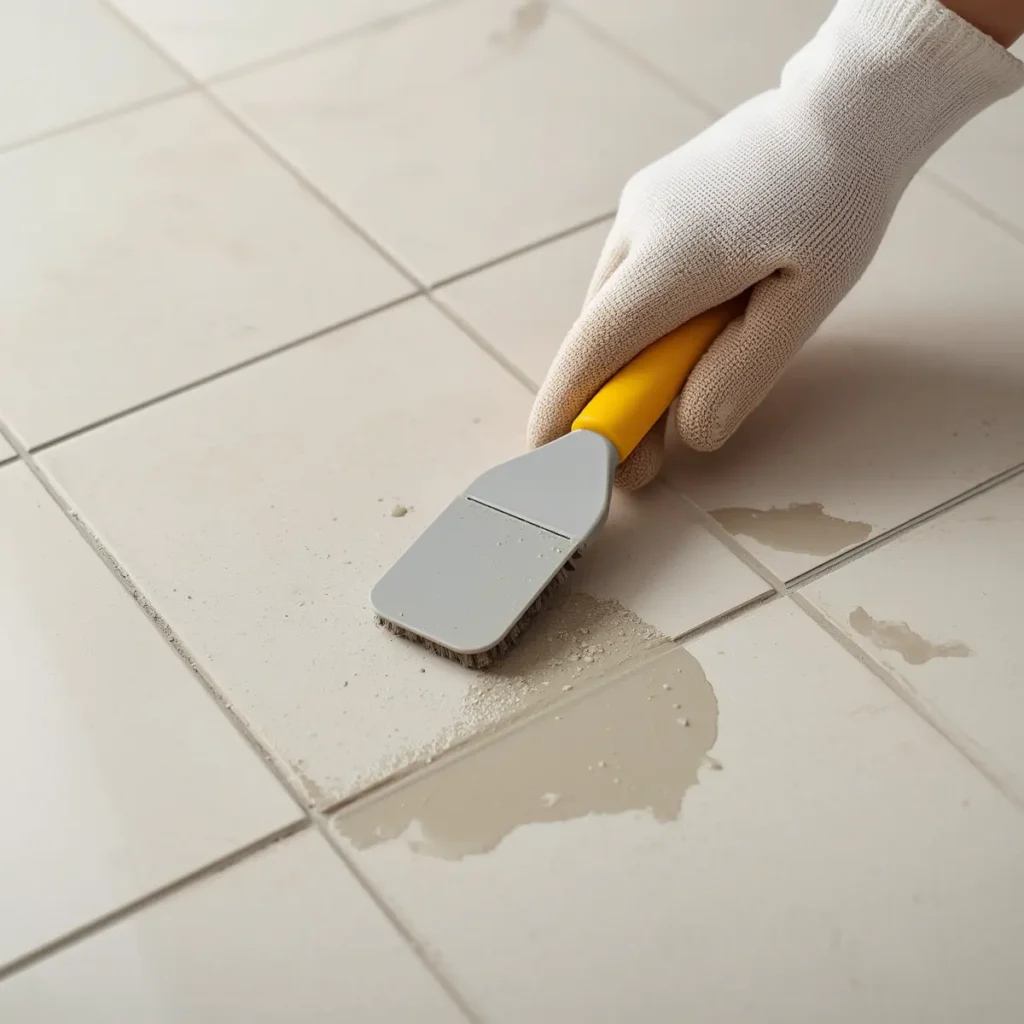
Apply pressure using a plastic or rubber scraper to remove cement deposits that have become soft. Make sure that the tool is used at an angle in order to prevent scratches on the surface of the tiles.
Step 4: Scrub remaining stains
Apply more of the vinegar solution if the surface starts drying out, then continue scrubbing the remaining residues. For ceramics and porcelain tiles, use a harder brush. Gently scrub in circular motions to remove the cement.
For terracotta, natural stone, and other porous tiles, avoid acidic cleaners whenever possible, as even diluted vinegar can cause etching or surface deterioration. Instead, use a pH-neutral cleaner and a soft sponge, following the manufacturer’s recommendations.
Always test the cleaning solution on a small, hidden area first to avoid surface damage or discoloration.
Step 5: Rinse and dry
Clean the whole surface thoroughly using water in order to rinse out all the loose cement particles and the acidic solution from it. Dry the tiles immediately using a clean cloth or mop.
Alternative methods for stubborn cement stains
1. Lemon juice and baking soda paste: Mix lemon juice with baking soda to form a thick paste. Apply it directly to stubborn stains and allow it to sit for about 10 minutes before scrubbing gently and rinsing. This method is effective for moderate cement deposits when vinegar alone is not strong enough, while still being relatively safe for most tile surfaces.
2. Commercial cement removers: Specialized cement removers, typically formulated with phosphoric or diluted hydrochloric acid, are highly effective for hardened or aged cement deposits. These products should always be used according to manufacturer instructions and with proper ventilation. After use, rinse thoroughly with clean water to neutralize and remove any chemical residue.
Safety precautions when removing cement stains from tiles
- Ensure proper ventilation when using vinegar or chemical cleaners
- Wear protective gloves to prevent skin irritation or chemical exposure
- Do not mix acidic cleaners with bleach or ammonia under any circumstances
- Avoid prolonged contact between acidic solutions and tile surfaces
- Rinse thoroughly after cleaning to fully neutralize chemical residues
- Keep cleaning solutions away from children and pets
Conclusion
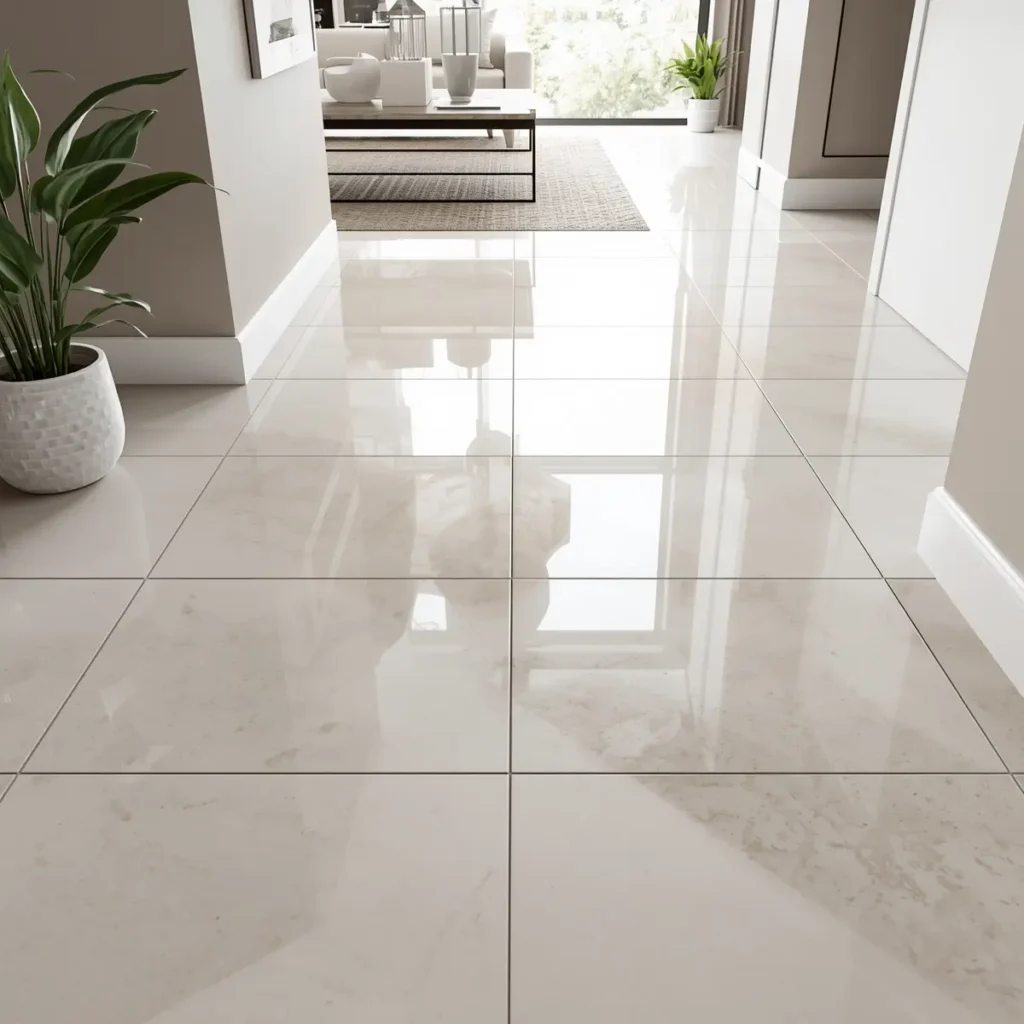
Removing cement stains from newly installed tiles requires the right combination of timing, technique, and cleaning agents. When handled correctly, even hardened cement residue can be safely removed without damaging the tile surface or finish.
Sources