




Mobility aids such as canes, walkers, rollators, and wheelchairs help people move safely, reduce pain, and stay independent. However, using the wrong mobility aid or using it incorrectly can increase the risk of falls and injury. To stay safe, choose the right mobility aid, make sure it fits properly, learn how to use it correctly, and check it regularly to ensure it remains in good condition.
1. Choose the right mobility aid
Not every mobility aid is suitable for every person.
- A cane is best for people who need a small amount of support because of mild weakness, pain, or balance problems.
- A standard walker provides more support and stability for people who have difficulty balancing or putting weight on one or both legs.
- A rollator (wheeled walker) allows easier movement because it has wheels, but it provides less stability than a standard walker.
- A wheelchair is appropriate for people who cannot safely stand or walk because they cannot bear enough weight through their legs.
Avoid choosing a mobility aid on your own. A mobility aid that provides too little support can increase your risk of falling. One that provides more support than you need may reduce your activity level and weaken your muscles over time.
2. Adjust the height correctly
Canes and Walkers: Stand upright with your shoulders relaxed and let your arms hang naturally by your sides. The top of the cane or walker handle should be level with your wrist, where your hand meets your forearm. When you hold the handle, your elbow should bend slightly about 15 to 20 degrees.
If the handle is too low, you will bend forward while walking, which can strain your back and affect your balance. If the handle is too high, you will have difficulty putting enough weight through your arms, making the mobility aid less stable.
Wheelchairs: Sit comfortably in the wheelchair. The feet should rest flat on the footrests or on the floor if appropriate, with your knees bent at about a 90-degree angle. Your armrests should support your forearms comfortably without forcing your shoulders upward. A wheelchair that does not fit properly can cause discomfort, pressure sores, and strain on your joints.
3. Use the correct technique
Using a Cane: Hold the cane in the hand opposite your weaker or injured leg. Move the cane forward at the same time as your weaker leg. Once both are firmly on the ground, step forward with your stronger leg. Always place the cane securely on the ground before putting your weight on it. Keep your head up and look ahead while walking instead of looking down at your feet.
Using a Standard Walker: Lift the walker and place it about one step in front of you. Do not place it too far away. Make sure all four legs of the walker are firmly on the ground before taking a step. Step forward with your weaker leg first. Then move your stronger leg into the walker. Use your arms to support part of your body weight as you walk.
Do not slide or push the walker while you are walking, and do not move your feet while lifting the walker. These mistakes can reduce your balance and increase your risk of falling.
Using a Rollator: Push the rollator forward as you walk. Because it has wheels, there is no need to lift it. When you want to sit down or stand up, always lock the brakes first. To stand, push up using the chair’s armrests instead of pulling on the rollator. Pulling on the rollator may cause it to roll away unexpectedly.
Using a Wheelchair: Before getting into or out of a wheelchair, move it as close as possible to the chair, bed, or toilet you are transferring to. Lock both wheels before beginning the transfer. Use the armrests and your upper body to help support your weight as you move. If you use a manual wheelchair, make sure you have enough upper body strength to move it safely. If you do not, ask someone to assist you.

4. Inspect the mobility aid regularly
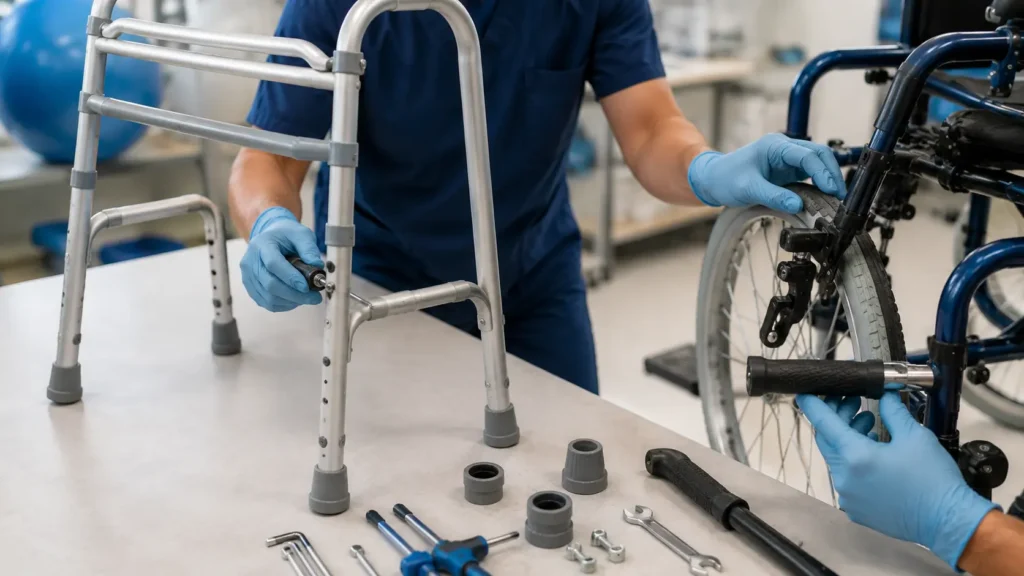
Check the mobility aid often to make sure it is safe to use. Check for:
- Bent, cracked, or rusted frames
- Loose or missing screws and bolts
- Loose or damaged hand grips
- Worn rubber tips on canes or walkers that no longer grip the floor properly
- Wheels that do not roll smoothly
- Brakes that do not lock securely
- Whether the mobility aid still meets the manufacturer’s recommended weight limit for your needs
Replace damaged or worn parts immediately. Do not continue using a mobility aid that is damaged or unstable.
5. Reduce fall Hazards at home
The home should be as safe as possible for walking with a mobility aid. Remove loose rugs, electrical cords, and clutter from walkways. Keep hallways, entrances, and stairways well-lit so you can clearly see where you are walking. Be extra careful on wet floors, uneven ground, or slippery surfaces. Most canes and standard walkers are not designed for use on stairs. If you must use stairs, speak with a physiotherapist about safer options such as handrails, ramps, or stairlifts. Learn the correct technique before attempting stairs on your own.
6. Wear supportive footwear
Always wear well-fitting, closed-toe shoes with non-slip soles when using a mobility aid. Avoid loose slippers, flip-flops, high heels, or walking in socks because they increase your risk of slipping.
7. Be mindful of uneven strength
If one leg is stronger than the other, turn toward your stronger side whenever possible. Turning this way provides better support, improves balance, and helps reduce the risk of losing your footing.
8. Schedule regular professional reviews
The mobility needs may change over time because of age, illness, injury, or recovery. Arrange regular reviews with a physiotherapist or occupational therapist. They can check that your mobility aid still fits correctly, watch how you walk, recommend adjustments if needed, and advise you if it is time to replace your mobility aid.
Conclusion
Safely using a mobility aid involves more than choosing the right one. Proper fitting, correct technique, regular maintenance, and a safe environment all work together to reduce the risk of falls and improve mobility. Regular guidance from a qualified healthcare professional helps ensure your mobility aid continues to provide safe, reliable support as your needs change.
Sources: