



The container you choose can make a big difference when reheating food in a microwave. Glass, ceramic, certain plastics, and silicone can handle microwave heating, while metal, foam, melamine, and some other materials can melt, crack, or cause a spark. Knowing what a container is made of makes it easier to decide whether it belongs in the microwave, especially when dealing with takeaway packs, food-storage containers, and everyday dishes.
This guide explains which common container materials can be microwaved, which ones to avoid, and the microwave myths that can lead to unsafe choices.
Which containers can go in the microwave?
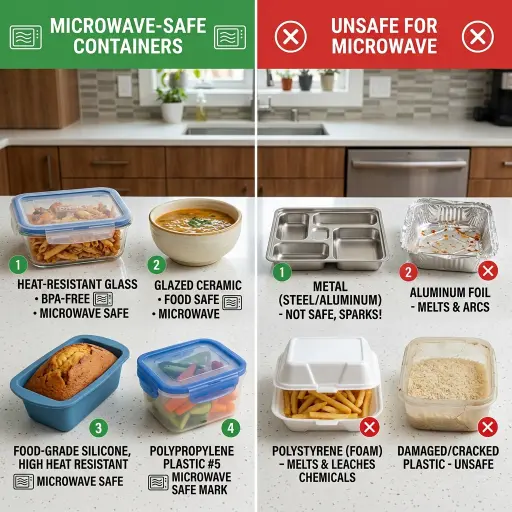
The safest microwave containers are made from materials that can tolerate heat without melting, cracking, or causing a spark:
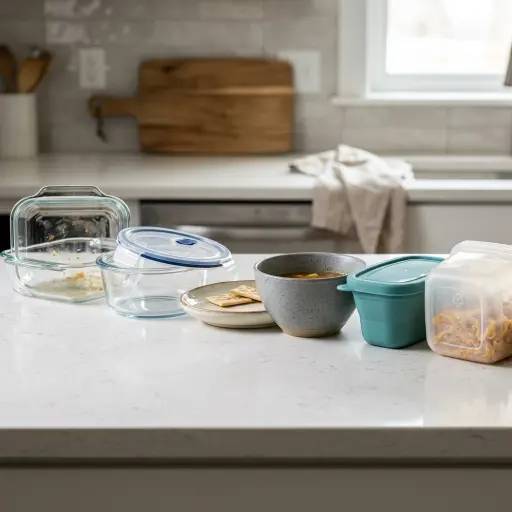
1. Borosilicate glass: Borosilicate glass is designed to handle significant temperature changes, making it a good choice for microwave cooking and reheating. It is commonly used for oven-safe glass baking and food-storage dishes. You may recognize it from clear, glass baking dishes and food containers designed for both storage and heating.
2. Tempered glass: Tempered glass is another common material used for microwave-safe food containers. It has been heat-treated to make it stronger and more resistant to thermal stress than ordinary glass.
3. Ceramic, stoneware, and porcelain: Ceramic, stoneware, and porcelain plates and bowls are generally suitable for microwave use. These materials are commonly used for everyday dishes and can handle microwave heating. However, dishes with metallic finishes are a different matter. Gold or silver borders, metallic patterns, and metal decorations can spark in a microwave, so those dishes should stay out.
4. Polypropylene plastic: Polypropylene, identified by the recycling number 5, is one of the plastics commonly used for food containers that are designed to withstand heat. You will often find it in reusable food-storage containers and some takeaway containers.
A number 5 marking is useful for identifying the plastic, but it does not automatically mean every polypropylene product is suitable for every type of heating. Follow any use instructions provided with the container.
5. Food-grade silicone: Food-grade silicone designed for cooking can be used in the microwave. It is flexible, heat-resistant, and commonly used for microwave-safe food containers, baking molds, covers, and storage products.
6. Microwave-safe paper and cardboard: Some paper plates, paper towels, parchment paper, and cardboard food containers are made for microwave heating. This is particularly common with takeaway packaging. If the container is specifically made for microwave use, it can usually be heated as directed. However, do not assume that every paper or cardboard container is suitable. Some contain coatings, adhesives, plastic linings, or metal components.
Containers you should keep out of the microwave
1. Metal: Metal containers, stainless-steel lunch boxes, metal bowls, and metal utensils should generally stay out of the microwave. Metal reflects microwave energy and can produce sparks or arcing.
2. Aluminum takeaway trays: Many takeaway meals come in aluminum trays. These should not automatically go straight into the microwave. Unless the tray specifically states that it is suitable for microwave use and your microwave’s instructions allow it, transfer the food to a microwave-safe glass, ceramic, or suitable plastic container.
3. Melamine: Melamine plates and bowls can look similar to ordinary ceramic dishes, but they are not intended for microwave heating. They are commonly used as lightweight, durable dinnerware, particularly in homes with children, but they should be used for serving rather than microwave cooking or reheating.
4. Polystyrene and foam containers: Foam takeaway containers are commonly made from expanded polystyrene. They can soften, deform, or become damaged when heated. Do not microwave them unless the specific container is designed and labeled for microwave use.
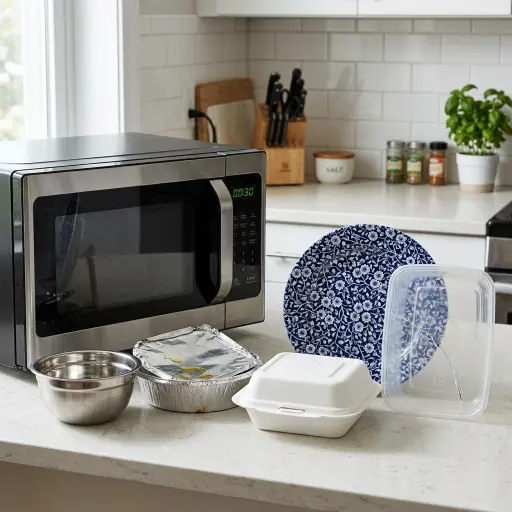
5. Plastic containers without heat resistance: Not all plastic containers are designed to handle heat. Thin disposable containers, some yogurt tubs, margarine containers, and other packaging may be intended only for cold storage or serving. If the container is not designed for heating, move the food to glass, ceramic, or another suitable microwave container before reheating.
6. Damaged containers: Cracked, chipped, badly scratched, or warped containers should not be microwaved. Damage can weaken the container and increase the chance of breaking when it is heated.
How to recognize a microwave-safe container
Before placing any container in the microwave, check for a microwave-safe label or symbol, usually found on the bottom of the container. This may appear as a microwave icon with wavy lines or a statement such as “microwave safe.” Containers made from microwave-safe glass, ceramic, or certain plastics are designed to withstand heat without releasing harmful chemicals or becoming damaged.
Common microwave myths
1. Myth: A spoon is safe because it is small
A spoon is still metal. Do not leave a metal spoon in the microwave unless the microwave manufacturer’s instructions specifically allow it. Metal can cause arcing or sparking under certain conditions.
2. Myth: Microwaves make food radioactive
They do not. Microwave ovens use non-ionizing electromagnetic energy to heat food. The energy heats the food but does not make it radioactive.
3. Myth: Microwave-safe means the container cannot get hot
A microwave-safe container can still become hot. Food heats up inside the container, and that heat can transfer to the glass, ceramic, plastic, or other material holding it. Use care when removing heated containers from the microwave.
Quick guide to common container materials
| Material | Microwave? | Common Examples |
| Borosilicate glass | Yes | Glass food-storage and baking dishes |
| Suitable tempered glass | Yes | Heat-resistant food containers |
| Ceramic/stoneware/porcelain | Generally yes | Plates, bowls, mugs |
| Polypropylene (#5) | Commonly suitable when designed for heating | Food-storage and takeaway containers |
| Food-grade silicone | Yes, when designed for cooking | Food containers, molds, covers |
| Microwave-safe paper/cardboard | Yes, for approved products | Some plates and takeaway boxes |
| Metal | No | Steel containers, metal bowls |
| Aluminum | Generally no | Foil and aluminum takeaway trays |
| Melamine | No | Lightweight dinnerware |
| Polystyrene/foam (#6) | Generally no | Foam takeaway containers |
| Ordinary thin glass | Avoid | Drinking glasses |
| Crystal/decorative glass | Avoid | Decorative or crystal tableware |
| Damaged containers | No | Cracked, chipped, and warped containers |
Conclusion
Heat-resistant glass, suitable ceramic, polypropylene food containers, and food-grade silicone are common choices for microwave heating. Metal, aluminum, melamine, foam, unsuitable plastics, ordinary thin glass, and damaged containers should generally stay out. The next time you receive takeaway food or reach for a container in your kitchen, look at what it is made of. The appearance of a container can be misleading. What matters most is the material it is made from, as different materials react differently when exposed to microwave heat.
Sources