


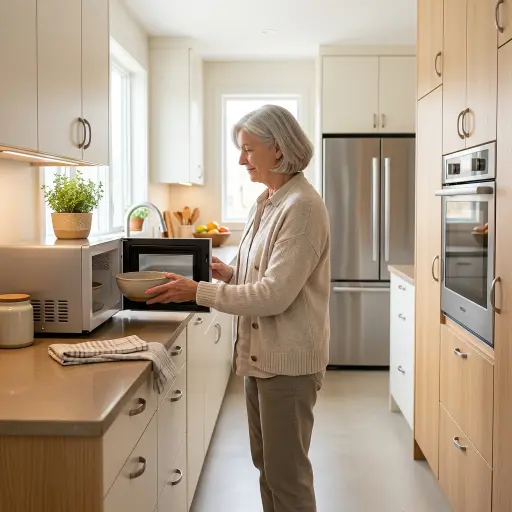

Maintaining independence in the kitchen can become challenging when appliance controls require a strong grip, precise finger movements, or good eyesight. Arthritis, reduced muscle strength, and age-related vision changes can make everyday cooking tasks more difficult and increase the risk of accidents.
Simple modifications, ergonomic adjustments, and accessible appliance choices can make meal preparation safer and more comfortable for older adults without requiring a complete kitchen renovation.
Ways to make kitchen appliances easier for older adults
1. Adding tactile markers and high-contrast labels: Digital keypads, smooth glass panels, and poorly marked controls can be difficult to use for older adults with reduced vision or limited finger sensitivity. Tactile markers and clearer labels make essential settings easier to identify.
Several simple modifications can improve the visibility and usability of existing appliance controls:
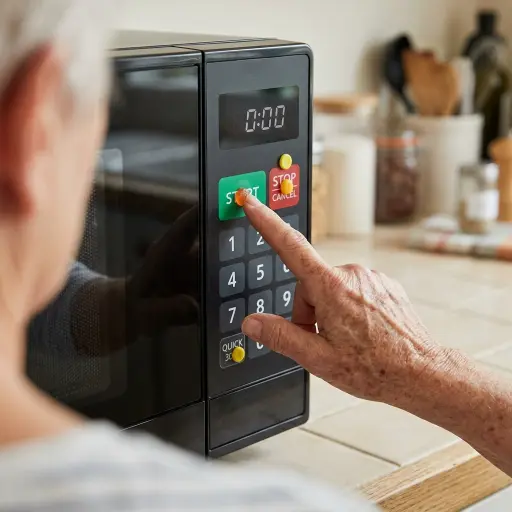
- Silicone bump dots: Apply self-adhesive, raised silicone dots to frequently used buttons, such as a microwave’s 30-second start button or a preferred stove setting. The raised texture helps users locate controls by touch.
- High-contrast labels: Use clear, large lettering with strong contrast against the background to make temperature readings, dial markings, and buttons easier to distinguish.
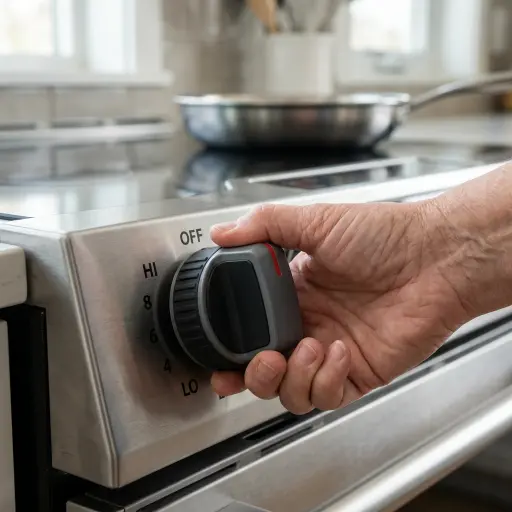
- Tactile dial grips: Add rubberized grips to small or slippery appliance knobs. These provide extra leverage and help prevent fingers from slipping when adjusting settings.
Before applying markers, ensure they do not cover important labels, interfere with controls, or sit near surfaces that become hot.
2. Positioning appliances at comfortable heights
Reaching overhead or bending to access low appliance doors can strain the back and increase the risk of losing balance. Placing frequently used appliances within a comfortable reach reduces unnecessary movement.
The following adjustments can improve kitchen accessibility:
- Microwaves and countertop appliances: Place microwaves at a comfortable height to avoid lifting hot food overhead. Countertop models offer easier access, while microwave drawers may require bending.
- Ovens and refrigerators: Place wall ovens at a comfortable height, and side-opening doors reduce bending and reaching over hot surfaces. French-door refrigerators with pull-out freezer drawers can keep everyday items within easy reach. Choose layouts and handles that suit the user’s mobility and grip.
3. Upgrading to accessible appliance controls
When evaluating appliance controls, prioritize features that reduce the need for precise finger movements and excessive force:
- Front-mounted controls: Choose ranges and cooktops with front-mounted controls to avoid reaching across hot burners or boiling pots. Check that the controls cannot be activated accidentally while moving around the kitchen.
- Rocker switches and lever handles: Wide paddle switches and lever-style controls are often easier to operate than small switches or round knobs because they require less precise finger movement.
- Touch-sensitive and smart controls: Soft-touch panels, voice-activated features, and automatic shut-off functions can simplify appliance operation. However, touchscreens may be difficult for people with reduced vision or limited familiarity with digital interfaces. Choose controls that are easy to identify and operate consistently.
When selecting an appliance, test its controls where possible. A feature is only useful if the person can operate it comfortably and reliably.
4. Choosing safer cooking technologies
Consider these appliance options to improve kitchen safety:
- Induction cooktops: Heat compatible cookware directly, reducing residual surface heat compared with conventional electric cooktops. Pan detection and automatic shut-off add protection.
- Hot water dispensers: Reduce the need to lift heavy water containers. Choose models with temperature controls and safety locks to minimise scalding risks.
Clear controls, stable surfaces, and accessible placement remain essential for safe use.
Conclusion
Making kitchen appliances easier for older adults to use can be as simple as adding tactile markers, improving labels, or adjusting appliance placement. When replacing appliances, prioritize accessible controls and safety features that support comfort and independence. What changes have made your kitchen safer and easier to use? Share your thoughts in the comments!
Sources: