


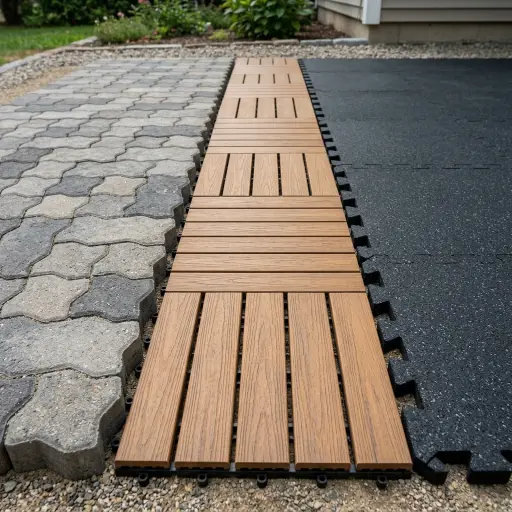

Outdoor interlocking floors can be prone to dirt. Regular cleaning will help keep the tiles and pavers looking their best.
Essential tools and materials
Before cleaning, gather the following supplies:
- Stiff-bristled outdoor broom: Removes loose dirt, leaves, sand, and other debris.
- Garden hose with a spray nozzle: Rinses away dirt and cleaning solution without excessive water pressure.
- Mild detergent or pH-neutral cleaner: Cleans surfaces without exposing them to harsh chemicals.
- Soft nylon scrub brush: Removes stubborn dirt and stains from textured surfaces and grooves.
Step-by-step cleaning process
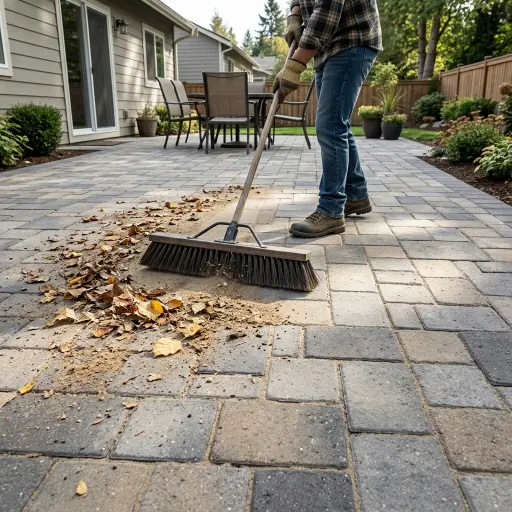
1. Remove loose dirt
Move outdoor furniture, potted plants, and other objects off the floor. Using a stiff-bristled broom, sweep across the whole floor to remove any leaves, sand, twigs, and loose dirt.
2. Clean joints
Check any gaps between the interlocking tiles/pavers for any dirt, weeds, or organic matter and carefully clear them.
3. Create a cleaning solution
Using warm water and a mild detergent or neutral PH cleaner, create a cleaning solution, following the manufacturer’s instructions. Avoid using strong acidic or petroleum-based solvents.
4. Clean floor
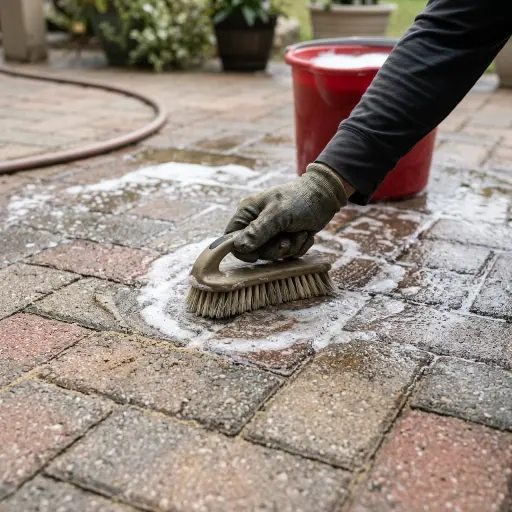
Using a mop, sponge, or soft brush, use the cleaning solution to clean the floor. Use in small sections and pay extra attention to any stained areas or areas with a rough texture. Also pay attention to any grooves where dirt may build up. Use gentle pressure.
5. Rinse
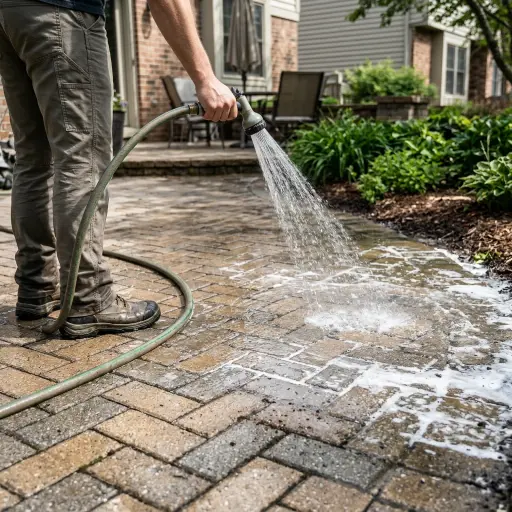
Use a clean hose to rinse the floor. This removes any remaining dirt and detergent. If there is still any soap residue left on the floor, it may leave it feeling slippery and cause it to attract more dust.
6. Allow the floor to dry
Leave the floor to fully dry. Once it’s dry, you can place your furniture back and allow heavy use. Make sure there is no water pooling underneath or between the tiles.
Material-specific cleaning and maintenance
Different interlocking floor surfaces will need different care when cleaning:
- Interlocking concrete pavers: After deep cleaning, check the joints and top up the jointing sand if needed. Try not to put high-pressure water into the joints.
- Composite interlocking tiles: Avoid using a metal or harsh brush. A soft nylon brush is best. If possible, follow the manufacturer’s cleaning recommendations.
- Interlocking rubber tiles: Avoid using too much water, especially if the tiles are over an impermeable surface. This can cause damp and mould build-up under the tiles.
Conclusion
It is important to use cleaning methods that are suitable for your interlocking floor. Avoid using very high-pressure water, strong chemicals, and harsh cleaning accessories, which can cause damage to your tiles and leave weak interlocking joints.
What type of interlocking outdoor floor do you have, and what cleaning challenge are you facing? Drop a comment below.
Sources: