


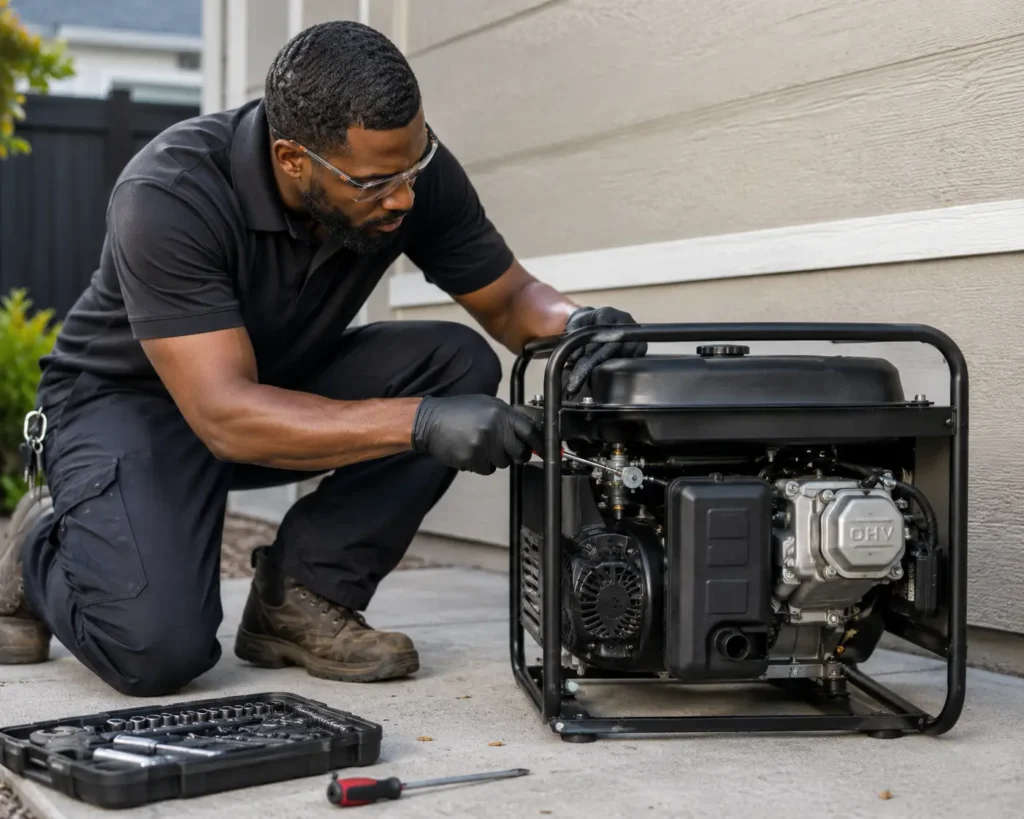

A generator that fails during an outage isn’t just an inconvenience. It can shut down a job site or stall a mobile clinic. Most of these failures trace back to the same root cause: skipped or inconsistent maintenance.
The good news is that generator upkeep isn’t complicated. It comes down to a handful of routines: checking fuel and fluids, inspecting connections, running the unit regularly, and keeping records, all performed on a schedule that matches how hard the generator actually works.
Why regular generator maintenance matters
Generators are often built to run occasionally as backups for outages or short-term jobs. But when a business depends on one daily, whether for primary power at a remote site or backup power for critical operations, irregular use can actually accelerate wear if maintenance isn’t adjusted to match.
Skipping maintenance creates risk in several ways:
- Unreliable starts. A weak battery, clogged filter, or degraded fuel can prevent a generator from starting exactly when it’s needed.
- Shorter equipment life. Unchecked wear, contamination, and carbon buildup shorten the lifespan of engines and fuel systems.
- Higher repair costs. Small issues like a fraying belt or a leaking hose are inexpensive to fix early but expensive once they cause secondary damage.
- Safety and environmental exposure. Fuel leaks, faulty wiring near fuel lines, and undetected corrosion create fire and spill risks.
- Voided warranties. Manufacturers and insurers typically require documented service history to honor a warranty claim.
Build a Generator Maintenance Checklist You Can Stick To
Manufacturer manuals usually recommend service every 200 to 500 running hours, but that guidance assumes light, occasional use. Actual intervals should shift based on how often the generator runs and where it operates. A unit running 40 hours a week needs more frequent attention than one used only on weekends. Dusty, rural, or extreme-temperature conditions also accelerate the buildup of debris in fuel lines and fans, calling for tighter inspection intervals.
A workable schedule breaks down into four tiers:
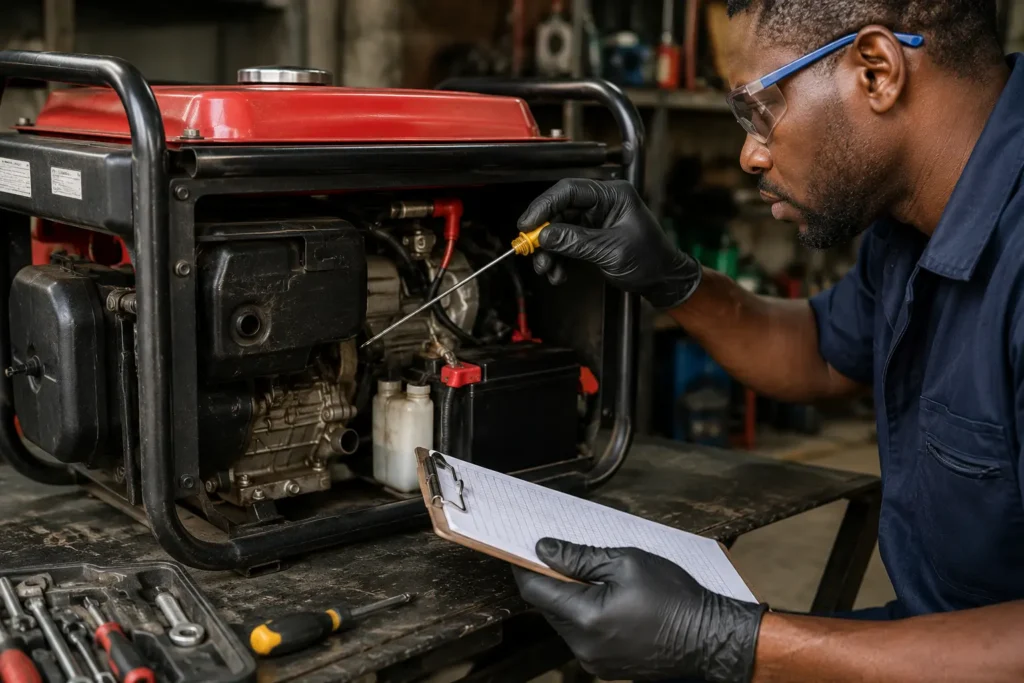
Weekly
- Visually check for leaks, loose connections, corrosion, or dust buildup.
- Confirm battery charge and inspect terminals for corrosion.
- Run the generator under load for 10 to 20 minutes to keep parts lubricated and prevent fuel from sitting unused.
- Check fuel/water separators and drain any accumulated water.
Monthly
- Check coolant level and top off with the manufacturer-specified mix.
- Inspect belts and hoses for cracking, fraying, or bulging.
- Clean air intakes and cooling fans of dirt and debris.
- Verify fuel quality, especially in stored tanks.
Quarterly to Semi-Annual
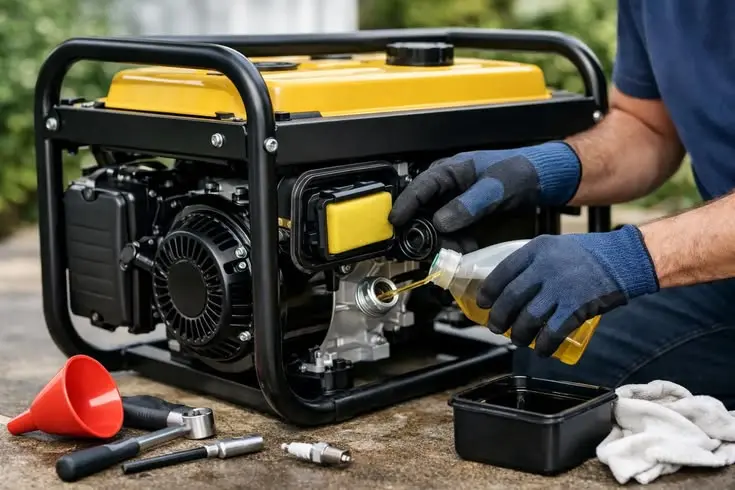
- Change the oil and the oil filter together.
- Replace air and fuel filters, checking between changes for early signs of particulate buildup.
- Inspect the exhaust system for leaks or corrosion.
- Flush and refill the coolant system if due.
Annual
- Test fuel for stability and microbial contamination. This is especially critical for diesel systems because fuel degrades chemically over time, even without visible signs.
- Perform load bank testing to confirm the generator can handle full demand.
- Inspect the inside and outside of all fuel tanks for leaks, rust, or damage.
- Test the battery’s capacity under load and replace it if it is weak.
- Review control panel wiring, sensors, and automatic start functions.
Recording every service, even the routine ones, does more than support warranty claims. A pattern of more-frequent-than-expected repairs is often the earliest sign that a unit is approaching the end of its service life.
Fuel System Care: The Most Common Point of Failure
The fuel system is where most preventable generator problems originate, particularly in diesel units. Two issues account for the majority of fuel-related failures:
Water intrusion. Water vapor condenses inside fuel tanks over time and can also enter through leaking caps, contaminated fuel deliveries, or loose fittings. Left unaddressed, it corrodes components and disrupts combustion.
Fuel degradation and contamination. Diesel fuel breaks down chemically through oxidation and polymerization, and microbes can grow within it. This increases particulate matter, clogs filtration systems faster, and allows sediment to bypass filters, accelerating engine wear.
Effective fuel system maintenance addresses both:
- Exercise the generator regularly so stored fuel gets used before it degrades.
- Install a fuel/water separator between the engine and the fuel tank, checking it monthly and draining any water.
- Open water drains during every routine inspection.
- Change filters according to the manufacturer’s schedule, and inspect them between changes for early sediment buildup.
- Test diesel fuel annually for stability and microbial contamination.
- Treat fuel with stabilizing additives if it will sit in storage for a year or more.
- Inspect tank interiors and exteriors at least annually for leaks, rust, or damage.
- Visually check all hoses, clamps, and fittings for cuts, splitting, or corrosion, and confirm that wiring near fuel lines is in a safe condition.
Generators that operate every day as the primary source of electricity should have their fuel systems inspected monthly, while generators used only occasionally for backup power generally only require inspections every six months.
Troubleshooting common generator problems
A properly maintained generator can still become faulty, and below are a few basic things to note:
1. Generator failing to start: The most frequent cause is simply low fuel. Many vehicles prioritize fuel for driving, so an onboard generator can shut down once the tank drops below roughly one-quarter full. If a unit starts, runs briefly, and then cuts out, check the fuel level first.
2. Overheating: If the temperature reading is high, add coolant gradually while checking the effect between additions. Recurring overheating usually points to a fan that needs cleaning.
3. Unresponsive or erratic behavior: Confirm the power converter and its fans are operating and that all connections are secure. Then use the reset function described in the owner’s manual.
3. Other warning signs that call for immediate service: They include unusual knocking or grinding noises, visible fuel or oil leaks, smoke, flickering or inconsistent output, and any active alarm on a digital control panel. These should never be dismissed or simply reset.
Establishing a Maintenance Team and a Trusted Mechanic
Even a solid checklist needs people behind it. Designate specific staff as generator caretakers and make sure they attend any orientation offered by the vehicle manufacturer or upfitter. Everyone who operates the equipment should also be familiar with the operating manual, including where basics such as the dipstick and usage meter are located.
Before a breakdown happens, identify who will service the generator for both routine maintenance and emergencies. The strongest recommendations usually come from the generator or vehicle manufacturer, or from other operators using similar equipment. Where no direct recommendation is available, an electrician familiar with generator electrical systems is a reasonable alternative.
Logging generator hours ties the entire maintenance system together. A usage meter on the unit tracks total run time. Recording those hours in a personalised checklist or maintenance software makes it possible to schedule service based on actual usage rather than estimates, while also creating the documentation manufacturers and insurers expect.
Conclusion
Reliable backup power isn’t the result of a single inspection. It is the outcome of a consistent routine that includes checking fuel and fluids, monitoring the parts that wear fastest, so it remains ready, and keeping accurate maintenance records. Build that routine around how your generator is actually used, and it will be ready to perform whenever the power goes out.