


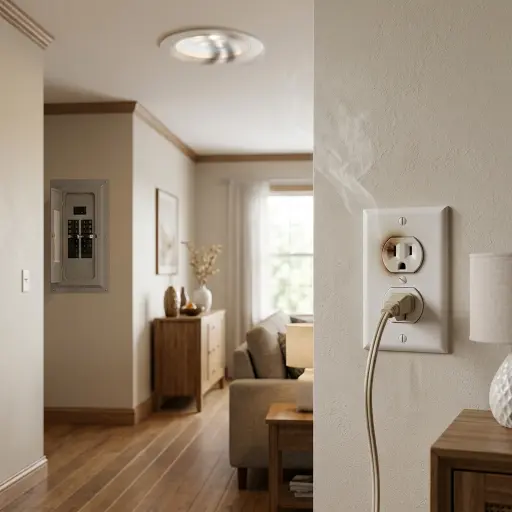

Every home relies on electricity to power appliances and electronics, but electrical circuits have capacity limits. Connecting too many high-wattage devices to the same outlet or circuit can cause overheating and create serious electrical hazards.
To identify an overloaded electrical outlet or circuit, watch for warning signs such as warm or discolored cover plates, buzzing or crackling sounds, unusual burning smells, flickering lights, or frequent circuit breaker trips. These signs can indicate excessive electrical load, damaged wiring, or another electrical fault that requires prompt attention.
Check for Heat and Discoloration
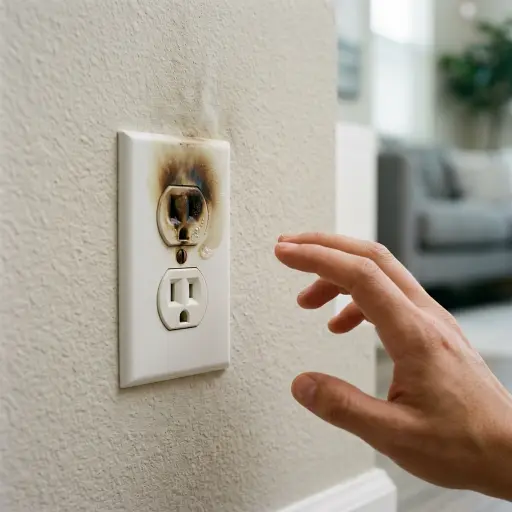
An unusually warm or hot outlet cover is a warning sign that should not be ignored. Excessive current can cause electrical components and connections to overheat, although heat can also indicate loose or damaged wiring.
Look for melted plastic, scorch marks, or dark brown or black discoloration around the receptacle. These signs indicate overheating or electrical damage and can increase the risk of fire.
If an outlet feels hot or shows visible damage, unplug connected devices if it is safe to do so, stop using the outlet, and have it inspected by a qualified electrician.
Watch for Buzzing, Crackling, and Burning Smells
Unusual sounds coming from an electrical outlet should receive immediate attention. Buzzing, humming, or crackling can indicate a loose connection, damaged wiring, or electrical arcing.
Arcing occurs when electricity jumps across a gap in an electrical connection. It can generate intense heat and may cause nearby materials to catch fire.
Also pay attention to burning plastic or other unusual odors around outlets and electrical fixtures. These smells can indicate overheating wires, insulation, or electrical components. If you notice a persistent burning smell, do not touch the outlet or attempt to switch off the circuit if doing so could put you at risk. Move away from the area and contact a qualified electrician. Avoid using the outlet until it has been inspected.
Be Alert to Breaker Trips and Flickering Lights
Circuit breakers are designed to interrupt the flow of electricity when a circuit carries more current than it can safely handle. Frequent trips in the same area of the home can indicate an overloaded circuit or an underlying electrical fault.
Flickering or dimming lights when a high-power appliance starts can also indicate that the circuit is under significant load or has an electrical connection problem. Appliances such as microwaves, hair dryers, and space heaters can place substantial demands on a circuit.
If these problems occur repeatedly, do not simply reset the breaker and continue using the circuit. A qualified electrician should determine the cause.
Prevent Electrical Overloads
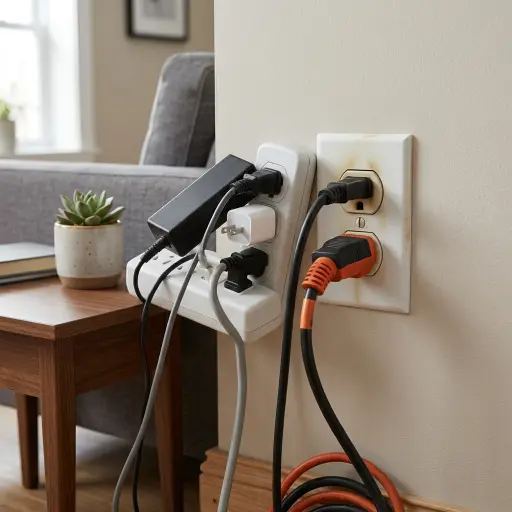
Safe load management starts with avoiding excessive demands on a single circuit. Do not connect power strips or extension cords to one another by plugging one into another. Extension cords are generally intended for temporary use and should not be used as permanent wiring or to power high-power appliances unless the cord is designed and rated for that specific use.
High-wattage appliances, including space heaters, refrigerators, and air conditioners, may require dedicated circuits depending on their electrical requirements and the home’s wiring. Follow the manufacturer’s instructions and have an electrician determine whether a dedicated circuit is necessary.
Avoid plugging more devices into an outlet simply because it has multiple sockets. The number of sockets does not increase the electrical capacity of the circuit. The total load must remain within the circuit’s safe rating.
Conclusion
Overloaded electrical outlets can pose serious risks when warning signs are ignored. Regularly check outlets for excessive heat, discoloration, unusual sounds, burning odors, flickering lights, and repeated breaker trips. Use appliances according to their electrical requirements and avoid placing excessive loads on a single circuit. When an outlet shows signs of damage or overheating, stop using it and have a qualified electrician identify and correct the problem.
Sources: