


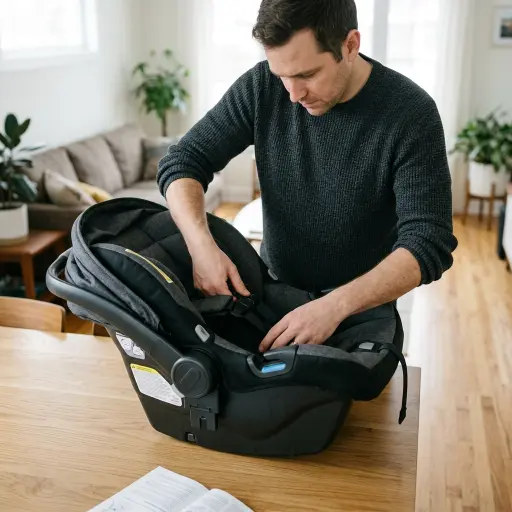

Keeping a car seat safe involves more than installing it correctly in a vehicle. How it is cleaned, stored, and handled at home can affect its condition and reliability. Regular inspections help identify damaged components, missing parts, and signs of wear before the next trip. Following the manufacturer’s instructions for cleaning, storage, and maintenance also helps prevent damage and ensures the seat remains suitable for use.
Conducting thorough car seat safety inspections at home
Inspecting a child safety seat at home provides an opportunity to examine its components carefully. Place the seat on a flat surface and check the shell, harness, buckle, and adjustment mechanisms.
- Check the manufacturing date and expiration information on the seat or in the manual to confirm that the restraint has not passed its usable lifespan.
- Inspect the harness straps along their entire length for fraying, cuts, or other signs of damage.
- Test the buckle to ensure it latches and releases properly without sticking or trapping debris.
- Examine the plastic shell for cracks, stress marks, or other significant damage.
Proper cleaning methods
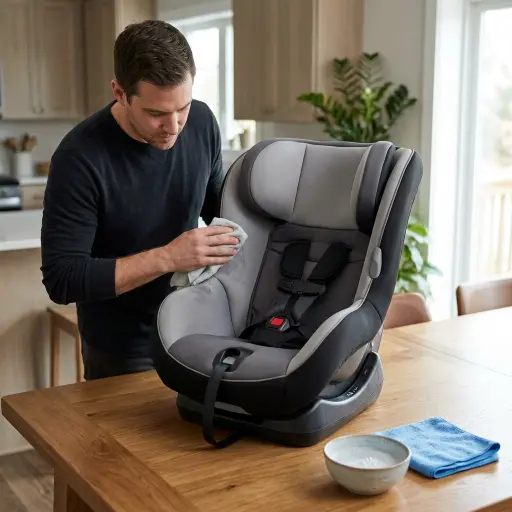
Cleaning a child restraint requires care because some cleaning products and methods can damage its components. Always follow the manufacturer’s cleaning instructions before removing or washing any part.
- Vacuum crumbs and loose debris from the seat’s crevices before cleaning.
- Spot-clean fabric covers with a damp cloth and mild soap unless the manufacturer provides different instructions.
- Clean plastic components with warm water and mild soap, avoiding contact with buckles, adjustment mechanisms, and other moving parts.
- Allow cleaned components to dry completely before reassembling or storing the seat.
Storing child safety restraints correctly
Proper storage helps protect a child restraint from unnecessary exposure to heat, moisture, sunlight, and physical damage when it is not in use.
- Clean and dry the seat completely before storing it to reduce the risk of mold, mildew, and odors.
- Store the restraint indoors in a dry location rather than in a damp basement, uninsulated attic, or hot garage.
- Keep the seat upright or supported on a flat surface, and avoid placing heavy objects on top of it.
- Store removable components, such as infant inserts and harness pads, together so they remain available when the seat is needed.
Verifying secondhand and hand-me-down restraints
A used child safety seat should be checked carefully before being used. If its history cannot be confirmed, it may be difficult to determine whether it has been damaged or involved in a crash.
- Confirm that the restraint has not been involved in a moderate or severe vehicle crash.
- Check the model number against the manufacturer’s recall information for applicable safety notices.
- Verify that all required original components are present and undamaged.
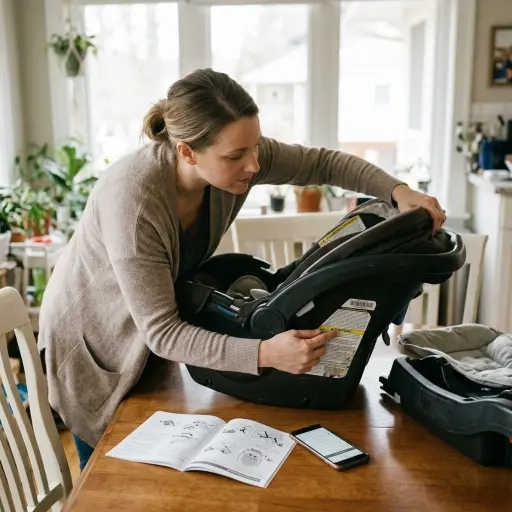
- Refer to the original instruction manual if available, or obtain an official digital copy from the manufacturer to confirm the correct installation and usage requirements.
Conclusion
Proper care at home helps keep child restraints clean, intact, and ready for use. Regular inspection, manufacturer-approved cleaning methods, and appropriate indoor storage can help reduce avoidable problems between trips. For every child car seat, follow the manufacturer’s instructions for inspection, cleaning, storage, expiration, and installation.
Sources