 05. November 2026
HOW TO CLEAN BLACK RESIDUE AND MOLD FROM A WASHING MACHINE RUBBER SEAL.
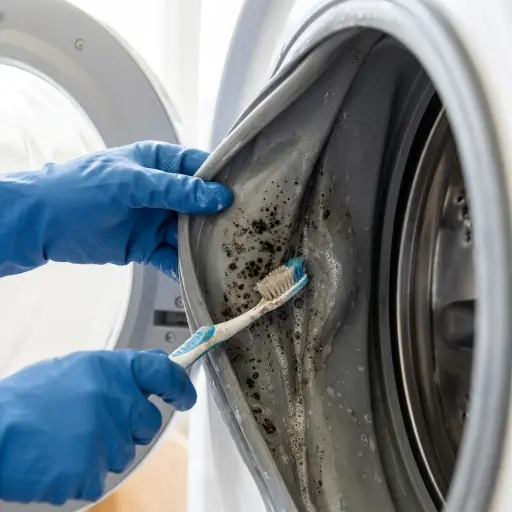
Black residue inside a washing machine rubber seal is often caused by mold, mildew, detergent buildup, and trapped dirt. The folds of the gasket can retain moisture after washing, creating conditions that encourage mold growth and unpleasant odors.
Cleaning the rubber seal regularly helps remove this buildup, keep the washing machine fresh, and prevent residue from accumulating around the door.
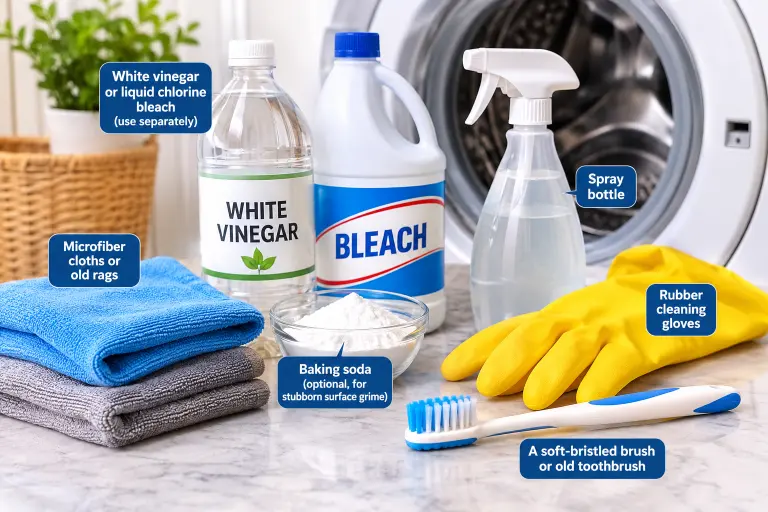
What You Will Need
- Microfiber cloths or old rags
- White vinegar or liquid chlorine bleach (use separately)
- Baking soda (optional, for stubborn surface grime)
- A soft-bristled brush or old toothbrush
- Rubber cleaning gloves
- Spray bottle
Step-by-Step Cleaning Guide
1. Remove loose dirt and debris (2 minutes)
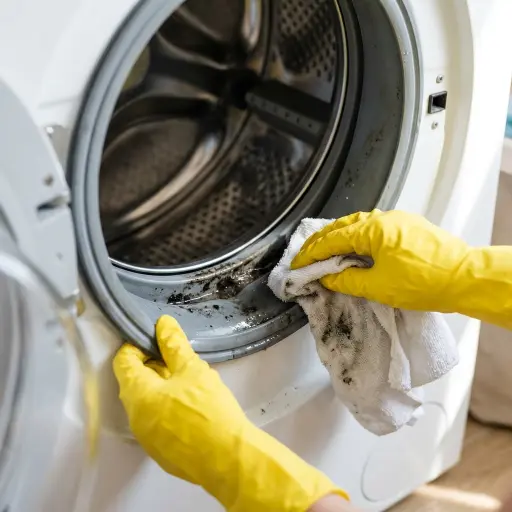
Put on your rubber cleaning gloves. Gently pull back the folds of the rubber seal and use a damp microfiber cloth to remove trapped hair, lint, detergent residue, and loose dirt.
Pay attention to the lower folds, where moisture and debris often collect.
2. Apply a suitable cleaning solution (5 minutes)
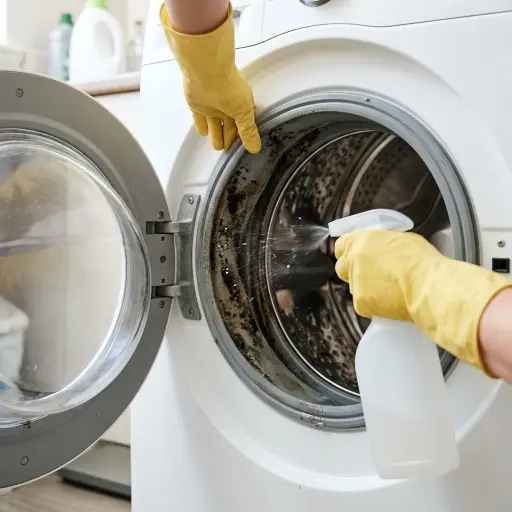
For general grime, mix equal parts white vinegar and warm water in a spray bottle. For stubborn mold, use a diluted bleach solution according to the product label and the washing machine manufacturer’s instructions.
Apply your chosen solution to the affected areas of the rubber seal. Make sure it reaches the folds where black residue has accumulated.
Important: Never mix vinegar with chlorine bleach or use them together. The combination releases toxic chlorine gas. Do not combine either cleaner with other cleaning products.
3. Scrub stubborn black residue (5–10 minutes)
Apply the cleaning solution to the affected areas of the rubber seal and leave it for the time recommended on the product label or by the washing machine manufacturer. Then, use a soft-bristled brush or old toothbrush to gently scrub the areas.
Pay particular attention to the inner folds and any drainage openings at the bottom of the gasket, if present. Avoid using abrasive brushes or applying excessive pressure, as these can damage the rubber.
4. Rinse and dry the rubber seal (3 minutes)
Use a clean, damp microfiber cloth to wipe away loosened residue and any remaining cleaning solution. Rinse the cloth as needed and repeat until the seal is clean.
Finish by drying the entire gasket with a dry microfiber cloth. Check inside the folds for trapped water.
5. Run a washing machine cleaning cycle (30–60 minutes)
If the cleaning solution has entered the drum, follow the manufacturer’s instructions for rinsing or running a maintenance cycle. Otherwise, run an empty cleaning cycle using a washing machine cleaner approved for your appliance.
Follow the product instructions and avoid adding vinegar or bleach unless the manufacturer specifically recommends it.
Preventing future mold and residue buildup
- Leave the door open: Keep the washing machine door slightly ajar after each cycle to allow moisture to escape and the drum to dry.
- Wipe the rubber seal: Use a dry cloth to remove moisture from the gasket and glass door after washing.
- Use the correct detergent: Follow the manufacturer’s recommended detergent type and quantity. Excess detergent can leave residue that accumulates inside the machine.
- Clean the gasket regularly: Inspect the rubber folds and remove trapped hair, lint, and dirt before they accumulate.
- Remove wet laundry promptly: Avoid leaving damp clothes inside the washing machine for extended periods, as this can contribute to unpleasant odors.
Conclusion
Regular cleaning and proper drying help keep the washing machine rubber seal free of stubborn residue and reduce the conditions that encourage mold growth.
Have you dealt with black residue or mold inside your washing machine rubber seal? Drop a comment below and share how you cleaned it.
Sources: