 25. September 2026
HOW TO CLEAN A DISHWASHER FILTER PROPERLY FOR PEAK PERFORMANCE.
A dirty dishwasher filter can prevent the appliance from cleaning dishes effectively. Trapped food particles, grease, and mineral deposits can restrict water flow, cause unpleasant odors, and leave residue on clean dishes. Cleaning the filter regularly helps maintain proper water circulation and keeps the dishwasher performing as intended.
How to clean a dishwasher filter
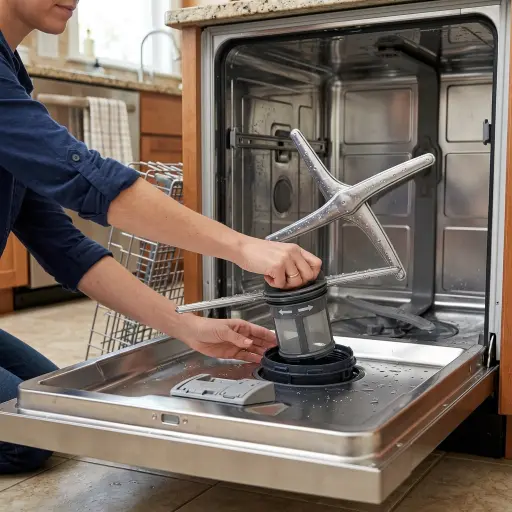
1. Locate and remove the dishwasher filter
Before cleaning the filter, turn off the dishwasher and remove the bottom rack for easier access.
- Find the filter: Look at the bottom of the dishwasher tub, usually beneath the lower spray arm.
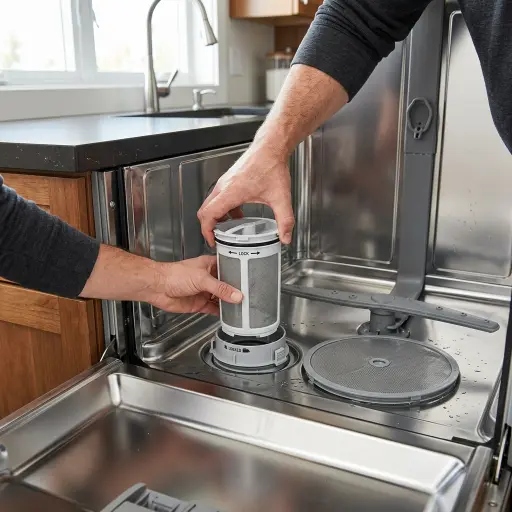
- Unlock the filter: Many models use a cylindrical filter that twists counterclockwise to unlock. Follow the instructions in your owner’s manual if the mechanism differs.
- Remove the filter: Gently lift the cylindrical filter from its housing. Some dishwashers also have a separate flat mesh screen that should be removed.
2. Rinse and scrub the filter
Handle the filter gently to avoid damaging its mesh.
- Rinse with warm water: Hold the filter under running water to remove loose food particles and grease.
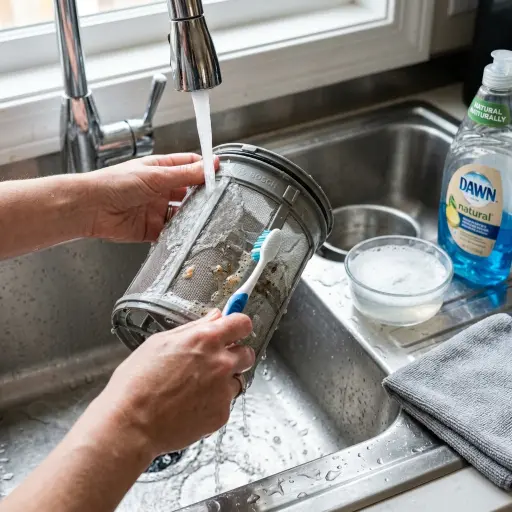
- Scrub gently: Use a soft-bristled brush or old toothbrush with mild dish soap to clean the mesh and plastic frame. Avoid wire brushes and abrasive scouring pads, which can damage the filter.
- Soak stubborn buildup: For heavy grease or mineral deposits, soak the filter in warm water with mild dish soap. White vinegar can also help loosen mineral deposits, provided the dishwasher manufacturer does not advise against it.
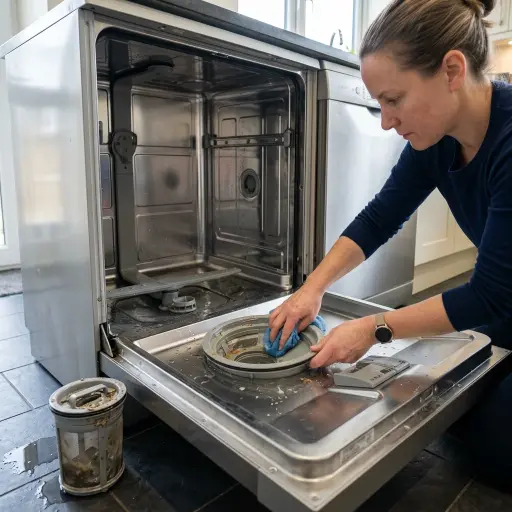
3. Clean the filter housing
Debris can collect in the area beneath the filter, so clean the housing before reinstalling it. Inspect the exposed area for food particles, grease, or other debris. Use a damp cloth or sponge to wipe the accessible surfaces. If you notice broken glass or sharp debris, handle it carefully and avoid reaching into areas you cannot see clearly.
4. Reinstall the filter securely
Once the filter and housing are clean, put everything back in place.
- Replace the flat screen: If your dishwasher has a separate mesh screen, position it correctly on the bottom of the tub.
- Insert the cylindrical filter: Align it with the filter housing and lower it into position.
- Lock the filter: Twist it clockwise until it is firmly secured. Make sure it sits flush and does not move when gently checked.
An improperly installed filter can allow debris to circulate through the dishwasher and may interfere with proper operation.
5. Clean the dishwasher filter regularly
How often you need to clean the filter depends on how frequently the dishwasher is used and how much food residue enters the appliance. Checking it regularly and cleaning it when debris or buildup becomes visible can help maintain proper performance. Regular filter maintenance can also help prevent unpleasant odors and residue from accumulating inside the dishwasher.
Conclusion
Cleaning a dishwasher filter is a simple maintenance task that can help keep the appliance working efficiently. Remove the filter carefully, rinse and scrub away buildup, clean the filter housing, and make sure everything is securely reinstalled. For the safest cleaning method, always check the dishwasher manufacturer’s instructions, as filter designs and maintenance requirements vary between models.
Sources: