 16. July 2026
PRUNING GUIDE FOR SMALL-SPACE FRUIT PLANTS.
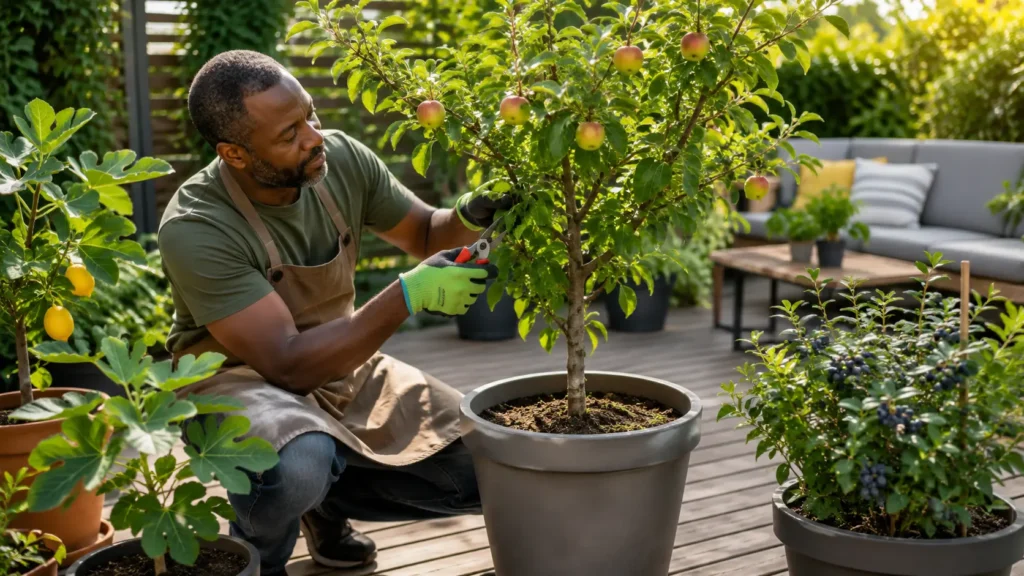
Fruit plants can quickly outgrow small gardens, patios, and containers if left unpruned. Excess growth blocks sunlight, reduces air circulation, and makes harvesting and maintenance more difficult. Pruning is the selective removal of branches and stems to shape the plant, improve light penetration and airflow, encourage healthy growth and fruit production, and keep its size manageable.
Whether you’re growing fruit plants in a small garden, on a patio, or in containers, the right pruning techniques can help you make the most of every available space. This guide explains when to prune, what to remove, and the training methods that keep compact fruit plants healthy, productive, and easy to manage.
When to prune small-space fruit plants
Most deciduous fruit plants should be pruned in late winter or early spring before new growth begins. At this stage, the branches are easy to see, cuts heal well, and pruning encourages strong new growth.
This includes many common fruit plants such as:
- Apple
- Pear
- Peach
- Plum
- Cherry
- Apricot
- Fig
- Pomegranate
Prune evergreen fruit plants after harvest
Evergreen fruit plants are generally best pruned after harvesting, when the current crop has been picked but before the next flowering cycle begins.
Common examples include:
- Orange
- Lemon
- Lime
- Mandarin
- Avocado
- Olive
- Guava
Pruning after harvest helps avoid removing flower buds that will produce the next season’s fruit.
What growth should you remove?
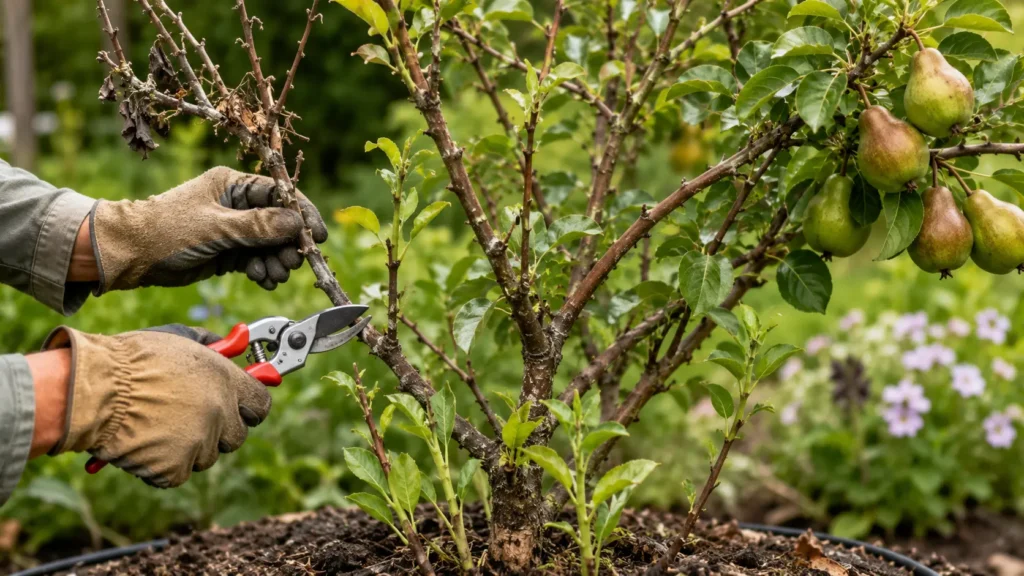
Every pruning cut should improve the plant’s health, shape, or productivity. Focus on removing growth that competes with healthy fruit-bearing branches.
1. Remove Dead, Damaged, and Diseased Branches: Always begin by removing branches that are dead, broken, diseased, or badly damaged. These no longer contribute to healthy growth and can become entry points for pests and fungal diseases.
2. Remove branches that crowd the plant: Too many branches reduce sunlight and air movement inside the canopy. Remove branches that:
- Grow toward the center of the plant
- Cross or rub against other branches
- Are overcrowded or poorly positioned
- Block sunlight from reaching lower branches
Opening the canopy allows more light to reach developing fruit and helps leaves dry more quickly after rain or watering.
3. Remove water sprouts and suckers: Water sprouts are fast-growing upright shoots that develop from branches, while suckers grow from the base of the trunk or below the graft union. Although vigorous, they rarely produce quality fruit and divert energy away from productive branches. Remove them as they appear.
How to control size without overpruning
To keep plants compact, shorten about one-third of the previous season’s growth each year. Avoid removing more than 25 to 30 percent of the canopy in a single pruning session, as severe pruning encourages excessive leafy growth instead of fruit production.
Use the right pruning cuts
Use thinning cuts to remove an entire branch back to its point of origin. These cuts improve light penetration and reduce crowding while maintaining the plant’s natural shape.
Use heading cuts to shorten a branch when you want to encourage branching or reduce height. Because heading cuts stimulate vigorous new shoots, they should be used sparingly on compact fruit plants.
Training methods for small-space fruit plants for easier pruning
Training guides branches into a planned shape, allowing fruit plants to grow efficiently in limited spaces while making pruning and harvesting easier. Here are the training methods:
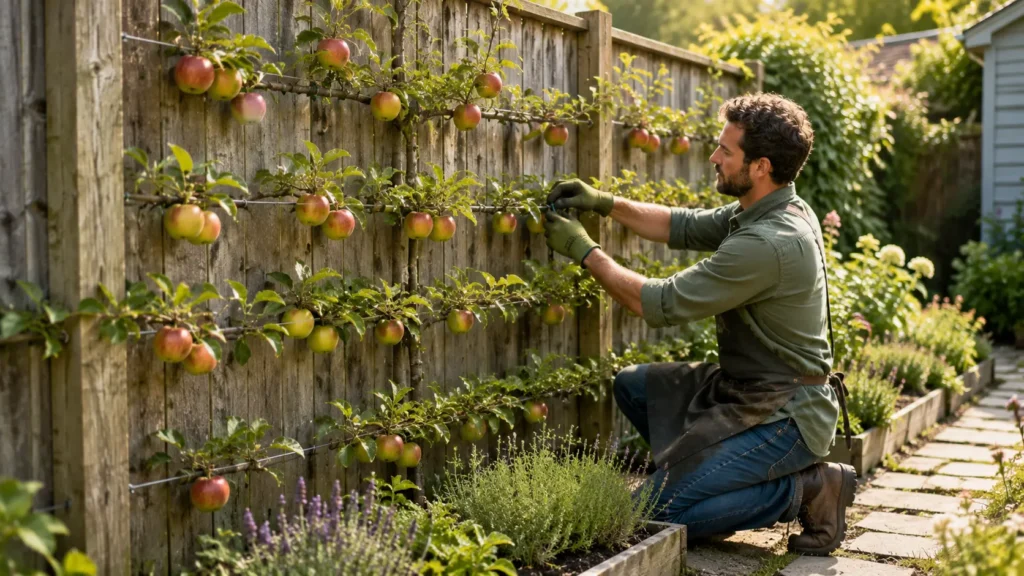
Espalier: This method is used to train branches to grow flat against a wall, fence, or wire support. It is one of the best methods for narrow gardens, patios, courtyards, and balconies. Suitable fruit plants include apples, pears, figs, peaches, and some citrus varieties.
Start with a young plant, select the main branches that will form the framework, remove unwanted shoots, and tie flexible branches to horizontal wires. Continue tying new growth each season to maintain the desired shape.
Open center (vase shape): The open center system removes the central stem and develops three to five strong outward-growing scaffold branches, creating a bowl-shaped canopy.
This allows sunlight and air to reach the middle of the plant while making fruit easier to harvest. It works especially well for peaches, nectarines, apricots, and many plum varieties.
Central leader: The central leader system develops one strong upright trunk with evenly spaced side branches. This method suits naturally upright fruit plants such as apples, pears, and some cherries. Support the main stem with a stake while young and remove competing leaders to maintain a narrow, space-efficient shape.
Caring for container-grown fruit plants
Fruit plants grown in containers need occasional root pruning because their roots eventually fill the pot. Every two to three years, remove the plant from its container and trim away thick circling roots before replacing some of the old potting mix. Replant it in the same container or one only slightly larger if additional root space is needed.
Continue removing dead, damaged, crossing, and overcrowded branches each year while maintaining the plant’s chosen training shape.
Choosing the right pruning tools
Using the correct tool produces cleaner cuts that heal more quickly and reduce the risk of disease.
- Bypass pruners: Best for stems up to about ¾ inch (2 cm) thick.
- Loppers: Suitable for branches up to about 2 inches (5 cm) thick.
- Pruning saw: Ideal for larger branches that cannot be cut safely with pruners or loppers.
Keep blades sharp and disinfect them before moving from one plant to another, especially after pruning diseased branches.
Conclusion
Pruning is one of the most effective ways to keep fruit plants healthy, productive, and compact in limited growing spaces. By pruning at the correct time, removing unproductive or overcrowded growth, and using a training system suited to your space, you can maintain vigorous plants that are easier to care for and capable of producing reliable harvests year after year.