 22. May 2026
HOW TO CHOOSE RECLAIMED WOOD WITHOUT STRUCTURAL PROBLEMS.
Reclaimed wood is suitable for furniture and renovation projects in that it provides aesthetic characteristics that are not easily achieved through new wood products. Barn boards, flooring wood, and old wood from historical structures may have unique grain markings, milling characteristics, surface wear, and aging that make them aesthetically desirable.
Nevertheless, when choosing reclaimed wood, one should be careful not to go solely by aesthetics. Moisture problems, infestations, internal problems, and structural issues may not become apparent until the wood is cut or installed. To ensure success, it is important to choose wood that not only looks authentic but is also able to withstand use without cracking or other failures.
1. Identify real surface features first
The unique look of reclaimed wood is one of the reasons why people love it. While modern timber is carefully cut using sophisticated machinery, reclaimed wood may have a variety of signs on its surface, from traditional craftsmanship to decades of use.
Consider some of the features like:
- Circular saw cuts
- Bandsaw cuts
- Hand-hewn surfaces
- Dents and scratches
- Weathered patina and wear patterns
Such characteristics can help identify the genuine piece and will also determine its look, which many consumers want to preserve. However, do not mistake surface characteristics for flaws. While wear may only add some charm, the damage to the board should be taken into account when evaluating its potential.
2. Examine the wood for structural integrity
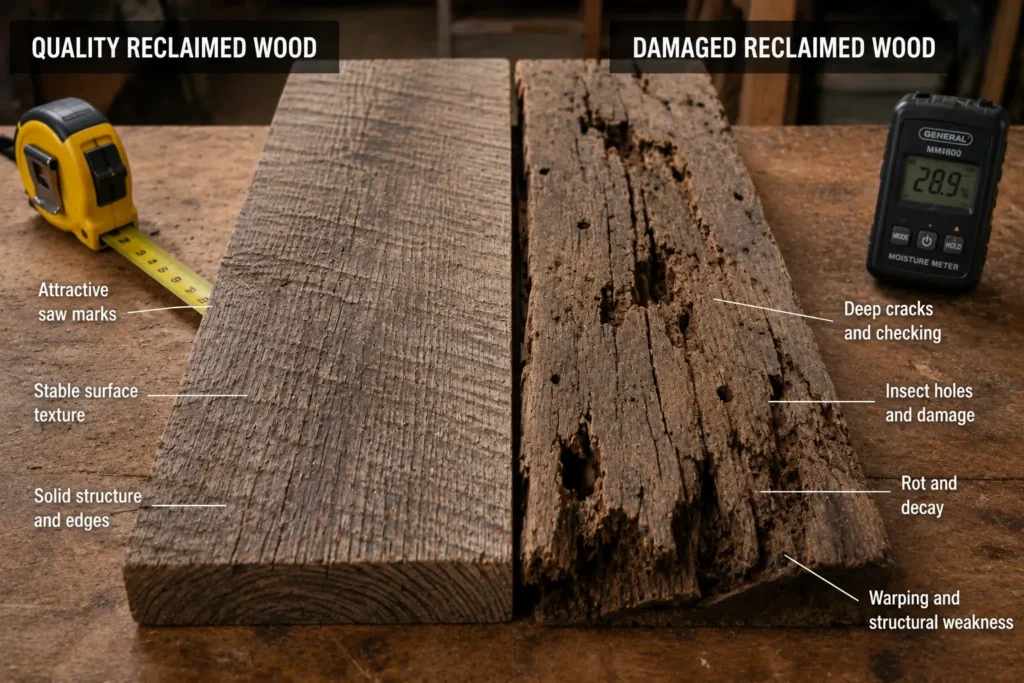
After ensuring that the characteristics on the surface are acceptable to you, it is important to establish whether the wood is still structurally sound. Some things to look out for include:
- Soft spots in the wood
- Large cracks or splits
- Presence of rot and mold
- Insect infestation
- Brittleness of wood
Checking on the surface of aged wood is common and need not be a cause for alarm since some wood may appear weather-beaten on the outside but still remain very durable inside.
3. Moisture level check and stability test
Sometimes, even very strong and durable wood can cause serious difficulties if it contains excess moisture. Wood properties can change with surrounding conditions, potentially resulting in:
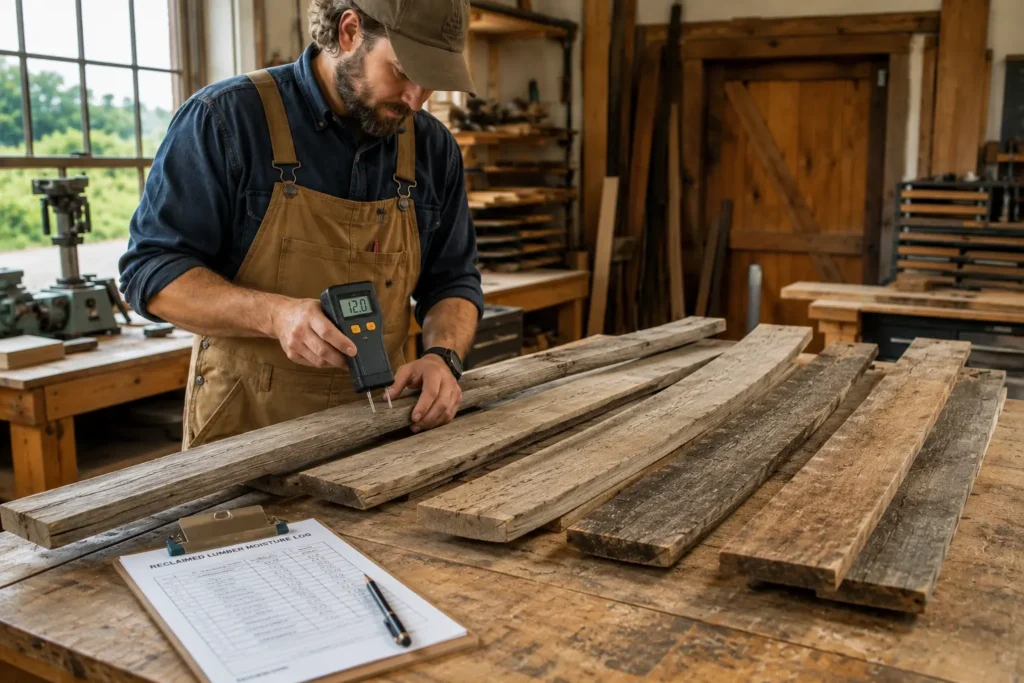
For inside furniture construction, the level of moisture should not be higher than 10%, preferably 7–9%. For flooring, the average level is 10–12%. You can check the level of moisture by using a moisture meter.
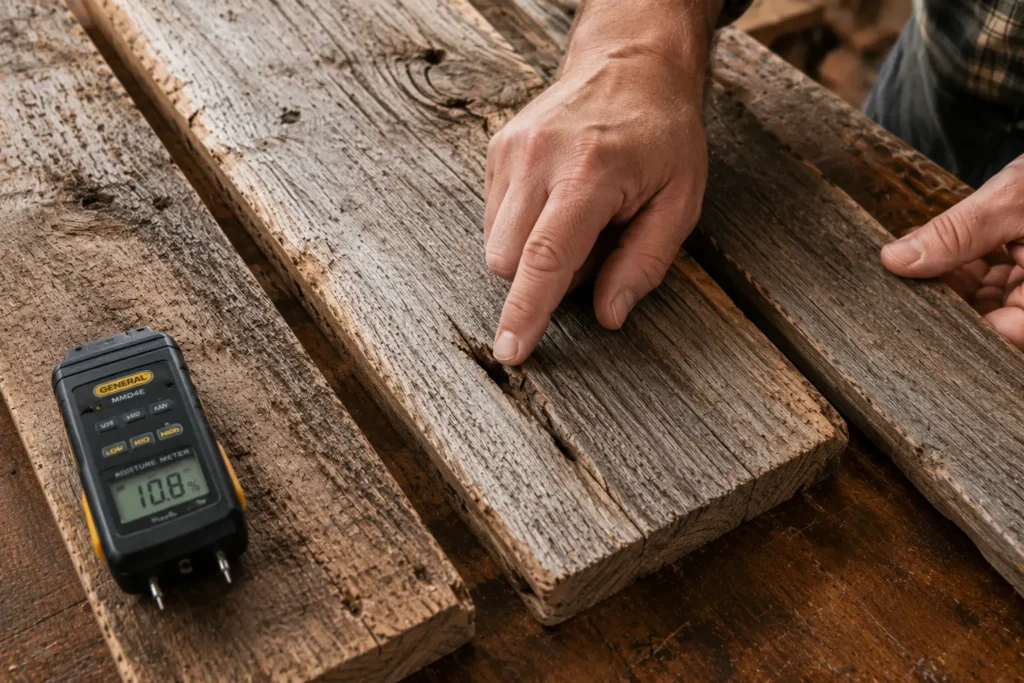
Furthermore, test the board for motion and distortion. Distortions could be:
- Twisting – twisting around the axis of the board
- Bowing – bending from edge to edge
- Cupping – bending from side to side
Motion can be rectified by the process of milling, but distortion cannot always be fixed without taking off large amounts of wood.
4. Purchase with caution and keep safety in mind
There could be hazards related to the former uses of the wood that are not apparent on first inspection. These dangers include:
- Nails or staples not readily visible
- Screws embedded within the wood
- Paint that contains lead
- Chemicals or other finishes used on the wood in the past
Hidden metal objects such as nails and screws can damage tools, while old paints and chemical treatments may create health risks during sanding, cutting, or other wood-processing activities. Reclaimed wood companies will usually have their lumber inspected and cleaned before sale.
Before purchasing reclaimed wood, ask the supplier whether the wood has been inspected, cleaned, de-nailed, or treated for contaminants. Understanding the wood’s source and preparation history can help reduce safety risks and prevent unexpected problems during use.
Conclusion
Reclaimed wood can provide both visual appeal and functionality when selected carefully. Proper inspection for moisture levels, structural condition, and hidden hazards helps ensure that the wood performs well in its intended application. Careful selection and preparation ultimately help create projects that are both reliable and aesthetically appealing. .
Sources