
 21. May 2026
THE CORRECT WAY TO CLEAN MATTE PORCELAIN FLOORS WITHOUT STREAKS.
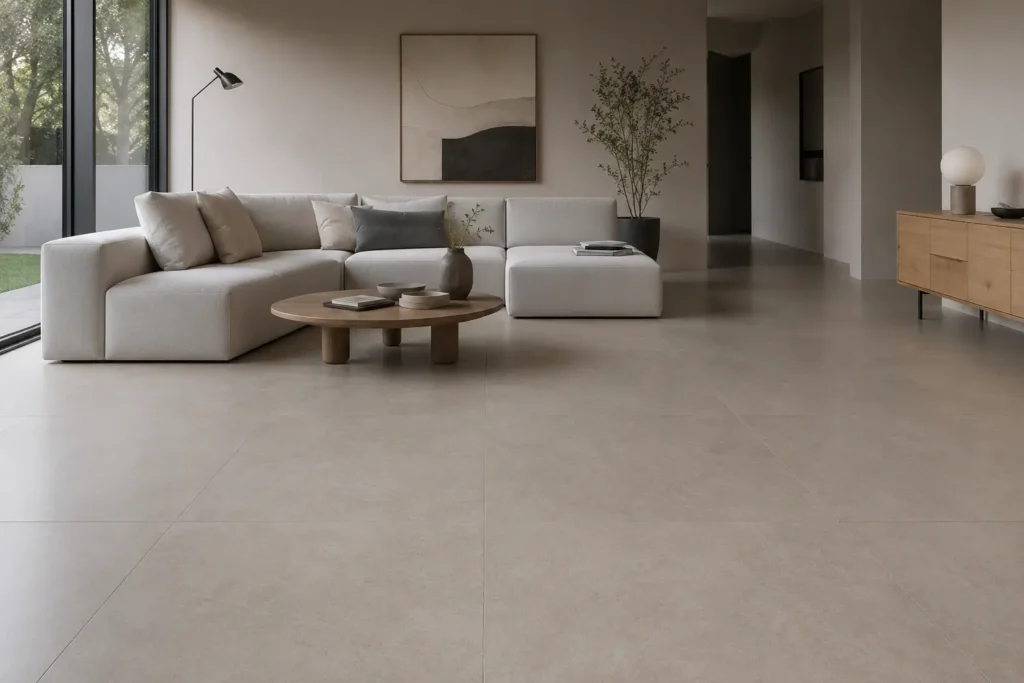
Matte porcelain flooring is preferred for its contemporary appearance, durability, and ability to conceal dust, footprints, smudges, and everyday surface marks better than glossy finishes. The only problem many people have noted with matte porcelain flooring is the formation of clouding spots on the floor despite thorough cleaning. This normally happens not because of the floor material but the cleaning process. People often assume stronger cleaning products create cleaner floors, but excessive use can leave residue that leaves floors dull and streaky.
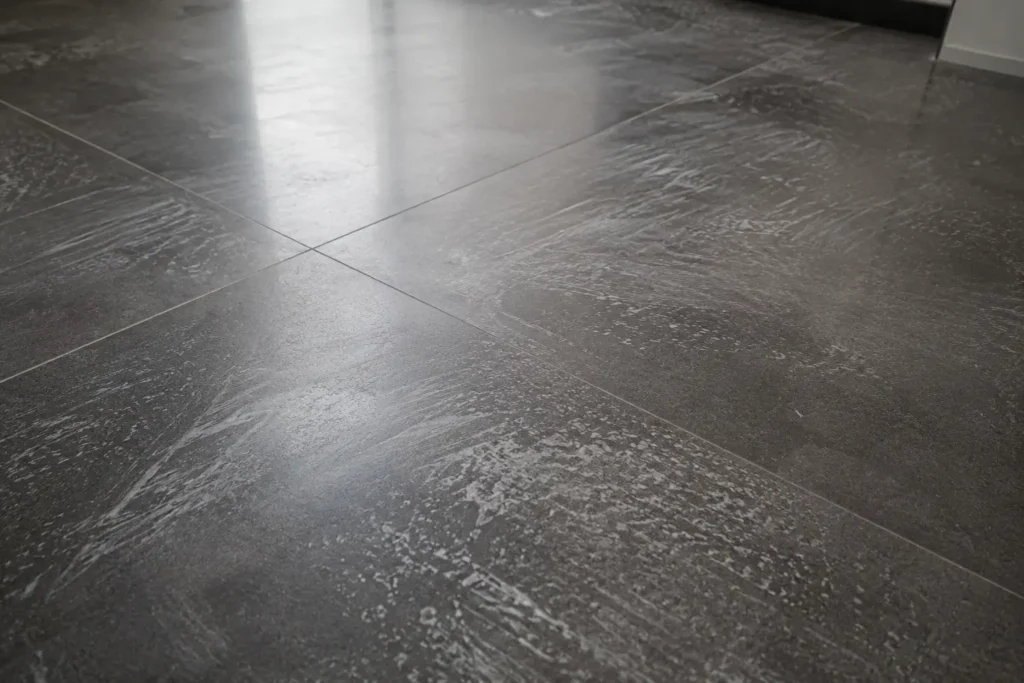
Why do matte porcelain floors develop streaks?
Matte porcelain floors have a lower reflective finish than polished porcelain. Some matte or lightly textured surfaces can hold small amounts of dirt or cleaning residue easily when improper cleaning methods are used. Streaking occurs as a result of:
- Applying too much cleaning agent
- Mopping using dirty water
- Having excess moisture on the floor
- Mineral deposits from hard water (often visible as cloudy marks after drying)
- Using floor waxes, oil-based cleaners, or products designed to add shine
- Residue from soap cleaners
How to properly clean a matte porcelain floor without streaks
1. Remove dirt before mopping
Dirt, dust, and sand can cause most of the scratches and dulling of porcelain flooring. Without removing this debris before mopping, you may just be spreading it around your floor surface or causing more friction between the debris and your floor. Simply doing a quick dry clean before mopping will work most of the time.
This can be done by sweeping with a soft-bristled broom if the dirt is heavy, or dusting with a dust mop if the dust is lighter and harder to see on a matte finish. A vacuum can even be used if there is one that is specialized for hard floors; however, avoid vacuums that have beater bars or rotate with stiff brushes, as this will damage your porcelain over time.
Oil marks are often removable with a mild degreaser that can be applied with the help of a brush or microfiber towel. Grout lines can be cleaned by applying a mixture of water and baking soda, rubbed into the grout with the help of a soft-bristle toothbrush. The spots that have developed due to mineral deposits can be eliminated with a dilute vinegar solution, but only rarely because of its corrosive nature. However, it should not be used in large quantities and always has to be rinsed off.
2. Use the proper cleaning solution
In most cases, warm water is sufficient for removing dust and everyday dirt from matte porcelain surfaces. When a deeper clean is needed, a pH-neutral floor cleaner can be diluted in warm water and applied with a well-wrung microfiber mop to gently lift residue without leaving streaks. The surface can then be wiped with clean water or a dry microfiber cloth to ensure no cleaning film is left behind.
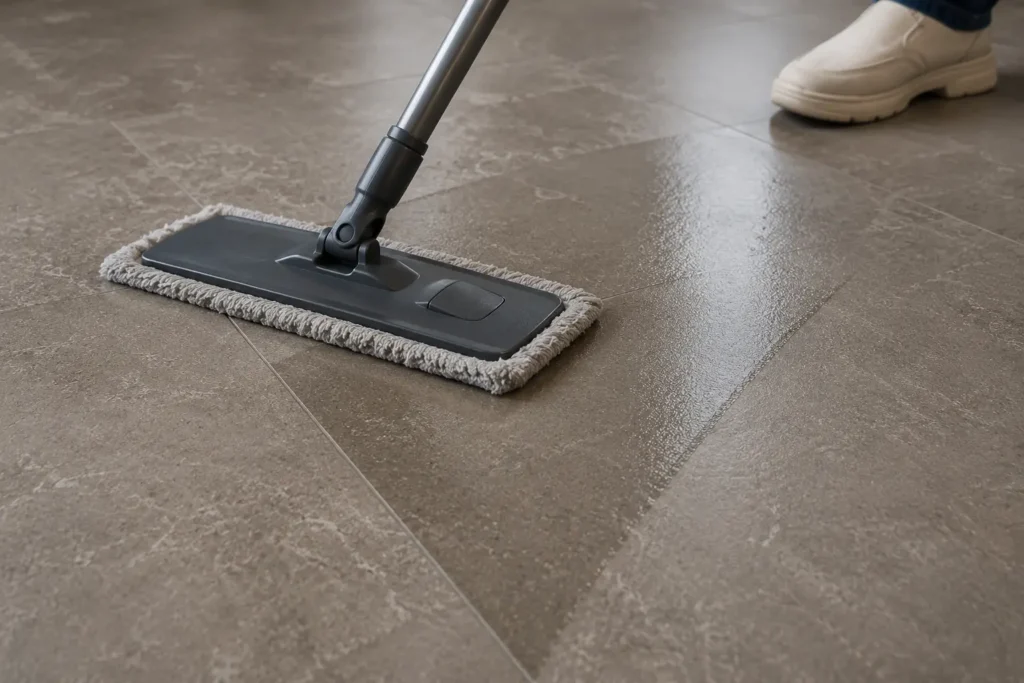
Harsh cleaning agents such as bleach, ammonia, wax-based products, oil soaps, and highly acidic or alkaline cleaners should be avoided, as they can leave residue or interfere with the natural finish of the tile rather than improve cleanliness.
Porcelain is a dense, low-porosity material with a water absorption rate typically below 0.5%, which makes it highly resistant to moisture compared to many standard ceramic tiles.
3. Follow a proper mopping technique
The importance of cleaning methods is significant to achieve optimal outcomes:
- Use the microfiber mop in the solution and wring it.
- Proceed in areas that are small, rather than soaking the whole floor.
- Keep rinsing the mop so that the dirt is not spread over the surface.
- Change the water that is used if it turns murky.
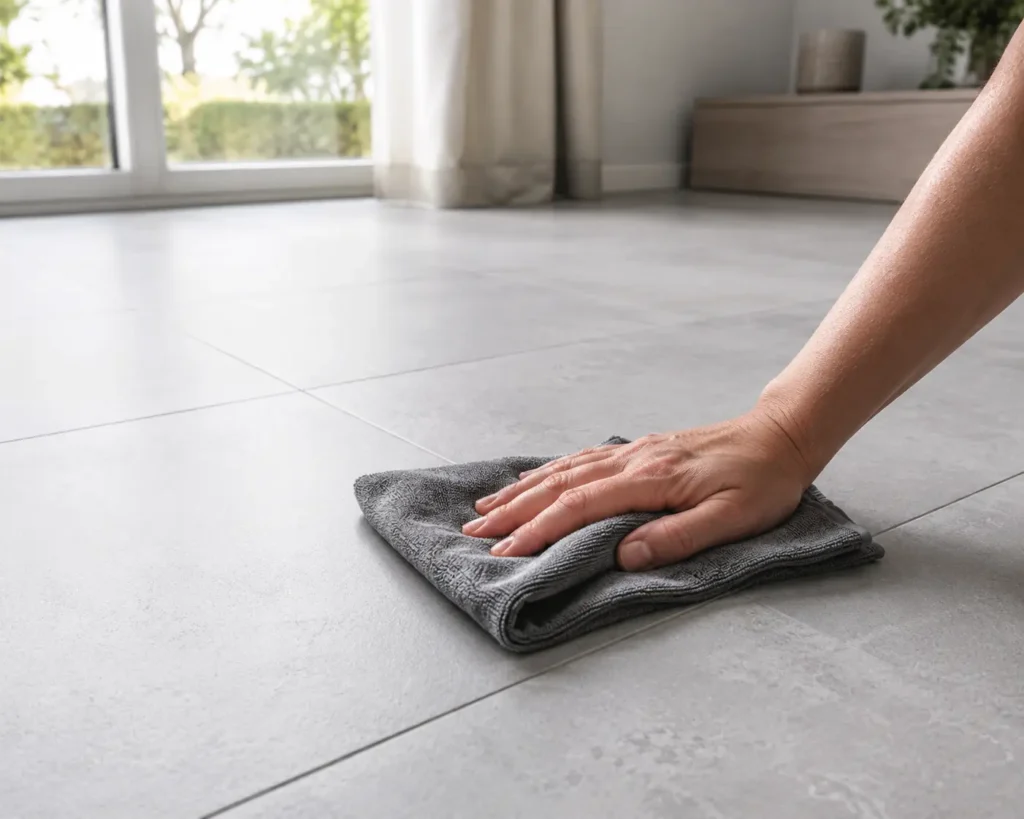
- Afterwards, use the microfiber cloth to dry the area.
Drying may seem like an extra step, but it significantly reduces streak formation and mineral deposits.
Sustained maintenance practices
Here are some simple practices that can help preserve your matte porcelain flooring:
- Install doormats at entryways to minimize dirt and dust
- Clean up any spills promptly
- Put furniture pads underneath the legs of all your furniture
- Spaces such as kitchens, entryways, and hallways may require daily sweeping or dust removal, while routine mopping is generally enough once a week or as needed.
- Apply grout sealant occasionally when necessary, according to the manufacturer’s recommendation
Conclusion
One widely recommended practice in professional tile care is a clean-water rinse after mopping, where the surface is lightly mopped again using only fresh water to remove any remaining detergent film before drying. This simple step significantly reduces streaks and helps preserve the natural matte finish.
Sources