
 27. August 2026
HOW TO FIX A DOOR THAT RUBS AGAINST ITS FRAME.
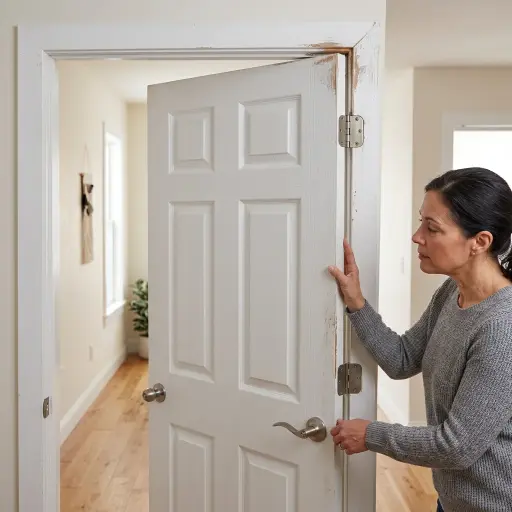
A door that scrapes, sticks, or drags when you open it is more than an annoyance. Continued rubbing can chip paint, damage the frame, and wear down the door. Fortunately, most rubbing doors can be fixed with basic tools, and the hinges are usually the best place to start.
What causes a door to rub against the frame?
Identifying the cause before making repairs can help you avoid unnecessary work. Common causes include:
1. Loose or worn hinge screws: Hinges support the door’s weight every time it opens and closes. Over time, screws can loosen, allowing the door to sag and catch on the frame.
2. Humidity and temperature changes: Wood absorbs and releases moisture as conditions change. During humid weather, a wooden door can swell enough to rub against the frame or floor.
3. An out-of-square door: A door that was not installed correctly may have uneven gaps from the beginning. This is usually noticeable soon after installation.
4. Foundation or structural settling: Homes can shift over time, particularly older properties. Movement can alter the position of the door frame and cause a door that once fit properly to rub.
5. Bent or damaged hinges: A forced door or years of use can bend hinge plates, changing the door’s position within the frame.
6. A warped door panel: Moisture exposure or a manufacturing defect can cause a wooden door to bow or twist, creating uneven gaps around the frame.
How to fix a door that runs against its frame
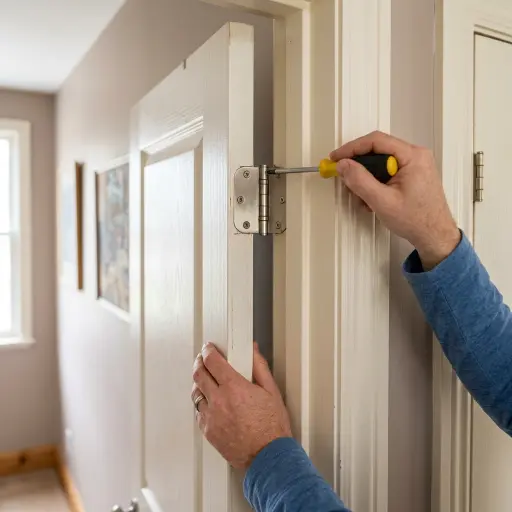
1. Start with the hinges: Hinge problems are one of the most common causes of a rubbing door, so check them before trimming the door. Open the door halfway and pull upward on the handle. If the door shifts or wobbles, the hinges may be loose. Tighten each screw with the correct screwdriver, starting with the top hinge.
If a screw spins without tightening, the hole may be stripped. For a minor repair, remove the screw, fill the hole with a small piece of wood such as a wooden toothpick or golf tee coated with wood glue, allow the glue to dry, and reinstall the screw. If tightening the screws does not solve the problem, the hinges may need shimming. Remove the hinge pins and take the door off the frame. Then loosen the hinge that needs adjustment and place a thin cardboard shim behind it before tightening the screws again. Make small adjustments and test the door after each one.
A shim behind the top hinge can change the position of the upper part of the door, while a shim behind the bottom hinge produces the opposite effect. If the jamb is pulling away from the wall, replacing an appropriate short hinge screw with a longer screw can help secure the jamb more firmly to the wall framing. Use care to avoid damaging the frame or driving the screw too far.
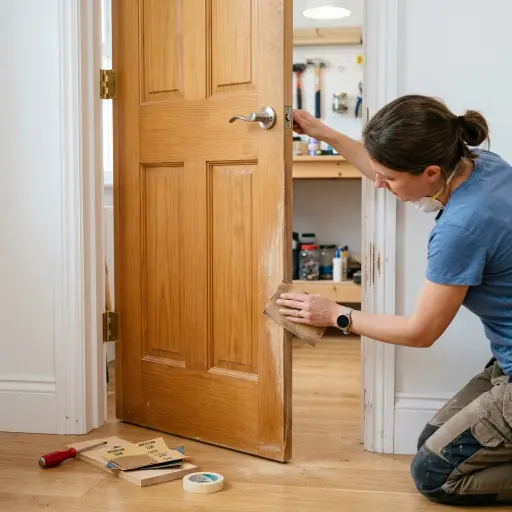
2. Sand or plane the door if the hinges aren’t enough: If the door still catches after adjusting the hinges, the edge may need to be trimmed. Close the door and identify the exact point where it rubs. If the tight spot is difficult to see, slide a thin piece of cardboard through the gap to help locate it. For minor rubbing, sanding may be enough. Start with 120-grit sandpaper, then smooth the area with 220-grit paper. Sand along the grain to maintain a consistent finish.
For heavier rubbing, a hand plane can remove material more efficiently. Remove the door from its hinges, support it securely, and trim the affected edge gradually. Rehang the door and test it frequently. Avoid removing too much material at once. It is easier to remove additional wood than to repair an edge that has been over-trimmed. After achieving the correct fit, seal or paint any exposed wood. This helps protect the edge from moisture and reduces the risk of future swelling.
3. Check the door frame: The door may not be the problem. Loose frame screws, a jamb that has pulled away from the wall, or a frame that is out of square can all cause rubbing. Start by tightening any accessible frame screws. If the jamb is misaligned, shims between the frame and wall framing may help restore its position. A severely misaligned frame may need to be removed and rehung. Also check the weatherstripping. Worn, torn, compressed, or unevenly installed weatherstripping can create resistance that feels like the door itself is rubbing.
How to prevent a door from rubbing again
Regular maintenance can help keep a door operating smoothly.
- Lubricate the hinges with a suitable silicone-based lubricant periodically.
- Check the hinge screws and tighten them when necessary.
- Keep surrounding areas of the door free of dirt and debris.
- Manage indoor humidity during particularly damp seasons.
When to call a professional
Many rubbing doors are straightforward DIY repairs, but some problems require professional attention. Consider calling a professional if:
- The door frame is structurally damaged.
- The door is severely warped, cracked, or split.
- The door has a complex multi-point locking system.
- The door continues to rub after you have adjusted the hinges and checked the frame.
- The problem repeatedly returns.
Conclusion
Persistent rubbing can indicate a larger issue, such as significant frame movement or foundation settling. A professional can determine whether the problem is limited to the door or requires attention elsewhere in the structure. Fixing a rubbing door early can prevent further damage to the door, frame, and surrounding finish. In many cases, tightening a few screws or making a small hinge adjustment is all it takes to restore a smooth swing.
Sources: