


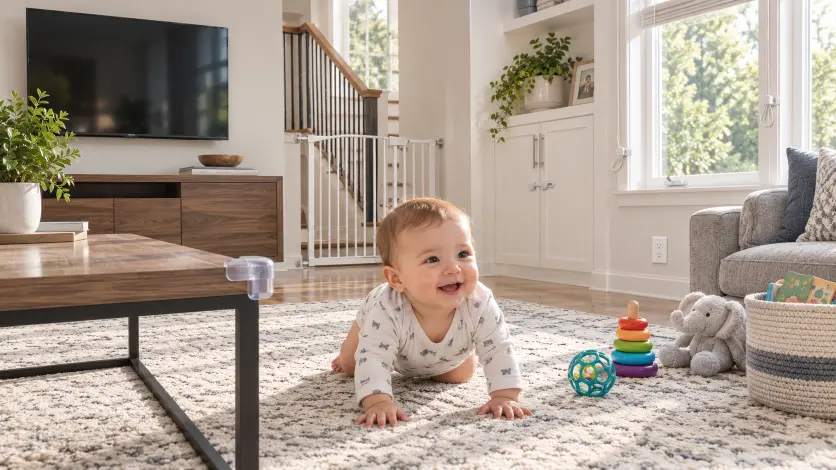

Most babies crawl at six months old, so it is essential that you baby proof your home even before they begin crawling rather than after. The following is a baby proofing checklist that highlights all the risks in your home, segmented according to age and room.
Baby proofing checklist by age
The following guide explains how to baby proof your home at different ages:
1. Before baby arrives
Prepare the home for a clean, healthy environment before your baby comes home:
- Clean the nursery and other areas where your baby will spend time, paying particular attention to dust, mold, and dampness.
- Improve ventilation and address sources of persistent odors, smoke, or other airborne irritants.
- Avoid using strong fragrances, air fresheners, or harsh cleaning products around areas where your baby will sleep and spend time.
- Wash the baby’s bedding, clothing, and other washable items before use.
- Clean and disinfect frequently touched surfaces and items that will come into close contact with your baby.
- Set up a safe sleep space with a firm, flat mattress and no loose bedding, pillows, or soft objects.
- Keep household chemicals, medicines, pesticides, and other potentially harmful substances stored securely.
- Check for peeling paint, visible mold, water leaks, and other conditions that could affect the home’s indoor environment.
2. Birth to 6 months
During the first six months, focus on keeping the items and spaces used for daily baby care clean and hygienic:
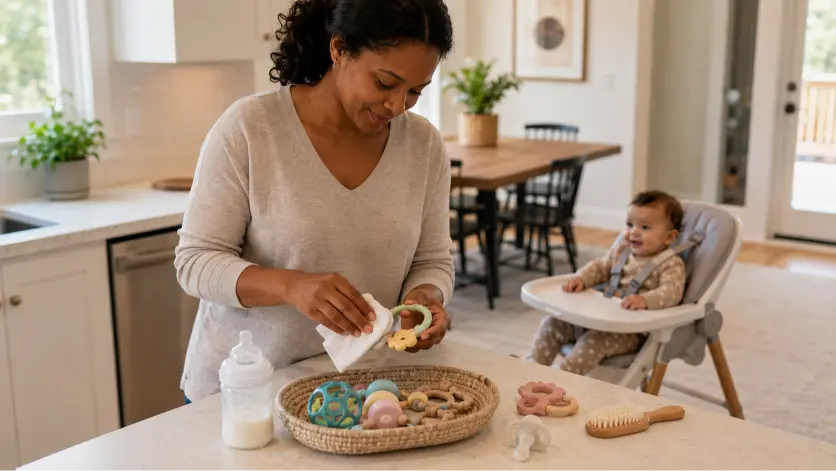
- Wash bottles, nipples, breast pump parts, and other feeding equipment thoroughly after use and sterilize them as recommended.
- Wash pacifiers regularly and replace them when they become damaged or worn.
- Wash your baby’s clothes, bedding, burp cloths, towels, and other frequently used fabrics regularly.
- Clean and disinfect changing mats and other surfaces used during diaper changes.
- Keep diapers, wipes, creams, and other baby-care supplies clean, dry, and within easy reach but away from pets and contaminants.
- Clean toys, teethers, and other objects your baby frequently puts in their mouth according to the manufacturer’s instructions.
- Empty and clean diaper bins regularly to prevent unpleasant odors and bacterial growth.
- Keep bathwater, baby tubs, and bathing accessories clean and dry between uses.
- Wash your hands before handling feeding equipment, preparing bottles, changing diapers, or caring for your baby’s umbilical cord.
3. From 6 to 9 months
As your baby begins crawling and exploring, focus on hazards within reach:
- Install safety gates that are securely screwed into place at the top and bottom of stairs.
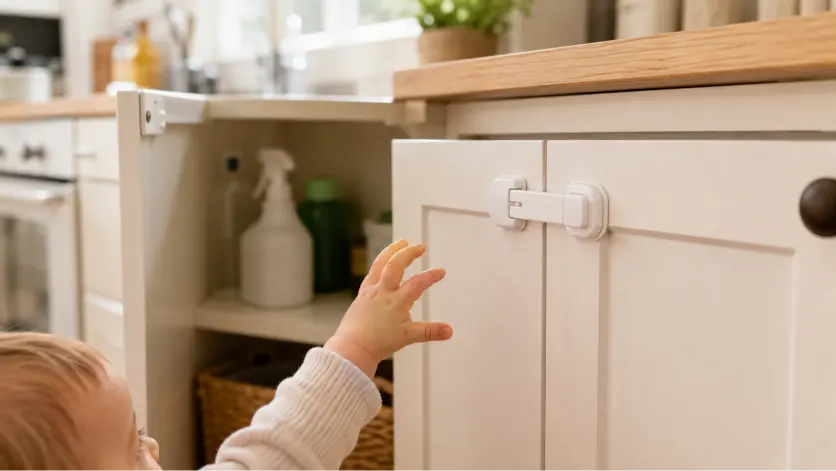
- Secure low cabinets and drawers with safety latches, especially those containing sharp objects, chemicals, or other hazards.
- Move small objects, batteries, coins, and other choking hazards out of your baby’s reach.
- Cover sharp edges and corners on low furniture that your baby can reach or pull against.
- Use door pinch guards where needed to protect your baby’s fingers.
- Secure tablecloths, cords, and other items your baby could pull down or become tangled in.
- Keep hot drinks, food, and cookware away from the edges of counters and tables.
- Check that furniture, televisions, and other heavy objects remain securely anchored as your baby begins pulling up.
- Check floors for splinters, sharp edges, loose carpet fibers, or other surfaces that could injure your baby’s hands and knees while crawling.
4. From 9 to 12 months and beyond
As your baby starts pulling up and eventually walking, reassess your home and do the following baby proofing steps:
- Install window guards or stops to prevent dangerous openings.
- Add a toilet lock.
- Secure alcohol, batteries, medicines, and other hazardous materials.
- Recheck furniture anchors and safety gates regularly.
- Move reachable objects out of your child’s reach.
- Replace or adjust safety devices if your child learns how to bypass them.
- Choose well-fitting clothes that do not drag on the floor as they begin walking to prevent tripping and falling.
Room-by-room baby proofing checklist
The following guide explains how to baby proof your different rooms:
1. Kitchen
The kitchen combines several hazards, including hot surfaces, sharp objects, chemicals, and heavy appliances.
Turn pot and pan handles toward the back of the stove and use rear burners whenever possible. Install stove knob covers to prevent your child from accidentally turning on a burner.
Lock cabinets containing cleaning products, medicines, sharp utensils, and other dangerous items. You can leave one low cabinet unlocked and fill it with safe items, such as plastic containers, to give your baby a safe place to explore.
Keep knives, scissors, appliances, and other potentially dangerous objects well out of reach.
2.Bathroom
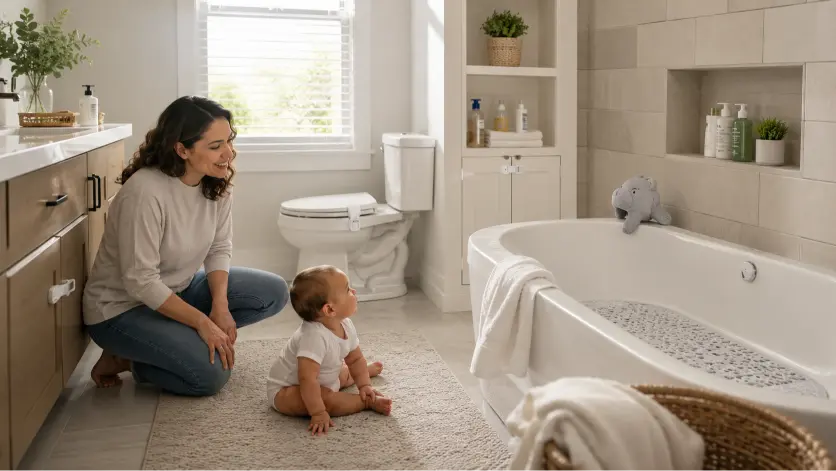
Bathrooms require particular attention because of drowning and scalding hazards. Set your water heater to 120°F (49°C) or lower. Use nonslip protection in the bathtub.
Install a toilet lock to prevent your child from opening the lid. Keep medicines, cosmetics, razors, cleaning products, and other potentially harmful items locked away.
Most importantly, never leave a baby unattended in the bath, even for a moment. Active supervision is essential because babies can drown in very shallow water.
3. Living room and play areas
Anchor bookshelves, dressers, TVs, and other heavy furniture to the wall. Furniture tip-overs can cause serious injuries, particularly when children climb or pull on them.
Cover sharp corners and edges on coffee tables and other furniture.
If you have a fireplace, use a gate that is securely attached to the wall rather than relying on a freestanding barrier. Keep children away from hot fireplace surfaces and glass, which can remain dangerously hot even after the fire is extinguished.
Keep toys and play areas free of small objects, loose cords, batteries, and other choking or strangulation hazards.
4. Bedroom and nursery
The crib should remain a safe sleep environment. Keep loose bedding, pillows, toys, and other soft objects out of the crib.
Keep blind and curtain cords out of reach because they can create a strangulation hazard. Secure tall or freestanding furniture, including dressers and shelving, to prevent tip-overs.
5. Stairs, Windows, and Doorways
Install gates at the top of stairs. Pressure-mounted gates may be appropriate in some locations, but they should not be relied on as the primary barrier at the top of stairs.
Use window guards or stops to prevent children from opening windows far enough to fall through. Do not rely on window screens to prevent falls.
Add pinch guards where appropriate to protect small fingers from doors.
Conclusion
Baby proofing your house is an ongoing process. Start with the highest-priority safety measures, then work through each room as your baby starts crawling, pulling up, walking, and becoming more independent. By anticipating what your child can reach, climb, pull, open, or explore, you can reduce hazards and create a safer environment for your baby’s everyday adventures.
Sources