


You don’t need a big backyard to enjoy fresh, homegrown fruits and berries. Container gardening makes it possible to grow fruits from sweet strawberries to juicy lemons right on your patio, balcony, or even a windowsill. This guide covers everything you need to know to grow fruits and berries in small spaces successfully.
Why Container Gardening is a Great Idea
Container gardening offers numerous advantages, particularly for individuals with limited outdoor space. It’s space-saving, making it perfect for apartments or urban homes. You get better control over soil quality, moisture, and pests than you would with planting in a traditional garden bed. The flexibility to move containers around allows you to maximize sunlight or protect plants from harsh weather. This makes growing your own produce simpler and incredibly rewarding, even for a beginner.
Choosing the Right Containers & Plants
- Containers: Choose containers with ample drainage holes to prevent root rot. The size of the container is important; for instance, strawberries thrive in shallow pots, while dwarf fruit trees require larger containers of at least 15 – 20 gallons. The materials of the container also play a role. Terra cotta pots are classic but dry out quickly, while plastic pots are lightweight and hold moisture longer. Fabric grow bags are a great, affordable option that promotes healthy root growth.
- Selecting plants: Not all plant varieties are suitable for containers, but many compact or dwarf varieties are perfect. They are as follows:
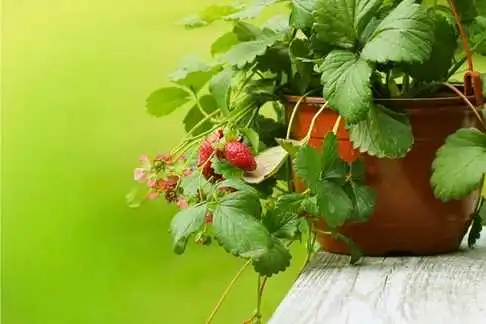
- Berries: Strawberries are easy to grow in hanging baskets or window boxes. Blueberries flourish in pots with acidic soil. Raspberries and blackberries require large containers with support for their canes.
- Fruits: Dwarf citrus trees, such as lemons and limes, thrive in large containers and offer a pleasant fragrance. Figs also adapt well to containers, as do specially bred dwarf varieties of apples and peaches.

Soil, Water, & Fertilizer Essentials
Healthy plants depend on proper care, and that starts with what’s in the container.
- Soil: Use a high-quality, well-draining potting mix, not heavy garden soil. Enrich it with organic matter like compost for extra nutrients. Keep in mind that blueberries need acidic soil, while most other fruits prefer a slightly acidic to neutral ph.
- Watering: Containers dry out faster, so check them frequently. Most plants need deep watering a few times a week, especially in warm weather. Keep the soil consistently moist but never soggy. Inconsistent watering can lead to poor yields or cracked fruit.
- Fertilizing: Container plants use up nutrients quickly, so regular feeding is essential. Use a slow-release fertilizer or liquid feed every 4-6 weeks during the growing season. Blueberries benefit from fertilizers made for acid-loving plants. Stop fertilizing about six weeks before winter so the plants can prepare for dormancy.

Maintaining Your Container Garden
A little routine maintenance goes a long way.
- Sunlight: Most fruits and berries need at least 6-8 hours of direct sunlight daily. Place your container in the sunniest spot and move it as the seasons change. In cold climates, bring pots indoors or insulate them for winter protection.
- Pruning: Pruning keeps plants healthy, compact, and productive. Remove old canes from berry bushes after fruiting to encourage new growth. For fruit trees, prune in late winter or early spring to maintain shape and airflow. Regular pruning ensures your plants focus energy on producing fruit.
- Pests & Diseases: Regularly inspect your plants for signs of pests or diseases. Common pests include aphids and spider mites, while powdery mildew and root rot are common diseases. To prevent these issues, ensure there is good airflow around your plants, and avoid watering the leaves directly. You can also use natural solutions, such as neem oil, or practice companion planting with herbs like basil or marigolds to deter pests.

Conclusion
The best part of container gardening is enjoying your fresh, homegrown harvest. Fruit is ready when it looks, smells, and feels ripe. For example, harvest blueberries when they are deep blue and come off easily, and pick citrus when the fruit feels heavy and has a strong fragrance.