


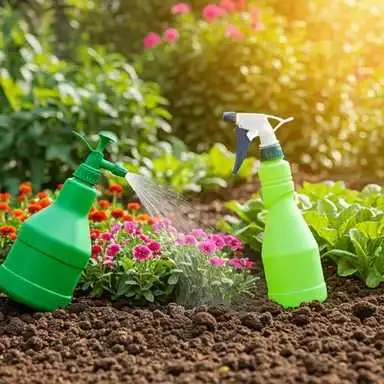

Making natural garden spray requires simple ingredients and provides significant benefits, including being eco-friendly, safe for plants and pets, and cost-effective. By choosing natural pesticides, you embrace a healthier choice for your garden and the environment. In this guide, we learn how to make a natural garden spray.
10 Natural Pesticides for Your Garden
Here are 10 natural pesticide options, including detailed application methods and target pests.

1. Mild Dish Soap
Dish soap is a common, cost-effective DIY natural pesticide for many garden bugs. To use it, mix one and a half teaspoons of mild liquid dish soap with water in a spray bottle or garden sprayer.
How to apply: always test this mixture on a small, hidden part of your plant first, and wait 24-48 hours to check for any damage. Dish soap’s surfactants can strip a plant’s natural protective waxy layer, leading to dehydration or burn, especially in strong sunlight. For this reason, apply the spray only in the early morning or evening, never in the middle of the day when plants are exposed to heat and direct sunlight.
If the test is successful, spray all infected plant surfaces thoroughly, undersides, leaf tops, stems, and buds. Repeat every 7 to 14 days until pests are gone. This method is effective against aphids, mites, beetles, and whiteflies by disrupting their outer protective layer. Remember, stick to truly mild dish soaps as many common varieties contain harsh additives that can harm plants.
2. Vegetable Oil Spray
Vegetable oil spray combined with dish soap coats an insect’s body and suffocates it by blocking its breathing pores.
How to Apply: Mix one cup of vegetable oil and one tablespoon of mild soap. Add two teaspoons of this mixture to water. Pour into a spray bottle and shake thoroughly. Spray the top and bottom of each leaf, and if necessary, the stems. Apply in the early morning or evening, effective against aphids, beetles, whiteflies, thrips, and mites.
3. Eucalyptus Oil
Eucalyptus oil has a warm and earthy smell and can be safely used as a pesticide. It serves three different purposes:
- To Repel: Many insects, such as ants, avoid strong smells like eucalyptus. Use ¼ teaspoon of eucalyptus oil in one cup of water. Put the mixture in a spray bottle, shake well, and apply to infected plants every three days.
- To eliminate insects, mix one teaspoon of eucalyptus oil with half a teaspoon of liquid dish detergent and 2 cups of water. Pour into a spray bottle, shake well, and apply to plants every three days until the insects are gone.
- To Mulch: Use shredded or chipped eucalyptus wood as mulch. As the mulch breaks down, it releases the oil, providing long-lasting insect protection. If you can’t find eucalyptus mulch, use pine mulch and spray it with eucalyptus oil.
4. Neem Oil Spray
Neem oil has a long history of being used as a pest deterrent and can also treat garden diseases like powdery mildew and rust. It has a bitter taste and a strong odor that helps keep pests away. It’s also biodegradable and non-toxic for people, animals, and plants.
How to Apply: Mix 1 teaspoon of neem oil with warm water and two teaspoons of mild liquid soap. Then add the neem oil and shake again. You’ll get a neem oil pesticide with a concentration of 0.5%. Use the mixture to spray the affected plant leaves. You can also use neem oil preventively on young plants before they get infested. It’s effective for 22 days, effective against caterpillars, aphids, beetles, mealybugs, scale, and thrips.
5. Pepper Spray
Pepper spray contains capsaicin, the compound that gives peppers their hot taste. Capsaicin kills insects by causing membrane damage and metabolic disruption. Many insects will sense the pepper spray and avoid treated plants. It can also be used to repel mammals, such as deer.
How to Apply: Wear gloves and a mask when making and applying pepper spray, as it can cause eye discomfort. Avoid using it on a windy day. Mix two tablespoons of red cayenne pepper or paprika with a gallon of water. Then add six drops of mild dish soap to help the solution bind. Pour the mixture into a spray bottle and apply at dusk. Spray until there’s a nice coat over the foliage and underside of the leaves. To maintain effectiveness against spider mites, aphids, and deer, repeat the application every 3 to 5 days, and after any rainfall.
6. Garlic Spray
Garlic is famous for its aroma, which is exactly why it’s on the list of organic pesticides for vegetables. Garlic acts primarily as an insect repellent.
How to Apply: You can plant garlic around or within your vegetable beds to repel insects. Alternatively, make a garlic spray: Take two garlic cloves and put them in a blender or a food processor with a little water. Let it sit overnight, then strain. Add a teaspoon of liquid soap and a half cup of vegetable oil. Put in enough water to fill a cup. Use the mixture with one quart of water and pour it into a spray bottle. Spray the tops and bottoms of leaves once a week, effective against ants, slugs, aphids, beetles, and whiteflies.
7. Tomato Leaf Spray
Tomato plants belong to the nightshade family, which means they have toxic compounds known as alkaloids in the leaves. When the leaves are chopped, the alkaloids are released. This spray becomes toxic to aphids but safe for people and other plants. It is also believed to attract beneficial predatory insects.
How to Apply: Chop two cups of tomato leaves and soak them in water overnight. Then strain the leaves with a cheesecloth or a strainer. Pour the water into the spray bottle and apply to stems and foliage.
8. Salt Spray
Salt spray deters pests, and it is also beneficial to the plant by increasing nutrient absorption, such as sulfur and magnesium.
How to Apply: You can sprinkle some salt around the base of the plant every week to deter pests and add magnesium to the soil. Alternatively, make a spray: Mix half a cup of salt in one gallon of warm water. Pour into a spray bottle, stir well until the salt dissolves, and spray on pest-infected plants. The salt will prevent the insects from sitting on your plant and feeding off of it by drying them out. Salt spray is effective against slugs, beetles, and cabbage worms.
9. Vinegar
Apple cider vinegar is essentially fermented apple juice. It’s an effective organic bug repellent, and its acidity can get rid of harmful insects altogether.
How to Apply: You can use either white or apple cider vinegar, but white is usually more affordable. To make a spray, combine three parts water and one part vinegar in a spray bottle. Add a teaspoon of soap dish to help bind the solution. Shake until well combined. Spray directly onto the bug or apply to the base of the plant or leaves if they are heavily infected. You can also use vinegar to repel dogs, cats, and coyotes from your garden. Vinegar is effective against slugs, snails, moths, ants, and fruit flies.

10. Rubbing Alcohol
70% rubbing alcohol is another excellent natural pesticide. When applied in a spray, it kills insects and draws out mobile insects from their hiding places, making it easier to control them.
How to Apply: Mix 1 cup of rubbing alcohol and 1 teaspoon of dish detergent in water. Pour into a spray bottle and shake to make sure it’s well mixed. To prevent potential harm to your plants, always test this mixture on a small, hidden leaf first, and allow 24 hours to observe for any adverse reactions. If no damage occurs, spray the mixture on stems and both sides of leaves, paying special attention to leaf axils where pests often hide.
Conclusion
Natural garden sprays are more than a trend; they’re a practical way to protect your plants, the environment, and your health. Whether you choose a simple dish soap spray or a complex essential oil blend, these methods are cost-effective and powerful. Stick with what works for your garden and stay consistent. You’ll notice fewer pests, healthier plants, and peace of mind.