

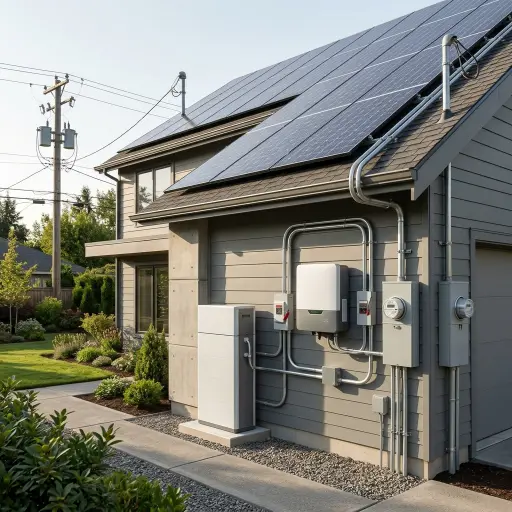

Solar energy systems convert sunlight into electricity for homes and businesses. However, they differ in how they connect to the public electricity grid, store energy, and provide backup power.
The three main types of solar photovoltaic (PV) systems are grid-tied, off-grid, and hybrid. Understanding how each works can help you choose the right system based on your electricity needs, budget, and access to reliable grid power.
Grid-tied solar energy systems
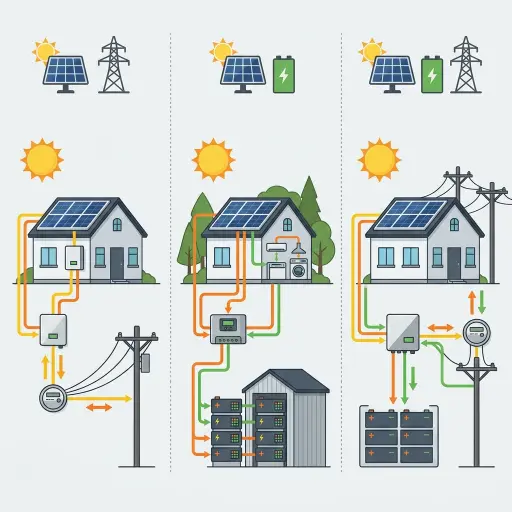
Grid-tied solar systems connect to the public electricity grid. They allow homes and businesses to generate solar electricity while drawing additional power from utility providers when needed.
How grid-tied solar systems work
Solar panels convert sunlight into direct current (DC) electricity. An inverter changes this into alternating current (AC), which powers electrical appliances and equipment.
When solar production exceeds electricity consumption, excess power can be exported to the public grid, depending on local regulations and utility arrangements.
At night or when sunlight is insufficient, the property draws electricity from the grid.
Advantages and limitations of grid-tied systems
- Lower installation costs: They generally cost less than off-grid and hybrid systems because they do not require battery storage.
- Reduced electricity bills: Solar generation reduces the amount of electricity purchased from utility providers.
- Simple maintenance: Fewer components make these systems relatively easy to maintain.
- No backup during grid outages: Standard grid-tied systems automatically shut down during power failures to prevent electricity from flowing into utility lines during repairs.
Grid-tied systems are suitable for properties with reliable grid access that want to reduce electricity costs without investing in battery storage.
Off-grid solar energy systems
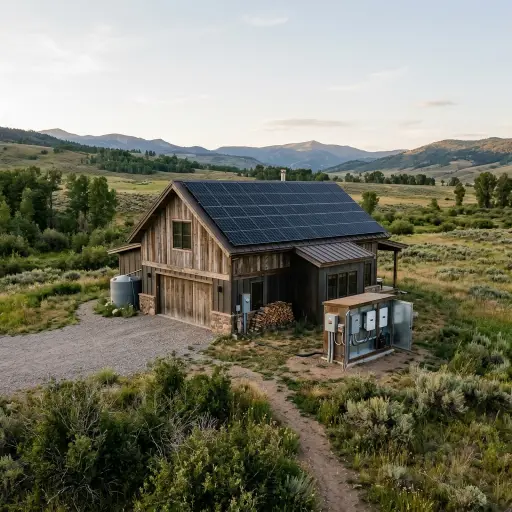
Off-grid solar systems operate independently of the public electricity grid. They generate and store their own electricity, making them suitable for remote properties and locations without reliable utility connections.
How off-grid solar systems work
Solar panels generate DC electricity from sunlight. A charge controller regulates the electricity flowing into the battery bank to prevent overcharging.
The batteries store excess energy for use at night or during periods of low solar production. An inverter then converts the stored DC electricity into AC power for household appliances and equipment.
Some installations also include a backup generator to supply electricity when solar production and battery reserves are insufficient.
Advantages and limitations of off-grid systems
- Energy independence: Users generate and store electricity without relying on utility providers.
- Suitable for remote locations: They provide power where connecting to public electricity infrastructure is difficult or expensive.
- Battery backup: Stored energy supplies electricity when solar panels are not generating enough power.
- Higher installation costs: Batteries, charge controllers, and backup generators increase initial expenses.
- Battery replacement: Batteries have a limited lifespan and eventually need replacing.
Off-grid systems are best suited to properties without access to public electricity or users who require complete energy independence from the utility grid.
Hybrid solar systems
Hybrid solar systems combine grid-connected solar panels with battery storage. They allow users to generate electricity, store excess energy, and draw power from the public grid when necessary.
How hybrid solar systems work
A hybrid solar system uses a combination of solar panels, battery storage, and a connection to the public electricity grid. Unlike standard grid-tied systems, it can store excess solar energy in batteries for later use.
When solar panels generate more electricity than the property consumes, the excess charges the batteries. Once the batteries are fully charged, additional electricity may be exported to the public grid, depending on the system configuration and local regulations.
When solar production is insufficient, the system can draw electricity from the batteries or the grid. During a power outage, a properly configured hybrid inverter disconnects from the grid and supplies power from the batteries to designated circuits.
Advantages and limitations of hybrid systems
- Backup power: Batteries can supply electricity to essential appliances during grid outages when the system has the necessary backup configuration.
- Better energy management: Stored solar electricity can be used when sunlight is insufficient.
- Reduced grid dependence: Battery storage reduces reliance on utility electricity.
- Higher installation costs: Batteries and hybrid inverters increase the initial investment.
- More complex installation: Proper equipment selection, system sizing, and configuration require careful planning.
Hybrid systems are suitable for properties with grid access that experience frequent power interruptions or require battery backup.
How to choose the right solar energy system
The right solar system depends on your electricity consumption, budget, location, and backup power requirements. Consider these differences before making a decision:
- Grid-tied: Best for properties with reliable grid access that want to reduce electricity bills without battery storage.
- Off-grid: Suitable for remote properties without utility connections or users who want complete energy independence.
- Hybrid: Ideal for properties that need grid access, battery storage, and backup power during outages.
Before installation, assess your average electricity consumption, the appliances you need to power, and the amount of backup time required.
Also consider the initial installation cost, battery replacement, maintenance, and potential equipment upgrades. A professional assessment can help determine the required solar panel capacity, inverter rating, and battery size.
Conclusion
Grid-tied, off-grid, and hybrid solar systems offer different ways to generate and use electricity. Grid-tied systems help reduce electricity bills, off-grid systems provide independent power, and hybrid systems combine grid access with battery storage.
Your choice should depend on your electricity needs, budget, location, and backup power requirements.
Which solar energy system would you choose for your home or business: grid-tied, off-grid, or hybrid? Share your reasons in the comments.
Sources: