




Regular washing machine maintenance prevents foul odors, extends appliance lifespan, and ensures your laundry stays fresh. Over time, laundry detergent residue, fabric softeners, minerals from hard water, and trapped moisture create an ideal environment for mold and bacteria growth inside the drum and rubber seals. Implementing a cleaning schedule removes built-up grime and keeps your washer operating efficiently.
Essential tools and safe cleaning solutions
Using safe, effective cleaning agents protects internal components and rubber gaskets from premature degradation:
- White Vinegar: This helps cut through soap scum, dissolves mineral deposits, and neutralizes mold spores.
- Baking Soda: Acts as a mild abrasive and deodorizer to eliminate stubborn trapped odors.
- Microfiber Cloths: Safely wipe down rubber door seals, glass doors, and exterior control panels without scratching surfaces.
- Old Toothbrush: Reaches tight corners inside detergent dispensers and door gaskets to scrub away hidden residue.
Step-by-step washing machine cleaning process
Top-loading and front-loading machines accumulate grime in different areas, requiring targeted cleaning techniques:
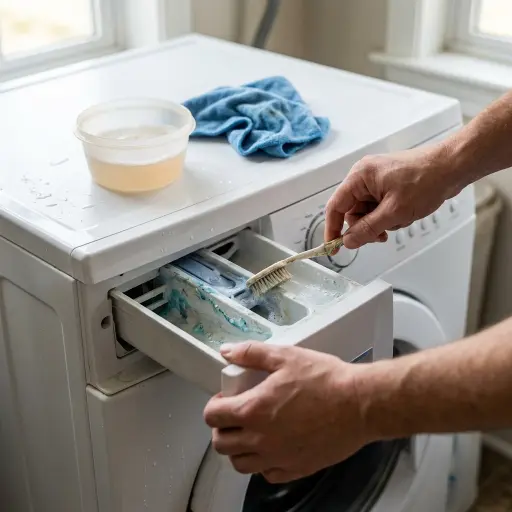
Step 1: Clean the detergent dispenser drawer
Removable dispenser drawers frequently trap damp detergent and fabric softener residue, encouraging black mold growth.
- Pull the tray out completely by pressing the release tab inside.
- Soak the drawer in warm water mixed with white vinegar.
- Scrub away caked-on soap using an old toothbrush.
- Wipe the internal cavity of the washer frame before replacing the dry tray.
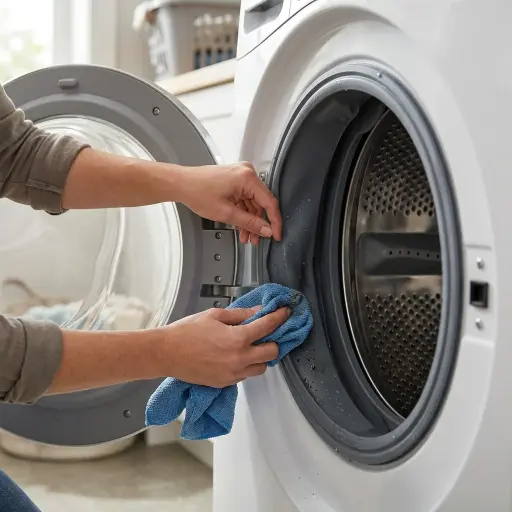
Step 2: Sanitize the rubber door gaskets (front-load washers)
The rubber bellows seal around front-load washer doors traps standing water, lint, and detergent after every cycle.
- Pull back the folds of the rubber seal carefully to expose hidden debris.
- Wipe down the interior seal using a microfiber cloth dampened with white vinegar or a mild bleach solution.
- Remove any trapped coins, hairpins, or lint accumulated in the bottom folds.
Step 3: Run a heavy-duty hot cleaning cycle
Deep clean the tub and internal plumbing to strip away grime from hidden drum walls:
- Pour two cups of white vinegar or a specialized washing machine cleaner directly into the drum or dispenser drawer.
- Run the machine on its longest, hottest cycle or use the dedicated Tub Clean setting.
- Pause the cycle midway through if cleaning a top-loader, allowing the solution to soak for 30 to 60 minutes before finishing.
Step 4: Wipe down the drum and exterior
After the hot cycle finishes, leave the door open and wipe the stainless steel drum with a clean microfiber cloth to catch remaining loosened particles. Clean the exterior buttons, knobs, and lid with a damp cloth to remove detergent splatters.
Preventive habits to stop mold and odors
Incorporating simple daily practices minimizes moisture buildup and reduces how often deep cleaning is needed:
- Leave the door ajar: Keep the washer door or lid cracked open between loads to allow air circulation and dry out residual moisture.
- Remove wet clothes promptly: Transfer clean laundry to the dryer immediately after the cycle ends to prevent mildew development.
- Use the right amount of HE detergent: High-efficiency washers use less water. Excess detergent cannot dissolve fully and leaves behind sticky residue that attracts bacteria.
- Clean the drain pump filter: Locate the drain pump filter at the bottom front panel of front-load machines, drain any trapped water into a shallow tray, and rinse away captured debris every few months.
Conclusion
Maintaining your washing machine requires routine drum sanitization, dispenser drawer cleaning, and simple moisture-prevention habits. Cleaning the rubber gaskets, removing soap buildup, and leaving the door open between washes keeps your appliance performing at its best and protects your clothes from unpleasant odors.
How often do you clean your washing machine? Drop a comment below and share your routine.
Sources