



Keeping bedroom mirrors and glass surfaces clean helps maintain a neat, polished appearance and keeps your space looking fresh and well-maintained. Daily dust, fingerprints, and cosmetic residue can leave mirrors and glass surfaces looking dull, while improper cleaning methods may damage the mirror’s reflective backing over time. Proper care involves using non-abrasive tools, suitable cleaning solutions, and techniques that prevent moisture from reaching the mirror’s edges.
Essential cleaning tools and safe solutions
Using the right materials prevents micro-scratches and surface clouding on the mirror:
- Microfiber Cloths: Standard paper towels leave lint behind and can create tiny surface scratches. Using microfiber cloths traps dust and absorbs liquids without shedding fibers.
- Distilled white vinegar solution: Mix equal parts distilled water and white vinegar in a spray bottle. Distilled water prevents mineral spots caused by hard tap water, while vinegar cuts through body oils and film.
- Ammonia-free glass cleaners: Avoid cleaners containing harsh ammonia or bleach. These chemicals seep around the edges of mirrors and dissolve the silver backing, causing black spots that cannot be repaired.
- Rubbing alcohol: Spot-treat stubborn deposits like hairspray or makeup residue with a small amount of isopropyl alcohol on a cloth before cleaning the full surface.
Step-by-step technique for streak-free mirror cleaning
Achieving a clear finish depends on applying cleaning product correctly and using controlled cleaning movements:
Step 1: Remove surface dust
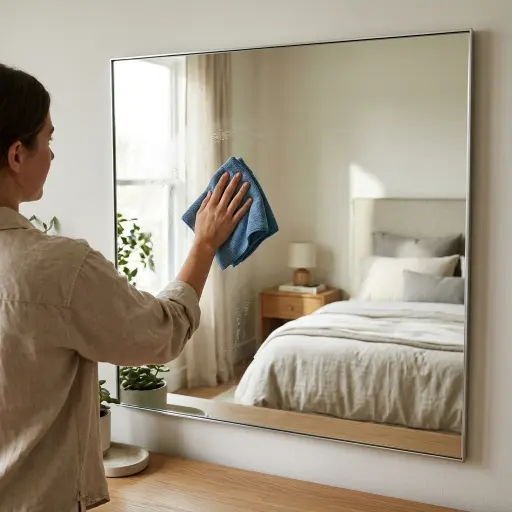
Wipe the mirror or glass panel with a dry microfiber cloth before applying a cleaning solution. Removing dust first helps prevent it from spreading across the surface and leaving streaks during cleaning.
Step 2: Apply cleaner to the cloth
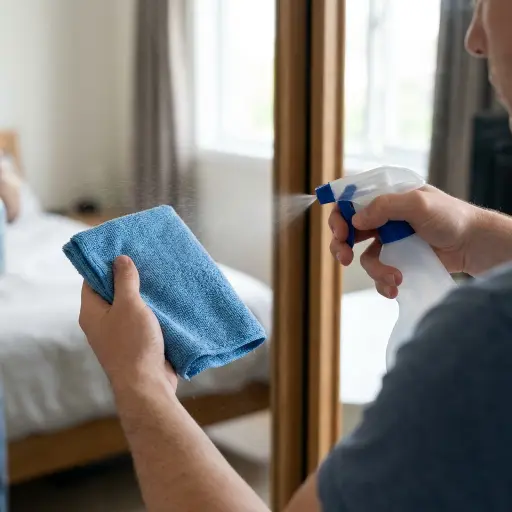
Lightly spray your cleaning solution onto the microfiber cloth rather than directly onto the glass. Direct spraying can cause liquid to seep around the mirror’s edges, potentially damaging the reflective coating and causing dark spots over time.
Step 3: Wipe in a pattern
Start at the top corner and wipe side-to-side in a tight, overlapping S-pattern or Z-pattern down to the bottom. Circular movements redistribute lifted oil and dirt across the glass, causing visible streaks.
Step 4: Buff dry immediately
Use a clean, dry microfiber cloth to wipe the glass with light pressure, using small overlapping strokes until the surface is clear and dry. This process, known as buffing, removes leftover moisture and helps prevent streaks and water spots.
Long-term maintenance and prevention strategies
- Maintain low indoor humidity levels to prevent condensation from settling on cold glass surfaces.
- Dust mirrors weekly with a dry cloth to prevent airborne particulate accumulation.
- Position freestanding or leaning mirrors securely away from high-traffic zones where impacts or vibrations could cause stress fractures.
Conclusion
Regular cleaning with a suitable solution and a lint-free microfiber cloth helps keep bedroom mirrors and glass clean and clear. Always spray the cleaner onto the cloth to prevent moisture damage and black spots.
How do you keep your mirrors streak-free? Share your tips in the comments.
Sources: