


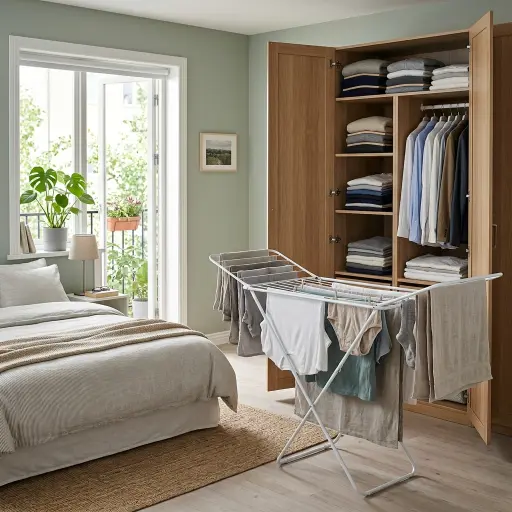

Mold behind a wardrobe can damage walls, stain clothes, and contribute to poor indoor air quality. It often develops when moisture becomes trapped in the narrow space between furniture and the wall, especially where airflow is limited. Improving ventilation, controlling humidity, and positioning furniture correctly can reduce the conditions that allow mold to grow.
Effective strategies for preventing mold behind a wardrobe
These practical steps can help keep the space behind your wardrobe dry:
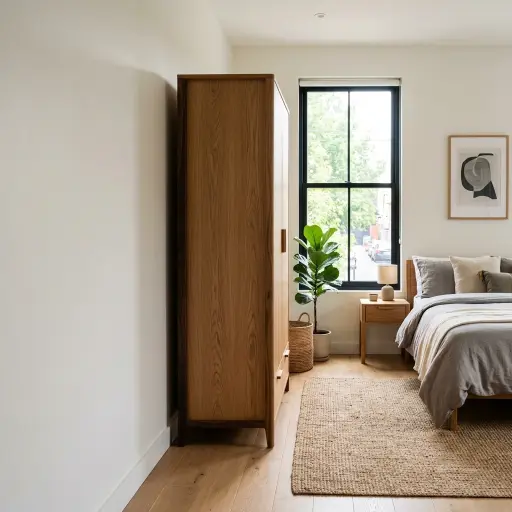
1. Create an air gap between the furniture and the wall
A wardrobe placed directly against a wall can restrict airflow and trap moisture. Cold wall surfaces can also encourage condensation when warm, humid air comes into contact with them. Pull the wardrobe a few centimeters away from the wall to create an air gap. This allows air to circulate behind the furniture and helps the wall surface stay dry.
2. Improve room ventilation and air circulation
Poor ventilation allows humid air to remain trapped in the room. Open bedroom windows regularly when weather conditions allow. Avoid completely blocking airflow around wardrobes and other large furniture. For built-in wardrobes located in enclosed spaces with little ventilation, properly installed ventilation grilles may improve air circulation.
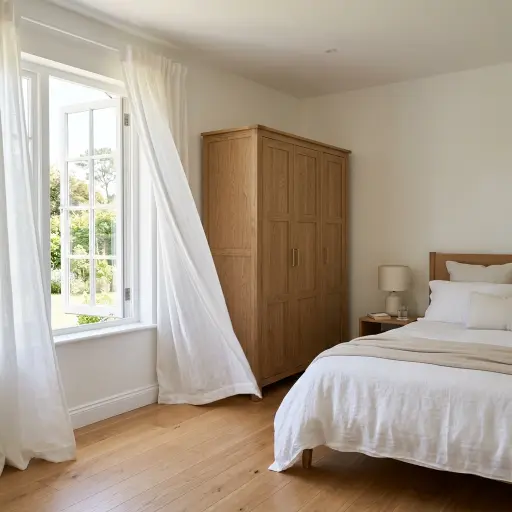
3. Maintain a consistent indoor temperature
Temperature changes can contribute to condensation on cold surfaces. Keep the bedroom at a reasonably consistent temperature rather than relying on short periods of intense heating.
Also, avoid placing wardrobes directly in front of radiators or other heat sources. Maintaining good airflow around both the furniture and heating equipment can help reduce moisture buildup.
4. Use moisture-absorbing solutions
Moisture absorbers can help manage dampness in enclosed spaces. Products designed to absorb moisture can be placed inside or near the wardrobe and replaced according to the manufacturer’s instructions.
For rooms that remain consistently humid, a dehumidifier can help reduce excess moisture in the air. However, moisture absorbers and dehumidifiers should complement proper ventilation rather than replace it.
5. Keep damp items out of the wardrobe
Damp clothes can introduce moisture directly into an enclosed wardrobe. Allow freshly washed or damp garments to dry completely before storing them. Avoid overcrowding the wardrobe as well. Leaving some space between clothes allows air to move more freely and reduces the chance of moisture becoming trapped between tightly packed fabrics.
Conclusion
Preventing mold behind a wardrobe requires good airflow, moisture control, and proper furniture placement. Leaving a gap between the wardrobe and wall, ventilating the room, maintaining a consistent temperature, and keeping damp clothes out of storage can help reduce moisture buildup. Regularly check the wall and the back of the wardrobe for signs of dampness or mold so that problems can be addressed before they spread.
Sources