


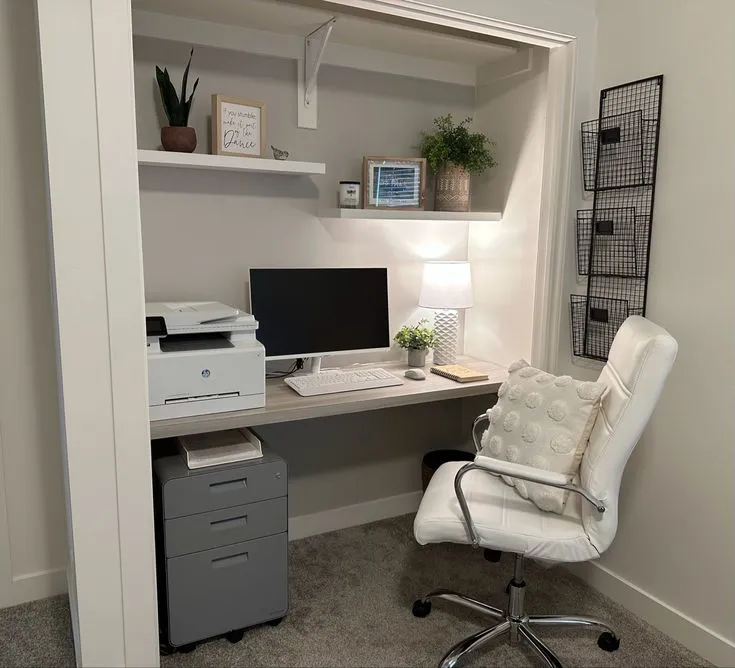

Turning a closet into a mini closet-office, is a brilliant way to maximize space. Small spaces can be challenging, but with the right approach, your closet-office can be both highly functional and visually appealing. Here’s a step-by-step guide to help you design a compact workspace that works.
Disclaimer: This guide is for informational purposes only and is not professional or expert advice. Always consult a certified professional for electrical work, structural modifications, or any safety-related concerns when converting a closet into an office.
Step 1: Clear the Space & Take Precise Measurements
Before purchasing furniture or décor, understand your closet’s physical limits and:
- Empty it out: Remove everything, including rods, shelves, or any other obstructions.
- Measure twice: Record the width, depth, and height. Make sure the chair to be used in the office-closet has enough space to move, and the doors can close without hitting anything.
Step 2: Plan for Power & Lighting
A workspace without power or proper lighting isn’t functional, so plan for:
- Electrical Access: If there isn’t an outlet inside, consider running a heavy-duty power strip from a nearby wall through a discreet hole in the baseboard.
- Lighting: Closets are often dark. Overhead LED strips or a slim desk lamp provide adequate illumination and reduce eye strain.
Step 3: Establish the Work Zone (The Desk)
The desk is the center of the office, do the following.
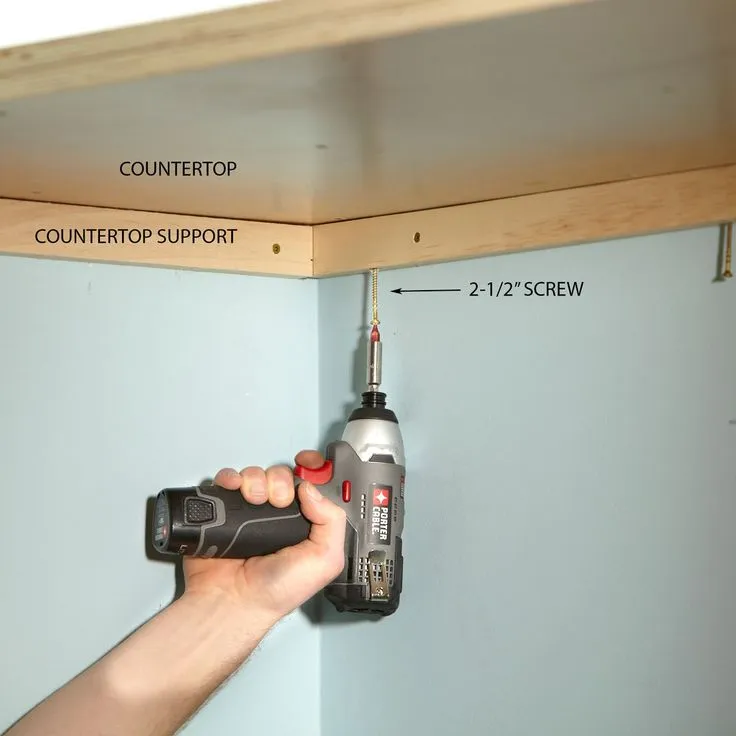
- Custom Fit: Use a sturdy butcher block or a pre-cut countertop attached to the wall with heavy-duty cleats.
- Floating Design: Choose a chair that can slide fully under the desk, and adjust the seat height so your feet rest comfortably on the floor and your arms align with the desk surface for proper posture.
Step 4: Optimize Vertical Storage
Closet with limited floor space, go vertical by:
- Adjustable Shelving: Wall-mounted tracks allow you to install shelves above your monitor. Adjustable shelving adapts to changing storage needs.
- Smart Placement: Store everyday items like notebooks and pens on lower shelves. Less-used items, such as old files or printer paper, can go higher.
Step 5: Add Aesthetic Appeal
A closet office is a chance to experiment with design, here’s how to achieve this:
- Wallpaper or Paint: Bold patterns or vibrant colors can make the back wall a visual focal point, clearly defining the office zone.
- Acoustic design: If echoes are a concern, add a small rug or felt pinboards on side walls to soften sound, ideal for video calls.
- Cable Management: Use cable trays or clips to keep cords off the floor and out of sight.
Conclusion
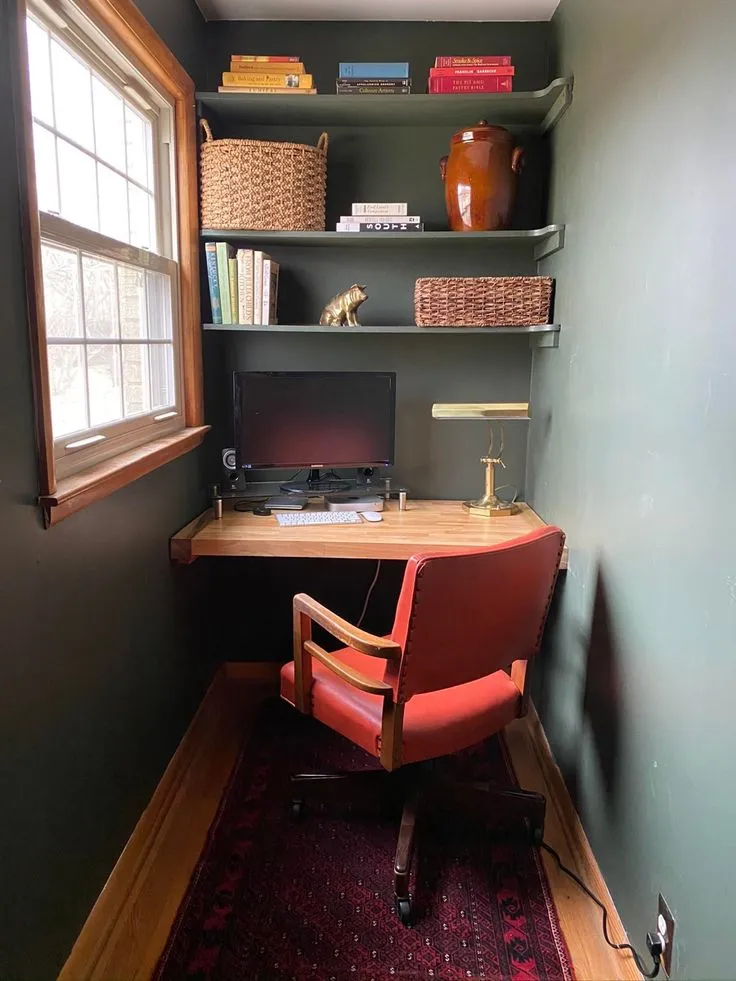
By carefully planning measurements, power, lighting, storage, and aesthetics, you can transform an underutilized closet into a productive, inspiring mini-office.