



Creating a safe home environment is less about being paranoid and more about being prepared. While we often think of “burns” as fire-related, a significant number of household injuries are actually scalds burns caused by hot liquids or steam. Because children have thinner skin than adults, they can suffer deep burns much faster and at lower temperatures. Here is a comprehensive guide to preventing burns and scalds.
How to Prevent burns and scalds in the kitchen zone
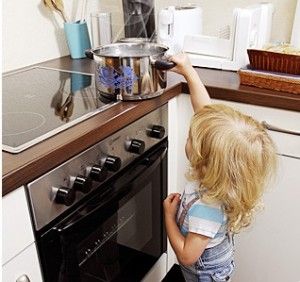
- Have a “Safe Zone”: Create a 3-foot (1-meter) “no-go zone” around the stove where children are not allowed to play.
- Back Burner Strategy: Always cook on the rear burners of the stove. If you must use the front ones, turn pot handles toward the back so they can’t be bumped or grabbed by little hands.
- The “Hot Drink” Rule: Never hold a baby or a child while drinking anything hot, such as tea or coffee. A sudden wiggle from a child can result in a spill on their small body.
How to prevent burn and scalds in the bathroom
- Check the Heater: Set your water heater thermostat to 120°F (49°C) or lower. Water at 140°F (60°C) can cause a third-degree burn in just two seconds.
- The Bathwater Sequence: When filling a tub, run the cold water first, to reach the desired temperature.
- The Elbow Test: Before putting a child in the bath, test the water with your elbow, not your hand. Your elbow is more sensitive to heat and gives a more accurate reading of how the water will feel to a child’s delicate skin.
General Household prevention from burn and scalds
- Hair Tools: Flat irons and curling wands can stay hot enough to burn for several minutes after they are turned off. Store them in heat-resistant pouches or high up, out of reach.
- The Living Room: Keep space heaters at least three feet away from curtains, furniture, and people. Ensure your fireplace has a sturdy screen.
- Electrical Safety: Cover unused electrical outlets with safety plugs and replace any frayed or damaged cords immediately to prevent electrocution.
Essential First Aid: What to do if an accident happens
Despite our best efforts, accidents occur. Knowing what to do in the first 60 seconds can significantly reduce the severity of the injury:
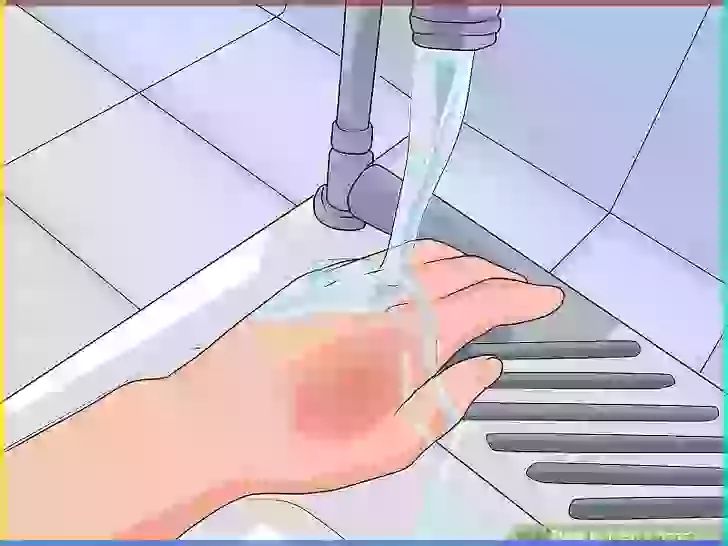
- Cool the Burn: Immediately run cool (not cold) tap water over the burn for at least 20 minutes. Do not use ice, as it can further damage the tissue.
- Remove Clothing/Jewelry: Gently remove any clothing or jewelry near the area before the skin starts to swell. Exception: If clothing is stuck to the burn, leave it alone and seek medical help.
- No Home Remedies: Never put butter, oils, ointments, or toothpaste on a burn. These trap the heat inside the skin and can cause infection.
- Cover Lightly: Use plastic wrap (cling film) or a clean, non-fluffy bandage to cover the burn. This protects the area and keeps it clean without sticking to the wound.
- When to seek medical assistance: Always see a doctor if the burn is larger than the person’s palm, if it involves the face, hands, feet, or genitals, or if the skin looks white, charred, or leathery.
Conclusion
Safety isn’t about being a perfect parent or homeowner; it’s about building habits. Turning a pot handle inward or checking a bath with your elbow takes only a second, but it can prevent a lifetime of scarring and recovery. By making these small adjustments, you create a home where your family can be both active and protected.